An Introduction to LED Linear Lighting
For project teams encountering linear lighting for the first time, or for procurement professionals who specify it without a technical background, a clear introduction is valuable. LED linear lights have become the standard for commercial, office, commercial, and hospitality ceilings across the UAE, yet their characteristics and advantages are not always well understood by everyone involved in a project. This introduction explains what linear lights are and why they have come to dominate commercial lighting.
It is written for the developer, the procurement manager, and the project coordinator who need a working understanding of linear lighting without the technical depth required of a lighting designer, providing the foundation to engage confidently with the specification process.
Defining the Linear Luminaire
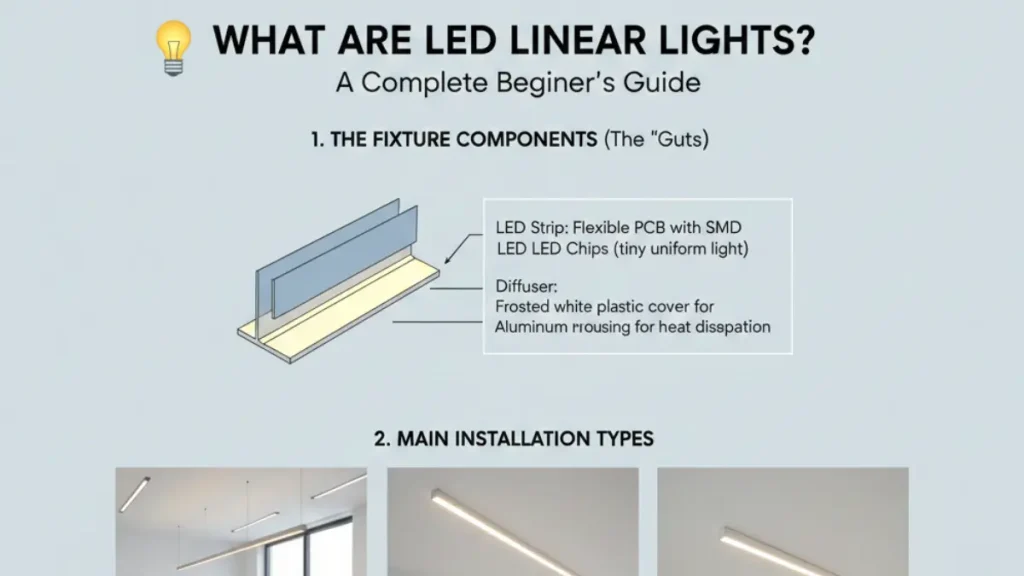
An LED linear light is a long, narrow luminaire containing a continuous row of light emitting diodes behind a diffuser, powered by an integrated or remote driver. Its elongated form delivers uniform illumination along its length and allows continuous runs to be created by joining modules. This contrasts with point sources such as downlights, which illuminate from discrete positions, and with the panels that fill modular ceiling grids.
The linear format is what enables the continuous lines of light that characterise contemporary commercial ceilings, and it is the defining feature that distinguishes linear systems from the other lighting types a project might consider. Our range of LED linear lights for commercial offices illustrates the format across configurations.
Why Linear Lights Replaced Fluorescent Battens
Linear LED lights have replaced the fluorescent battens and troffers that served commercial buildings for decades, and the reasons are compelling. LED linear systems consume far less energy, last many times longer, deliver better light quality without flicker, and contain no mercury to complicate disposal. For commercial buildings, these advantages translate into lower energy and maintenance costs, better occupant comfort, and easier compliance with environmental regulations.
The transition from fluorescent to LED linear has been one of the most significant shifts in commercial lighting, driven by the clear superiority of the LED technology across every dimension that matters to building owners and occupants. Fluorescent linear lighting is now effectively obsolete for new commercial specification.
The Configurations Available
Linear lights come in recessed, surface mounted, and suspended configurations. Recessed systems integrate into suspended ceilings for a flush, minimal appearance. Surface mounted systems attach directly to the ceiling, suiting exposed structure and shallow voids. Suspended systems hang from the ceiling, enabling upward light and the floating effect of contemporary design. Each configuration suits different ceilings and design intents.
Understanding these configurations helps project teams engage with the specification, recognising why a particular configuration has been chosen for a given space and how it serves the design. The choice of configuration is one of the basic decisions in any linear lighting scheme.
Light Quality and Colour
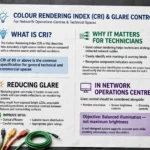
The quality of light a linear system delivers is characterised by its colour temperature, its colour rendering, and its glare control. Colour temperature sets whether the light is warm or neutral, with neutral 4000K typical for offices and warm 3000K for hospitality. Colour rendering, expressed as CRI, determines how faithfully colours appear. Glare control, expressed as UGR, determines visual comfort, with a UGR below 19 required for office environments.
These characteristics determine how a space looks and feels under the lighting, and specifying them appropriately for each application is fundamental to a successful scheme. A procurement team aware of these characteristics can engage meaningfully with the specification and recognise quality in the products offered.
Energy Efficiency and Running Cost
A primary advantage of linear LED lighting is energy efficiency. Linear systems convert electricity into light far more efficiently than the fluorescent systems they replace, reducing the energy consumed and the cost incurred across the long operating hours of commercial buildings. In the UAE, where electricity is a significant operating cost, this efficiency delivers meaningful savings.
Efficiency also matters for compliance, with UAE green building regulations setting limits on lighting energy that only efficient LED systems can satisfy. Specifying efficient linear lighting addresses both the running cost and the regulatory dimensions of the building, a dual benefit that underpins the case for the technology.

Control and Dimming
Linear lights can be controlled and dimmed when specified with appropriate drivers, enabling energy management and flexibility. Control options range from simple dimming to full DALI addressability that integrates with the building management system. Controlled linear lighting can respond to daylight and occupancy, dimming or switching to consume only the energy genuinely needed.
For commercial buildings, this controllability supports both energy efficiency and the creation of appropriate lighting environments for different times and uses. Understanding that linear lighting can be controlled and dimmed helps project teams appreciate the flexibility the technology offers beyond simple illumination.
Where Linear Lights Are Used
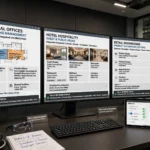
Linear lights are used across virtually every commercial environment. Offices use them for glare controlled ambient lighting. Commercial uses them for circulation and display. Hospitality uses them for atmospheric cove and feature lighting. Healthcare and education use them for reliable illumination across large areas. This breadth of application reflects the versatility of the linear format.
Recognising where and why linear lights are used helps project teams understand the role of the lighting in their own development and engage with decisions about where linear systems serve best. It is the application, as much as the technology, that determines a successful lighting outcome.
Quality and the Importance of Specification
Not all linear lights are equal, and the difference between quality and budget products is significant though not always visible on a specification sheet. Quality systems use better drivers, superior thermal design, tighter colour consistency, and more durable construction, delivering reliable performance across a long life. Budget products may disappoint through early failure, inconsistent colour, or poor light quality.
For procurement teams, this means that selecting linear lighting on price alone risks a poor outcome. Understanding that quality matters, and specifying products from recognised manufacturers with full documentation, protects the project from the disappointing installations that result from uninformed purchasing.
Compliance and Certification
Linear lights for UAE commercial projects must carry the certifications that compliance requires, DEWA approval for Dubai submissions, CE marking, and RoHS compliance. These certifications evidence that the products meet the safety and environmental standards UAE procurement demands and support the authority submissions the project requires.
For procurement teams, ensuring the specified products carry these certifications is an essential check, protecting against the compliance failures that uncertified products can cause. A knowledgeable supplier provides the certification documentation the project needs as a matter of course.
Working With a Knowledgeable Supplier
For project teams without deep lighting expertise, a knowledgeable supplier is a valuable partner, providing product recommendations, technical documentation, and specification support. A good supplier helps the team specify appropriate products, satisfy compliance, and avoid the pitfalls that catch the inexperienced. This support is particularly valuable for teams encountering linear lighting for the first time.
As an authorised OPPLE distributor, Tricircle provides this support to project teams across the UAE, helping developers, procurement managers, and contractors specify and source linear lighting with confidence regardless of their prior experience with the technology.
Common Questions About Linear Lights
Project teams new to linear lighting often raise similar questions. Can linear lights be dimmed? Yes, with appropriate drivers and controls. Do they last longer than fluorescent? Substantially, typically many times longer. Are they more efficient? Considerably, reducing energy and cost. Can they be repaired? Quality systems with replaceable drivers can, extending their serviceable life. Addressing these questions builds the confidence to engage with the specification.
Understanding the answers to these common questions equips a project team to participate meaningfully in lighting decisions and to recognise quality and value in the products offered, rather than relying entirely on others to judge.
Linear Lights and Building Value
The lighting installation contributes to the value of a commercial building in ways that are easy to overlook. Efficient, low maintenance, well documented lighting reduces operating cost and supports the marketability of the building to tenants and purchasers. Quality linear lighting that presents the building well enhances its appeal, while a building facing imminent lighting replacement carries a hidden liability.
For developers and owners, recognising that the lighting installation is a component of building value, not merely a utility, supports the case for quality specification. The lighting is part of what makes a building attractive, efficient, and valuable across its life.
Getting Started With Linear Specification
For a project team beginning to specify linear lighting, the starting point is to understand the requirements of each space, the function, the illuminance and comfort needs, the design intent, and the compliance obligations. With these understood, appropriate linear systems can be selected, with the support of a knowledgeable supplier where the team lacks deep lighting expertise.
This structured approach, understanding requirements then matching products, replaces guesswork with method and produces lighting that serves each space appropriately. It is the foundation of a successful linear specification, accessible even to teams without specialist lighting backgrounds.
Speak to Tricircle About Your Project
If your project team is specifying linear lighting and would value knowledgeable support, our team can help. We provide product recommendations, technical and compliance documentation, and project pricing, supplying certified OPPLE linear systems in project quantities across the UAE.
To discuss your linear lighting requirements, contact our team at aysha@tricirclegroup.ae or call +971 50 578 1325. We support project teams across Dubai, Sharjah, Abu Dhabi, and the wider Emirates with the products and guidance that confident specification requires.