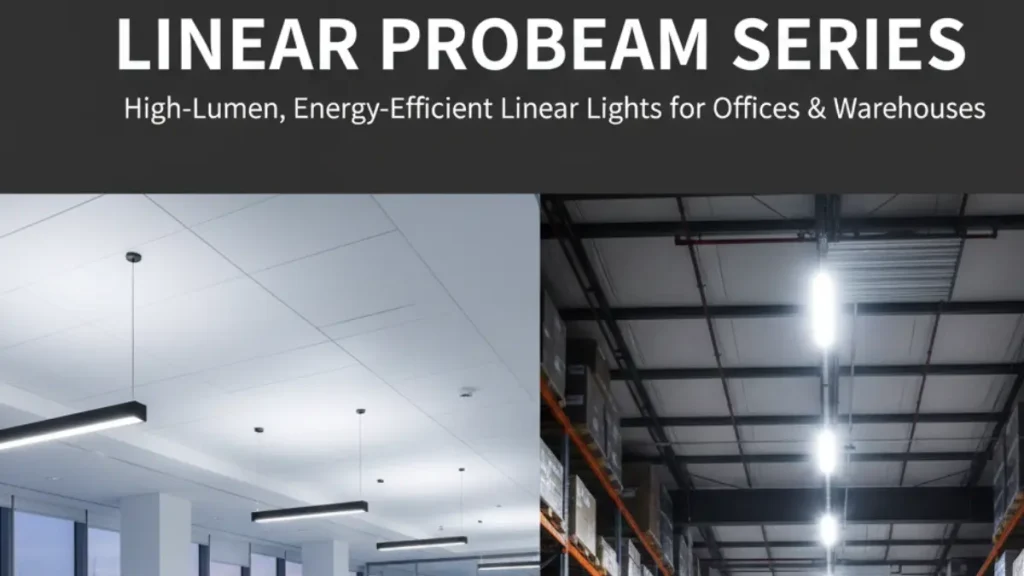
Lighting the Largest Commercial and Industrial Spaces
The largest spaces in the UAE built environment, warehouses, factories, logistics hubs, and large format commercial, present lighting challenges that ordinary commercial fittings cannot meet. These spaces demand high lumen output to reach the floor from elevated mounting heights, robust construction to endure industrial conditions, and the efficiency to keep the energy cost of lighting vast areas under control. High lumen LED linear systems are engineered precisely for these demands.
This guide examines high lumen linear lighting for the industrial and large commercial spaces that underpin the UAE economy. It is written for the developers, facility operators, and MEP consultants who specify lighting for warehouses across Jebel Ali, factories in the industrial zones, and the large format spaces where ordinary fittings fall short.
The Demands of High Bay Environments
Industrial and warehouse environments often mount lighting at heights of six metres or more, and at these heights ordinary fittings cannot deliver adequate illumination to the floor. High lumen linear systems produce the intense output needed to reach the working plane from elevated positions, maintaining the illuminance that safe, productive industrial operation requires across large floor areas.
Specifying lighting for high bay environments requires fixtures with the output and the optical control to deliver light efficiently to the floor from height. High lumen linear systems with appropriate distribution achieve this, illuminating warehouse aisles and factory floors uniformly and efficiently, complementing the dedicated industrial LED lighting for warehouse facilities that these environments require.

Efficiency Across Vast Floor Areas
The scale of industrial and large commercial spaces makes the efficiency of their lighting a major operating cost consideration. Lighting a vast warehouse or factory floor for long operating hours consumes substantial energy, and the efficiency of the fixtures directly determines the cost. High lumen linear systems achieving high efficacy deliver the required illumination at the lowest energy cost, a significant economic factor across large facilities.
For industrial operators, the efficiency of high lumen linear lighting translates into meaningful savings across the operating life of the facility. Combined with controls that adjust the lighting to occupancy and daylight, efficient high lumen systems keep the energy cost of lighting large spaces under control while delivering the illumination that operations require.
Durability for Industrial Conditions
Industrial environments are demanding, with dust, vibration, temperature extremes, and sometimes chemical exposure testing the fixtures installed in them. High lumen linear systems for industrial use must be robustly constructed and appropriately rated, with sealed construction excluding dust and moisture and durable materials withstanding the conditions. Fixtures not built for industrial use fail prematurely in these environments.
Specifying industrial fixtures with appropriate ingress protection and robust construction ensures they endure the conditions of warehouses, factories, and industrial facilities. The durability of industrial lighting is essential to its reliability, and to avoiding the disruption and cost of failures in operating industrial facilities where lighting failure interrupts production and compromises safety.

Illumination for Safety and Productivity
In industrial environments, lighting is a safety and productivity essential. Adequate, uniform illumination enables workers to perform tasks safely and accurately, identify hazards, and move safely through the facility. Poor lighting, with inadequate levels, glare, or shadows, compromises both safety and productivity, contributing to accidents and errors. High lumen linear lighting delivers the illumination that safe, productive industrial operation requires.
Specifying industrial lighting to deliver appropriate illuminance levels and uniformity across the working areas supports both the safety and the productivity of the facility. The lighting is not merely a utility but a contributor to the safe, efficient operation of the industrial space, and specifying it well delivers real operational benefit.
Logistics and Distribution Facilities
Logistics and distribution facilities, central to the UAE role as a regional trade hub, depend on quality lighting across their vast spaces. High racking, narrow aisles, and continuous operation demand lighting that illuminates the full height of storage and the floor of the aisles, supporting the safe, efficient movement of goods. High lumen linear systems deliver this illumination across the demanding environment of the distribution centre.
Specifying lighting for logistics facilities addresses the particular demands of high racking and continuous operation, with fixtures that illuminate the storage and circulation effectively and endure the intensive use. Quality high lumen lighting supports the efficient operation on which logistics facilities depend, illuminating the space that keeps goods moving through the supply chain.

Manufacturing and Production Environments
Manufacturing and production facilities require lighting that supports precise, safe work across the production floor. Assembly areas, machine stations, and quality control all depend on adequate, glare free illumination that enables accurate work and inspection. High lumen linear systems deliver the consistent illumination that manufacturing requires, supporting the quality and safety of production across the facility.
Specifying lighting for manufacturing addresses the requirements of the production processes, with appropriate illuminance for the tasks and quality control. Quality lighting supports the precision and safety that manufacturing demands, contributing to the quality of the products and the safety of the workers across the production environment.
Emergency Lighting in Industrial Facilities
Industrial facilities require emergency lighting to ensure safe evacuation in the event of power failure, and the scale of these spaces makes adequate emergency provision essential. Emergency fixtures and battery backup maintain illumination along escape routes and across critical areas when the mains fails, guiding workers safely out of the facility. Specifying appropriate emergency provision satisfies safety requirements and protects the workforce.
Coordinating emergency lighting across a large industrial facility, identifying the escape routes and critical areas requiring maintained illumination, ensures the facility meets its safety obligations. Quality emergency systems with reliable batteries deliver the maintained illumination that safe evacuation requires across the demanding environment of the industrial facility.
Mounting and Installation at Height
Installing lighting at the heights of industrial environments presents practical challenges, requiring appropriate mounting systems and safe installation methods. Suspended, surface, and trunking mounted systems suit different industrial situations, and the installation must be secure and maintainable despite the height. Planning the mounting and installation ensures the lighting is securely installed and can be maintained safely.
Specifying lighting with appropriate mounting systems for the industrial environment, and planning the installation and future maintenance, ensures the lighting is installed safely and remains serviceable. The practical aspects of mounting and installing lighting at industrial heights deserve attention at specification stage, avoiding difficulties during installation and maintenance.
Reducing the Maintenance Burden
Maintaining lighting in industrial facilities, particularly at height, is costly and disruptive, making the longevity and reliability of the fixtures especially valuable. Long life LED systems that operate reliably for years minimise the maintenance interventions that industrial lighting requires, reducing both the cost and the disruption to operations. Quality fixtures that endure are a significant economic advantage in industrial facilities.
Specifying durable, long life lighting reduces the maintenance burden across the industrial facility, a real benefit given the cost and difficulty of maintaining lighting at height in operating facilities. The reliability of quality industrial lighting, delivering years of service without intervention, rewards the specification of quality fixtures designed for the demanding industrial environment.
Industrial Lighting Supply From Tricircle
Delivering high lumen lighting across industrial and large commercial facilities requires fixtures engineered for the demands of these environments and a supplier who understands them. As an authorised OPPLE distributor, Tricircle supplies high lumen LED linear and industrial lighting validated for UAE conditions across warehouses, factories, and large commercial spaces.
To discuss lighting for an industrial or large commercial facility in the UAE, contact our team at aysha@tricirclegroup.ae or call +971 50 578 1325. We supply high lumen industrial lighting in project quantities across Dubai, Sharjah, Abu Dhabi, and the wider Emirates.
Specifying for Cold Storage and Special Environments
Some industrial environments present special challenges that standard fixtures cannot meet. Cold storage facilities require fixtures rated for low temperatures, food processing demands hygienic, washable fixtures, and hazardous environments may require explosion protected fittings. Specifying fixtures appropriate to these special environments is essential to safe, reliable performance where standard industrial fixtures would fail or pose a risk.
Understanding the special requirements of these environments, and specifying fixtures rated and certified for them, ensures the lighting performs safely and reliably. For facilities with cold storage, food processing, or hazardous areas, this specialist specification is essential, and a knowledgeable supplier advises on the appropriate fixtures for each special environment.
Lighting Design and Lux Calculations
Specifying industrial lighting effectively requires lighting design and lux calculations that verify the proposed scheme delivers the required illuminance across the space. These calculations model the lighting, confirming the levels, uniformity, and coverage before installation, and demonstrating compliance with the illuminance standards the facility requires. This design work ensures the installed lighting performs as needed.
A supplier providing photometric data and supporting lighting design enables the accurate calculation that effective industrial lighting requires. Specifying fixtures supported by complete photometric data, and verifying the design through calculation, ensures the industrial lighting delivers the illumination the facility needs across its large and demanding spaces.
The Total Cost of Industrial Lighting
Evaluating industrial lighting on total cost of ownership reveals the value of quality, efficient, durable fixtures. The energy consumed lighting vast industrial spaces, and the cost of maintaining lighting at height, dominate the lifecycle cost, far outweighing the initial fixture price. Efficient, long life fixtures that minimise energy and maintenance deliver the lowest total cost across the life of the facility.
For industrial operators, this total cost perspective justifies the specification of quality, efficient lighting. The fixtures that cost more initially deliver lower energy and maintenance costs across the operating life, proving the more economical choice for the large spaces and long hours of industrial operation, where the lifecycle costs are substantial.
Control and Energy Management Industrially
Intelligent control delivers significant energy savings in industrial lighting. Occupancy sensors that dim or switch lighting in unoccupied areas, daylight sensors that reduce output where natural light is available, and zoning that lights only the areas in use, all reduce the energy consumed across large industrial spaces. For facilities lighting vast areas, these controls deliver substantial savings.
Specifying high lumen linear lighting with intelligent control combines the illumination that operations require with the efficiency that operating cost demands. The lighting responds to actual conditions and use, consuming energy only where and when it is needed, a valuable economy across the large spaces and long hours of industrial operation.