Lighting plays a critical role in how a space looks, feels, and functions. Over the years, lighting technology has evolved significantly, moving from basic incandescent bulbs to energy-efficient LED solutions. Among these innovations, LED strip lights have gained massive popularity due to their flexibility, efficiency, and modern appeal.
In this detailed comparison blog, we explore LED strip lights versus other common lighting options, analyze their performance, design impact, cost efficiency, and best-use cases, and explain why LED strip lights are becoming the preferred choice for modern residential and commercial spaces.
Understanding LED Strip Lights
LED strip lights are slim, flexible lighting solutions made of multiple small LEDs mounted on a circuit board. They provide continuous, even illumination and can be installed in places where traditional lighting fixtures are impractical.
Unlike standard bulbs or tube lights, LED strip lights can be hidden, curved, extended, and customized, making them suitable for both decorative and functional lighting applications.
Traditional Lighting Options Explained

Before comparing, it’s important to understand the most common traditional lighting types still in use today:
Incandescent Bulbs
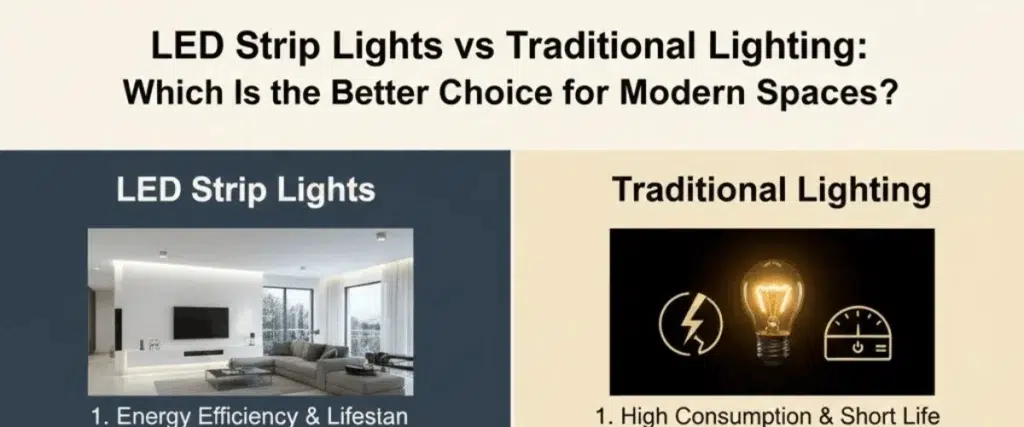
- High energy consumption
- Short lifespan
- Produces heat
- Limited design flexibility
Fluorescent and Tube Lights
- Moderate energy efficiency
- Bulky appearance
- Limited color temperature options
- Often unsuitable for modern interiors
CFL Lights
- Better efficiency than incandescent bulbs
- Contains mercury
- Limited brightness control
While these options still exist, they are increasingly being replaced by LED-based lighting systems.
LED Strip Lights vs Bulb Lighting
Design and Appearance
Traditional bulbs provide point lighting, meaning light comes from a single visible source. This often creates harsh shadows and uneven brightness.
LED strip lights provide linear illumination, producing smooth and uniform light. They can be concealed within ceilings, cabinets, or furniture, creating a clean and modern look.
Installation Flexibility
Bulbs require fixed fixtures and sockets. LED strip lights can be installed almost anywhere, including corners, curves, and narrow spaces.
Energy Consumption
LED strip lights consume significantly less power compared to incandescent bulbs, making them a more energy-efficient choice.
Winner: LED strip lights
LED Strip Lights vs Tube Lights

Aesthetic Value
Tube lights are functional but visually outdated in modern interiors. They are usually visible and bulky.
LED strip lights offer discreet installation and enhance architectural elements rather than drawing attention to the fixture itself.
Light Distribution
Tube lights provide direct overhead lighting, often causing glare. LED strip lights offer indirect lighting, which is softer on the eyes and more comfortable.
Maintenance
Tube lights require frequent replacement and ballast maintenance. LED strip lights have a longer lifespan and lower maintenance requirements.
Winner: LED strip lights
LED Strip Lights vs Panel Lights
Application Areas
Panel lights are ideal for offices and commercial ceilings but lack flexibility in placement.
LED strip lights can be used in ceilings, walls, furniture, staircases, shelves, and decorative features.
Customization
Panel lights offer limited customization. LED strip lights allow control over brightness, color temperature, and even color-changing effects.
Winner: LED strip lights for versatility
LED Strip Lights vs Spotlights
Light Coverage
Spotlights focus on a specific area, creating strong highlights and shadows.
LED strip lights provide continuous illumination, making them better for ambient and accent lighting.
Visual Comfort
Spotlights can cause glare if not positioned correctly. LED strip lights create softer lighting that enhances comfort.
Winner: Depends on use, but LED strip lights excel in ambient lighting
Energy Efficiency Comparison
One of the biggest advantages of LED strip lights over traditional lighting is energy efficiency.
- Uses up to 80% less energy than incandescent bulbs
- Lower electricity bills
- Minimal heat generation
- Eco-friendly lighting solution
Over time, the cost savings from reduced energy consumption make LED strip lights a smart investment.
Lifespan and Durability
Traditional bulbs often last a few thousand hours. LED strip lights can last up to 50,000 hours or more when properly installed.
This long lifespan reduces:
- Replacement costs
- Maintenance effort
- Downtime in commercial spaces
Lighting Control and Smart Integration
Traditional lighting offers limited control—mostly on or off.
LED strip lights can be integrated with:
- Dimmers
- Remote controls
- Smart home systems
- Mobile apps
This allows users to adjust brightness, mood, and timing easily.
Where LED Strip Lights Perform Better Than Other Lights
LED strip lights outperform traditional lighting in several applications:
Kitchens
- Under-cabinet lighting
- Countertop illumination
Living Rooms
- Cove lighting
- Feature walls
- TV units
Bedrooms
- Headboard lighting
- Soft ambient illumination
Commercial Spaces
- Display shelves
- Reception areas
- Retail showcases
Modern Lighting Trends and Design Preferences
Modern interiors prioritize minimalism, clean lines, and indirect lighting. This shift has increased demand for modern LED strip lights, which blend seamlessly into contemporary designs while providing efficient illumination.
Architects and interior designers now prefer lighting that enhances space without dominating it visually.
Indoor Lighting Comparison
When comparing indoor lighting options, LED strip lights offer unmatched flexibility. LED indoor lights such as bulbs and panels still serve basic needs, but LED strip lights provide layered lighting that improves depth, comfort, and aesthetics.
Layered lighting is essential in modern interior design, and LED strip lights play a central role in achieving it.
Cost Comparison Over Time
While the initial cost of LED strip lights may be higher than basic bulbs, the long-term cost is significantly lower due to:
- Reduced electricity bills
- Longer lifespan
- Minimal maintenance
Over several years, LED strip lights are more economical than traditional lighting options.
Safety and Heat Management
Traditional lights generate heat, which can be a safety concern, especially in enclosed spaces.
LED strip lights operate at low temperatures, making them safer for:
- Furniture installations
- Wooden cabinets
- Decorative features
Choosing the Right Lighting for Your Space
When deciding between LED strip lights and traditional lighting, consider:
- Purpose of lighting
- Design style
- Energy efficiency
- Long-term cost
- Installation flexibility
In most modern residential and commercial spaces, LED strip lights offer superior performance and aesthetics.
Why LED Strip Lights Are the Future of Lighting
The shift toward LED strip lights is not a trend—it is a long-term change driven by technology, efficiency, and design needs. As smart homes and modern interiors become standard, lighting solutions must adapt, and LED strip lights meet these demands perfectly.