The Versatility of Strip Lighting in Commercial Design
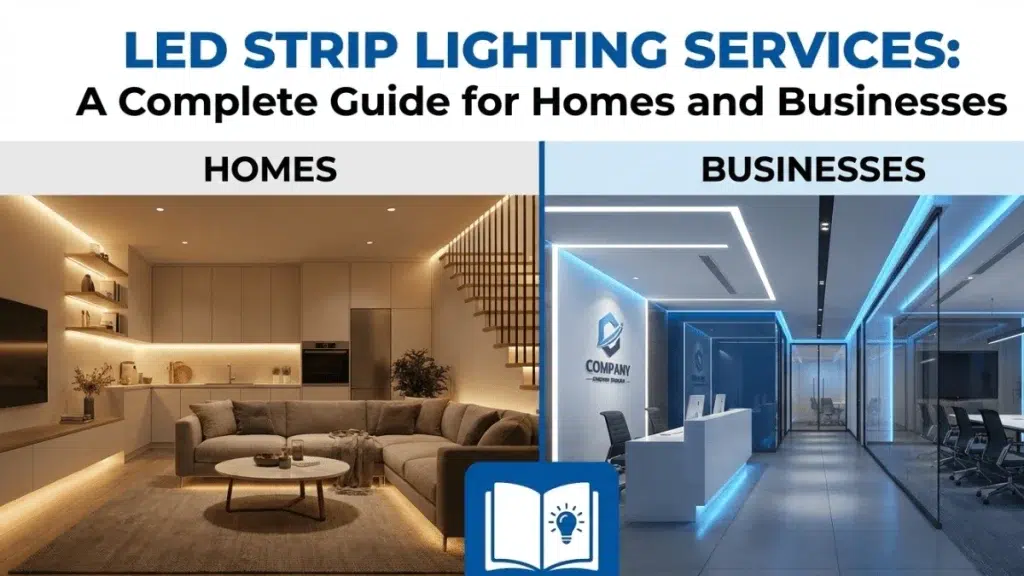
LED strip lighting is among the most versatile tools available to commercial and hospitality designers across the UAE. Flexible, compact, and energy efficient, strip systems create the architectural cove lighting, display illumination, and feature effects that define contemporary commercial interiors. This guide examines the applications and specification of strip lighting for the developers, fit out contractors, and designers who deploy it across projects in the Emirates.
Unlike discrete fittings, strip systems can be installed in continuous runs, around curves, and in confined spaces, integrating lighting into architecture in ways no other format allows. This flexibility, combined with quality and efficiency, has made strip lighting an essential element of professional commercial lighting design.
Architectural Cove and Indirect Lighting
One of the most valuable applications of strip lighting is architectural cove and indirect illumination. Installed in ceiling perimeters, reveals, and recesses, strip systems wash surfaces with soft, indirect light that creates ambience and reveals architectural form. This indirect lighting is fundamental to the layered, atmospheric environments that premium commercial and hospitality interiors require.
Cove lighting with quality strip systems creates the impression of a glowing architectural edge, lifting the perceived quality of a space without visible fittings. It is a technique used extensively across hotel lobbies, premium offices, and commercial environments, and it depends on quality strip products and careful installation to achieve its effect.
Display and Commercial Illumination
In commercial environments, strip lighting illuminates merchandise, display cases, and shelving with the high colour rendering that presents products attractively. The compact form of strip systems allows them to be installed close to displays, delivering light precisely where it is needed without bulky fittings. For commercial developers and brands, this display lighting directly influences how products are perceived and the impression the store creates.
Specifying strip lighting for commercial display prioritises colour rendering and consistent output, ensuring merchandise appears at its best. The flexibility of strip systems allows commercial displays to be illuminated in ways that discrete fittings cannot match, supporting the visual merchandising on which commercial success depends.
Hospitality Atmosphere and Feature Lighting
Hospitality projects use strip lighting extensively to create atmosphere. Warm cove lighting in lobbies and restaurants, illuminated bar backs and shelving, concealed lighting in feature ceilings, and decorative effects across the property all rely on strip systems. The warmth and flexibility of quality strip lighting create the inviting environments that drive guest satisfaction and the commercial success of hospitality developments.
Specifying strip lighting for hospitality emphasises warm colour temperatures, high colour rendering, and quality dimming to create and transform atmosphere across the day. This atmospheric capability makes strip lighting indispensable to hospitality interior design across UAE hotels and restaurants, complementing our LED strip lights for hospitality interiors.

Choosing the Right Strip Density
Strip lighting is available in different LED densities, measured in diodes per metre, and choosing the right density is fundamental to a successful installation. Standard density strips suit general applications, while high density strips deliver uniform, dot free illumination preferred where the strip is viewed closely or through a diffuser. For premium commercial and hospitality applications, high density strips deliver the seamless line of light that quality demands.
Selecting density to suit the application and viewing distance ensures the installation delivers the intended visual quality. A low density strip in a close viewed application reveals individual diodes and disappoints, while high density strips deliver the continuous glow that professional installations require.
Voltage, Drivers and Run Length
Strip lighting operates at low voltage, typically 12 or 24 volts, and the voltage affects the practical run length. Higher voltage 24 volt systems support longer continuous runs with less voltage drop, making them preferable for commercial installations with extended runs. The driver must be sized to the connected load with appropriate headroom and positioned for ventilation and access.
Correct attention to voltage, driver sizing, and run length is essential to reliable strip lighting. Undersized drivers and excessive run length cause dim ends and premature failure, the most common faults in poorly specified strip installations. Addressing these factors at specification stage ensures consistent, reliable performance across the installation.
Ingress Protection for the Environment
Strip lighting must carry the appropriate ingress protection for its environment. Indoor dry applications suit standard IP20 strips. Splash prone areas such as kitchens and bathrooms require IP65 rated strips. Submerged applications such as pools and water features require fully sealed IP68 strips. Matching the IP rating to the environment is essential to reliable, safe performance.
Specifying inadequately protected strips for demanding environments leads to early failure, while over specifying adds unnecessary cost. Matching the protection to the environment, IP20 indoors, IP65 for splash zones, IP68 for submersion, ensures durable performance appropriate to each application across a commercial project.
Control and Dynamic Strip Lighting
Strip lighting can be controlled and made dynamic when specified with appropriate systems. Simple dimming adjusts the level, while addressable RGBW systems enable colour change and dynamic effects. For commercial and hospitality environments, controlled strip lighting allows the atmosphere to be transformed across the day and for different events, adding flexibility and value to the installation.
Dynamic strip lighting is particularly valued in hospitality and commercial, where the ability to change the lighting to suit different times, seasons, and events supports the commercial objectives of the space. Specifying controllable strip systems extends their capability from static illumination to a flexible, programmable design element.
Installation Quality and Reliability
The reliability of a strip installation depends heavily on installation quality. Secure, well protected connections, correct driver sizing and placement, adequate thermal management, and appropriate protection for the environment all determine whether the installation performs reliably across its life. Quality products installed correctly deliver years of reliable service, while poor installation undermines even good products.
For commercial projects, specifying quality strip systems and ensuring competent installation protects against the failures that compromise strip lighting. The combination of quality products and professional installation delivers the reliable, refined strip lighting that commercial and hospitality projects require.
Sourcing Strip Lighting With Tricircle
Delivering strip lighting across a commercial project requires complete systems, strips, channels, diffusers, drivers, and controls, supplied with consistent quality and technical support. As an authorised OPPLE distributor, Tricircle supplies professional strip lighting systems across the UAE, complete with the components and guidance that professional installations require.
To discuss strip lighting for a commercial or hospitality project, contact our team at aysha@tricirclegroup.ae or call +971 50 578 1325. We supply complete strip lighting systems in project quantities across Dubai, Sharjah, Abu Dhabi, and the wider UAE.
Strip Lighting in Office and Workplace Environments
Beyond hospitality and commercial, strip lighting serves the modern workplace. Under cabinet lighting in office kitchens and pantries, reception feature wall illumination, and indirect ceiling cove lighting all use strip systems to add quality and warmth to corporate environments. Used indirectly, strip lighting softens the workplace and reduces the harshness that direct lighting alone can create.
For office developers and fit out contractors, strip lighting offers a means of adding design quality and warmth to workplace environments cost effectively. It complements the ambient panel and linear lighting with the accent and feature effects that lift a workplace above the purely functional.
Energy Efficiency of Strip Systems
Quality LED strip lighting is highly energy efficient, consuming little power for the light and effect it delivers. Across the long operating hours of commercial and hospitality environments, this efficiency reduces running cost and supports the energy performance objectives of the building. Combined with intelligent control that dims or switches the lighting to suit conditions, strip systems deliver their architectural effect economically.
For commercial operators, the efficiency of strip lighting means the architectural and atmospheric benefits it delivers come at modest energy cost. This combination of effect and efficiency is central to the value strip lighting offers across commercial and hospitality projects.
Maintenance and Longevity Considerations
Quality strip systems, properly installed with adequate thermal management, deliver long, reliable service with minimal maintenance. The aluminium channel that manages heat also protects the strip, extending its life. Where maintenance is eventually required, accessible installation and quality connections simplify it. Specifying quality systems and installing them well minimises the maintenance burden across the building life.
For facility managers, strip lighting installed to a professional standard presents little ongoing concern, delivering its effect reliably for years. Poor quality strips or poor installation, by contrast, create recurring maintenance problems, underlining the value of quality specification and professional installation.
Strip Lighting Within the Wider Scheme
Strip lighting rarely works alone; it forms part of a layered scheme combining ambient, task, accent, and feature lighting. Strip systems typically deliver the accent and feature layers, complementing the ambient illumination of panels and linear systems and the task lighting of downlights. Understanding this layered role ensures strip lighting is deployed where it serves best within the complete scheme.
A well designed commercial lighting scheme uses each technology for what it does best, with strip lighting providing the architectural detail and atmosphere that complete the environment. Deployed thoughtfully within the wider scheme, strip lighting delivers the finishing quality that distinguishes a considered interior from a merely functional one.
Aluminium Channels and Thermal Management
Professional strip installations use aluminium channels, which provide thermal management, optical quality, and mechanical protection. The channel conducts heat away from the strip, extending its life in UAE conditions, while the diffuser eliminates the dot effect of individual diodes for a uniform line of light. The channel also protects the strip and provides a clean, finished appearance.
For commercial and hospitality installations, aluminium channels are essential to both the performance and the appearance of strip lighting. Strips installed without channels run hotter, degrade faster, and present a less refined appearance, making the channel a necessary element of any professional installation.