Three Technologies, One Decision
Three LED technologies dominate commercial ceiling lighting in the UAE, linear systems, panels, and tube retrofits, and choosing between them is a decision every commercial project must make. Each has distinct characteristics, costs, and applications, and the right choice depends on the ceiling type, design intent, budget, and performance requirements of the specific project. This guide helps developers, MEP consultants, and contractors make the decision with a clear understanding of what each technology offers.
Rather than declaring one technology universally superior, it examines the strengths and appropriate applications of each, recognising that the best commercial projects often combine them, deploying each where it serves best across a single development.
LED Panels: The Commercial Standard
LED panels are the default for standard commercial grid ceilings across UAE offices, schools, hospitals, and commercial back of house areas. They integrate directly with the modular suspended ceiling grid, require no adaptation, and deliver uniform, glare controlled illumination at a cost effective price. For the large majority of standard commercial ceiling area, the panel is the rational choice, combining efficiency, comfort, and value.
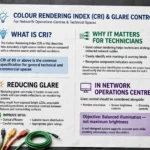
Panels with a UGR below 19 are the standard for office environments, while high CRI variants serve commercial and healthcare. Their ease of integration and cost effectiveness make them the workhorse of commercial lighting, and they are explored in depth among our LED panel lights for commercial offices. The panel is the technology to specify where standard grid ceilings meet standard commercial requirements.
LED Linear: The Premium Choice
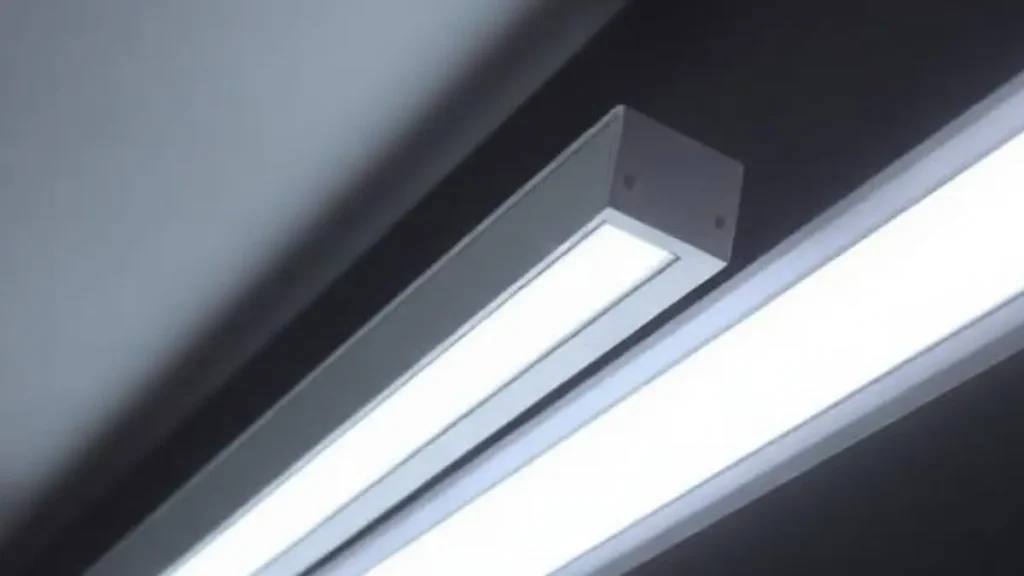
LED linear systems are specified where lighting quality and architectural design are priorities alongside efficiency. Continuous runs create the clean, contemporary ceiling planes that distinguish premium commercial and hospitality environments, and direct indirect distribution delivers the glare free comfort that premium offices require. Linear systems are the choice for Grade A offices, hotel public areas, and any environment where the lighting contributes to the architectural quality of the space.
Linear systems carry a higher cost and greater installation complexity than panels, justified where the design quality matters. They also offer superior flexibility for defining circulation and emphasising architectural form. For premium and public facing areas, linear systems elevate a development above the commodity standard, and they form a distinct cluster of considerations for the design team.
LED Tubes: The Retrofit Solution
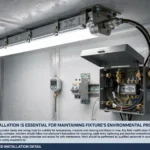
LED tube replacements serve commercial retrofit projects where existing fluorescent fittings and ceiling grids are retained. Direct LED tube replacements deliver substantial energy savings while utilising the existing fitting infrastructure, making them the economical choice for upgrading existing buildings without full refit. Ballast bypass installation, wiring the tube directly to the mains and eliminating the fluorescent ballast, is preferred for commercial retrofit because it removes the ballast as a future failure point.
For large scale retrofit across offices, schools, and warehouses, LED tubes offer the best combination of performance improvement and installation economy. They are the technology to specify where the objective is to upgrade an existing fluorescent installation cost effectively rather than to deliver a new architectural scheme.
Comparing Energy and Efficiency
All three technologies deliver substantial energy savings against the legacy systems they replace, but their efficiency varies with quality and design. Quality panels and linear systems achieve high system efficacy through integrated design, while tube retrofits deliver efficiency within the constraints of the existing fitting. For new build, panels and linear systems generally offer the highest efficiency; for retrofit, tubes deliver meaningful savings without the cost of refitting.
In every case, the efficiency of the chosen technology must satisfy the lighting power density limits of UAE green building regulations for new build, or deliver the operating cost savings that justify a retrofit. Comparing system efficacy across the options, rather than headline figures, informs the energy dimension of the decision.

Comparing Cost and Value
Cost considerations differ across the technologies. Tubes offer the lowest cost route to upgrading existing installations. Panels offer cost effective quality for new standard ceilings. Linear systems carry a premium justified by design quality in public facing areas. The right choice balances the budget against the performance and design requirements of each space, and the best projects allocate each technology where its cost is justified by its contribution.
Evaluating value on total cost of ownership, including energy, maintenance, and service life, rather than initial price alone, reveals the true economics of each option. A technology that costs more initially may prove the more economical choice across the building life through lower energy and maintenance costs.
Matching Technology to Ceiling Type
The ceiling construction strongly influences the appropriate technology. Modular grid ceilings suit panels, which drop directly into the grid. Plasterboard and feature ceilings suit recessed linear systems and discrete fittings. Existing fluorescent installations suit tube retrofits. Exposed structure suits surface mounted linear and tube systems. Matching the technology to the ceiling type avoids costly adaptation and delivers a clean, integrated result.
Many commercial developments combine ceiling types across a single building, and the lighting specification follows suit, deploying panels in grid ceilings, linear systems in feature areas, and tubes in retained installations. A coordinated specification maintains design consistency while deploying each technology where the ceiling construction makes it appropriate.
Combining Technologies in One Development
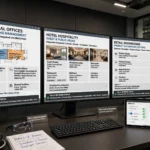
The most effective commercial lighting specifications rarely rely on a single technology. A mixed use development might specify linear systems in the hotel lobby and Grade A office floors, panels in standard office and back of house areas, and tubes in a retained car park installation. This considered combination deploys the strengths of each technology where they serve best, optimising both performance and cost across the development.
Achieving this requires understanding the strengths of each technology and the requirements of each space, the kind of specification thinking that distinguishes a well lit development from one lit by a single default choice. A knowledgeable supplier supports this thinking with products and advice across all three technologies.
Making the Decision With Confidence
Choosing between linear, panel, and tube technologies is ultimately a matter of matching the technology to the requirements, the ceiling type, the design intent, the budget, and the performance and compliance criteria of each space. There is no universally correct answer, only the right choice for each application within a project. Understanding what each technology offers allows the decision to be made with confidence rather than habit.
As an authorised OPPLE distributor supplying all three technologies, Tricircle helps developers and consultants make this decision and deploy each technology effectively across their developments. Our team provides comparative product recommendations and the documentation each option requires for UAE commercial projects.
Retrofit Versus New Build Considerations
The choice between technologies is shaped by whether the project is new build or retrofit. New build offers a clean slate, allowing the optimal technology to be specified for each space without the constraints of existing infrastructure. Retrofit must work within the existing fittings and ceilings, which often favours tube replacements that utilise the existing infrastructure cost effectively. Recognising this distinction guides the decision toward the appropriate technology for the project context.
For retrofit projects seeking to upgrade beyond what tube replacements offer, replacing existing fittings with new panels or linear systems delivers greater improvement at greater cost. The decision balances the improvement sought against the budget and disruption acceptable, a calculation specific to each retrofit project.
Maintenance and Long Term Ownership
The maintenance characteristics of the three technologies differ in ways that affect long term ownership. All three, being LED, offer long life and low maintenance compared to the fluorescent systems they replace. Among them, the integration and quality of the product determine the maintenance experience, with quality panels and linear systems offering accessible, replaceable drivers that extend the serviceable life of the installation.
For facility managers, specifying products designed for serviceability, where the driver can be replaced without replacing the whole luminaire, reduces the long term cost of ownership. This consideration, often overlooked at specification stage, becomes significant across the operating life of a commercial building.
Aligning the Decision With Building Strategy
The lighting technology decision should align with the broader strategy for the building. A development positioning itself as premium specifies linear systems in its public areas to support that positioning. A development prioritising cost efficiency specifies panels and tubes to deliver acceptable quality economically. A retrofit prioritising rapid payback specifies tubes for their low cost and quick return. Aligning the lighting decision with the building strategy ensures it supports rather than contradicts the wider objectives.
This alignment is the mark of considered specification, lighting chosen to serve the strategy of the building rather than selected by default. It is where the lighting decision connects to the commercial and architectural ambitions of the development.
A Framework for the Decision
Bringing the considerations together, the technology decision follows a clear framework. Identify the ceiling type and design intent of each space. Assess the performance and compliance requirements. Weigh the budget against the quality and design ambitions. Then deploy each technology where it serves best, panels for standard ceilings, linear for premium areas, tubes for retrofit, often combining them across a single development.
Applied consistently, this framework produces a lighting specification that serves each space appropriately while optimising performance and cost across the project. It replaces the habit of a single default choice with the discipline of matching technology to requirement, the foundation of a well lit commercial building.
Specify the Right System With Tricircle
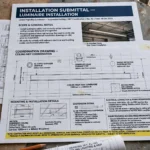
If you are weighing linear, panel, and tube options for a commercial project in the UAE, our team can help you match the technology to each application and supply certified OPPLE products across all three categories in project quantities. We support developers, consultants, and contractors with the products, documentation, and advice that informed specification requires.
To discuss the right lighting technology for your project, contact our team at aysha@tricirclegroup.ae or call +971 50 578 1325. We supply LED linear, panel, and tube systems across Dubai, Sharjah, Abu Dhabi, and the wider UAE.