Why LED Defines Commercial Lighting
LED lighting has become the foundation of commercial lighting across the UAE, and the reasons lie in the range of benefits it delivers. Energy efficiency, long life, light quality, environmental performance, and compliance combine to make LED the standard for commercial buildings. For developers, facility managers, and consultants, understanding these benefits supports informed specification and the realisation of the value that LED offers across commercial developments.
This guide examines the benefits of LED lighting for commercial buildings, exploring how each contributes to the performance, economy, and quality of the development, and why together they make LED the essential choice for commercial lighting across the Emirates.
Energy Cost Reduction
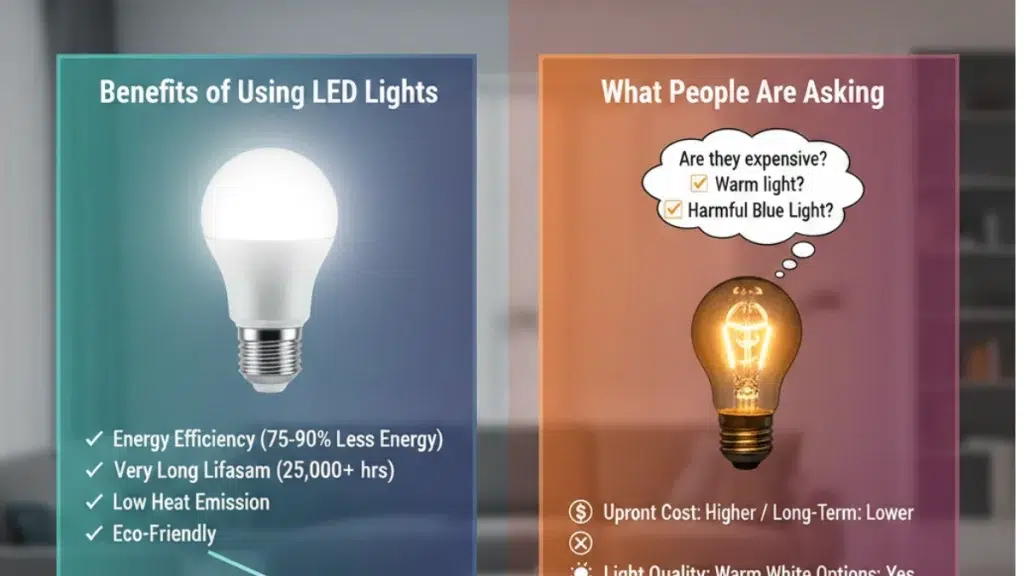
The energy efficiency of LED delivers the most immediate and quantifiable benefit, reducing the energy consumed and the cost incurred across the long operating hours of commercial buildings. LED consumes a fraction of the energy of the lighting it replaces, delivering substantial savings across large floor plates and long hours. For commercial operators, this energy saving improves the building economics directly.
In the UAE, where electricity is a significant cost, this energy reduction is particularly valuable, lowering service charges and improving net operating income. The energy benefit of LED, accumulating across the operating life, is among the strongest arguments for the technology and a major contributor to the value it delivers across commercial buildings.
Reduced Maintenance Burden
The long life of LED dramatically reduces the maintenance burden, eliminating the frequent replacement that the alternatives demanded. LED fixtures rated for tens of thousands of hours operate for years without intervention, reducing the maintenance cost and the disruption that replacement causes in occupied commercial buildings. For facility managers, this maintenance reduction is a significant practical and economic benefit.
The maintenance benefit of LED frees facility resources, reduces cost, and avoids the disruption that lighting replacement causes to building operations. Across a commercial building with many fittings, the reduction in maintenance frequency transforms the economics and practicality of lighting maintenance, a major benefit of the technology, complemented by long life LED panel lights for commercial buildings.
Superior Light Quality
Modern LED delivers superior light quality, with excellent colour rendering, instant output, flicker free operation, and full dimming capability. This quality supports the comfort of occupants and the presentation of the environment across commercial spaces. The light quality of LED, unmatched by the alternatives, suits the demanding requirements of offices, commercial, and hospitality across the UAE.
For commercial environments where light quality affects comfort, productivity, and presentation, the quality of LED delivers real benefit. The accurate colour rendering, comfortable glare control, and flexible dimming support the requirements of the space and the people within it, contributing to the quality of the commercial environment across the development.
Regulatory Compliance
LED enables compliance with the UAE regulations that govern commercial lighting. Green building regulations setting lighting power density limits, and energy efficiency requirements, are satisfied by efficient LED lighting. For developers, specifying LED addresses these regulatory requirements, ensuring the development satisfies the standards required for authority approval and occupancy across the Emirates.
The compliance benefit of LED, satisfying the regulatory requirements that the alternatives cannot meet, is essential for commercial development. Specifying LED ensures the lighting satisfies the energy and efficiency standards the regulations impose, supporting the smooth progress of the development through approval and occupancy.
Environmental and Sustainability Benefits
LED delivers environmental benefits that support the sustainability objectives of commercial development. The energy efficiency reduces the carbon footprint, the absence of mercury simplifies disposal, and the long life reduces waste. For developments pursuing sustainability certification and ESG objectives, the environmental benefits of LED contribute to the credentials and performance the development seeks.
The sustainability benefit of LED supports the environmental objectives that increasingly define premium commercial development. The reduced energy, carbon, and waste of LED contribute to the sustainability certification and ESG positioning that developments pursue, making the environmental performance of LED a valuable benefit alongside its economic advantages.
Reduced Cooling Load
The cool operation of LED reduces the cooling load it imposes, a significant benefit in the UAE climate. Converting most of its energy to light rather than heat, LED adds little to the cooling load, reducing the air conditioning energy required to remove the heat that less efficient lighting generates. In the cooling dominated UAE climate, this benefit compounds the energy saving of LED.
For commercial buildings in the UAE, the reduced cooling load that LED delivers, through its cool operation, adds to the energy benefit. The lighting that generates less heat requires less cooling to remove it, compounding the efficiency advantage in the climate where cooling dominates building energy use, a particular benefit of LED in the UAE.

Design Flexibility
LED offers design flexibility that the alternatives could not match, enabling the linear systems, strip lighting, and compact fittings that contemporary commercial design employs. This flexibility allows lighting to be integrated into the architecture and tailored to the design intent, supporting the design quality that distinguishes premium commercial developments. The design flexibility of LED is a benefit beyond its efficiency and economy.
For architects and designers, the design flexibility of LED enables the creative, integrated lighting that contemporary commercial design pursues. The compact, versatile, controllable nature of LED supports design possibilities that the alternatives could not, contributing the design flexibility that quality commercial and hospitality developments value.
Controllability and Smart Integration
LED integrates with control and smart building systems, enabling the dimming, occupancy control, daylight harvesting, and energy management that modern commercial buildings require. This controllability delivers energy savings and operational flexibility, and supports the smart building capability that premium tenants increasingly expect. The controllability of LED is a benefit central to the modern commercial building.
The integration of LED with control and smart building systems delivers the responsive, manageable lighting that efficient, sophisticated commercial buildings require. This controllability, enabling energy management and smart capability, is a key benefit of LED in the modern commercial building, supporting the efficient, data driven operation that developments pursue.
Reliability and Consistent Performance
Quality LED delivers reliable, consistent performance across its life, operating dependably without the failures and degradation that the alternatives suffered. This reliability ensures the lighting performs consistently, presenting the building well and avoiding the disruption that failures cause. For commercial buildings, the reliability of quality LED is a benefit that supports the consistent operation and appearance of the development.
The reliability of quality LED, delivering consistent performance across the building life, supports the dependable operation and appearance that commercial buildings require. This consistency, avoiding the failures and degradation that disrupt and detract, is a benefit that quality LED delivers across the operating life of the commercial development.
Asset Value and Marketability
The benefits of LED contribute to the value and marketability of the commercial building. Efficient, low maintenance, well documented lighting reduces operating cost and supports the appeal of the building to tenants and purchasers. A building with quality LED lighting presents well and operates economically, contributing to its value and its attractiveness in the market across the UAE.
For developers and asset managers, the contribution of LED to asset value and marketability is a benefit beyond the operating economics. The efficient, quality lighting supports the appeal and value of the building, contributing to its leasing and sale performance, making the lighting a genuine component of the value of the commercial development.
Realising the Benefits Through Quality
The benefits of LED are realised only through quality products properly specified; poor LED products poorly specified deliver disappointing results despite the merits of the technology. Selecting quality LED from recognised manufacturers, matched to the requirements of each space, delivers the energy, maintenance, quality, and other benefits that make LED valuable across the commercial building.
This dependence of the benefits on quality emphasises the importance of specifying LED well. The technology offers the benefits, but quality products properly specified deliver them; specifying on price alone risks a poor outcome that fails to realise the potential of LED across the commercial development.
The Comprehensive Case for LED
The benefits of LED, energy saving, reduced maintenance, light quality, compliance, sustainability, reduced cooling load, design flexibility, controllability, reliability, and asset value, combine to make a comprehensive case for the technology in commercial buildings. Together they deliver the performance, economy, and quality that commercial developments require, explaining the position of LED as the standard for commercial lighting.
For developers, consultants, and facility managers, these combined benefits confirm the value of LED and the importance of specifying it well. The technology delivers across every dimension that matters for commercial lighting, making it the essential choice for the commercial development across the UAE.
LED Lighting Supply From Tricircle
Realising the benefits of LED across a commercial development requires quality products and knowledgeable support. As an authorised OPPLE distributor, Tricircle supplies quality LED lighting across the UAE, supporting developers, consultants, and facility managers in realising the energy, maintenance, quality, and other benefits that LED delivers across their commercial buildings.
To discuss LED lighting for your commercial development, contact our team at aysha@tricirclegroup.ae or call +971 50 578 1325. We supply quality LED lighting in project quantities across Dubai, Sharjah, Abu Dhabi, and the wider Emirates.