Modern Universities Need Smarter and More Sustainable Lighting Solutions
Universities are no longer simply places for teaching; they are complex environments that operate almost around the clock. Lecture halls, classrooms, laboratories, libraries, administrative offices, sports facilities, auditoriums, cafeterias, student accommodation, parking areas, and outdoor walkways all depend on reliable lighting to support learning, safety, and daily operations. As educational institutions continue to expand across the UAE, many universities are replacing traditional fluorescent, halogen, and metal halide lighting with modern energy-efficient LED lighting systems that deliver better performance while significantly reducing operating costs.
This shift is driven by more than energy savings alone. Universities are looking for lighting solutions that improve student comfort, enhance learning environments, reduce maintenance requirements, support sustainability initiatives, and integrate seamlessly with smart building technologies. From Dubai and Abu Dhabi to Sharjah, Ajman, Ras Al Khaimah, and Al Ain, higher education institutions are investing in LED lighting because it provides long-term value across every part of the campus.
Whether upgrading an existing campus or designing a new educational facility, energy-efficient LED lighting has become an essential component of modern university infrastructure.
Rising Energy Costs Are Encouraging Universities to Upgrade Their Lighting Systems
Large university campuses consume significant amounts of electricity every day. Thousands of lighting fixtures operate continuously across classrooms, laboratories, corridors, libraries, lecture theatres, sports complexes, and outdoor spaces. Traditional lighting technologies consume considerably more power than modern LED systems, resulting in high utility bills and unnecessary energy waste.
Energy-efficient LED lighting typically consumes up to 50–70% less electricity than conventional fluorescent or metal halide fixtures while providing equal or better illumination. This reduction in electricity usage has a direct impact on operational costs, allowing universities to redirect savings toward academic programmes, research facilities, technology upgrades, and student services.
In the UAE, where cooling systems already represent one of the largest contributors to energy consumption, reducing lighting energy demand also lowers the heat generated inside buildings. As LED fixtures produce less radiant heat, air conditioning systems work more efficiently, further decreasing overall electricity consumption.
Universities located in Dubai, Abu Dhabi, and Sharjah increasingly recognise that lighting upgrades are among the fastest ways to improve energy efficiency while delivering measurable financial returns over the long term.
LED Lighting Creates Better Learning Environments for Students and Faculty
Lighting directly influences how students learn, concentrate, and interact within educational spaces. Poor lighting may contribute to eye strain, headaches, visual fatigue, and reduced concentration during lectures or study sessions. Modern LED lighting addresses these issues by providing consistent illumination with improved visual comfort.
High-quality LED luminaires distribute light more evenly across classrooms, reducing shadows and dark areas that may distract students. Flicker-free LED technology also eliminates the subtle light fluctuations commonly associated with older fluorescent systems, creating a more comfortable environment for reading, writing, presentations, and computer-based learning.
Universities also benefit from selecting appropriate colour temperatures based on room function. Neutral white lighting often supports concentration in classrooms and lecture halls, while slightly cooler lighting enhances alertness in laboratories and research facilities. Libraries and collaborative learning spaces may use balanced lighting that creates a welcoming atmosphere without causing visual discomfort.
By improving visibility and reducing eye fatigue, LED lighting contributes to better educational experiences for both students and teaching staff.
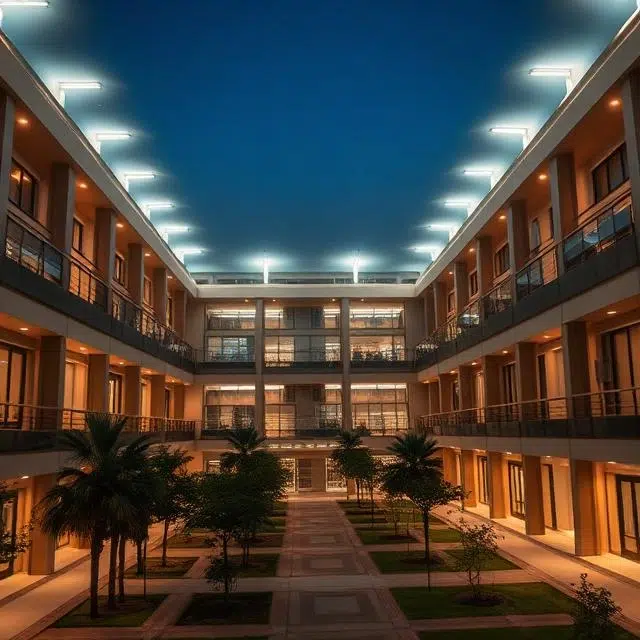
Longer Lifespan Significantly Reduces Maintenance Costs
One of the most practical reasons universities are switching to LED lighting is the dramatic reduction in maintenance requirements. Educational campuses often contain thousands of lighting fixtures installed across multiple buildings, high ceilings, outdoor poles, auditoriums, gymnasiums, and difficult-to-access locations.
Traditional lamps require frequent replacement due to shorter operating lifespans. Every replacement involves labour costs, maintenance scheduling, equipment such as scaffolding or lifting platforms, and potential disruption to lectures or campus activities.
LED lighting fixtures are engineered for long operational life and maintain their performance for many years under normal operating conditions. Their durability allows facility management teams to spend less time replacing failed lamps and more time focusing on preventive maintenance across other building systems.
This reduction in maintenance is particularly valuable for universities operating throughout the academic year, where minimising disruption is essential. Fewer maintenance interventions also improve safety by reducing the need for technicians to access elevated lighting installations in lecture theatres, sports halls, libraries, and outdoor areas.
Smart LED Lighting Supports Modern Campus Management
Today’s universities are becoming increasingly connected through digital technologies, and lighting is now an important part of intelligent campus management. Modern LED systems can integrate with Building Management Systems (BMS), occupancy sensors, daylight sensors, programmable schedules, and central monitoring platforms.
Smart lighting automatically adjusts brightness based on natural daylight entering classrooms or libraries, ensuring comfortable illumination while avoiding unnecessary energy consumption. Occupancy sensors switch lights off when lecture rooms, meeting spaces, or offices are unoccupied, reducing electricity usage without requiring manual intervention.
Large campuses can also monitor lighting performance remotely, allowing facility managers to identify maintenance requirements quickly and optimise lighting schedules across multiple buildings.
These intelligent lighting controls improve operational efficiency while supporting sustainability goals, making LED technology a valuable investment for universities planning long-term campus development.
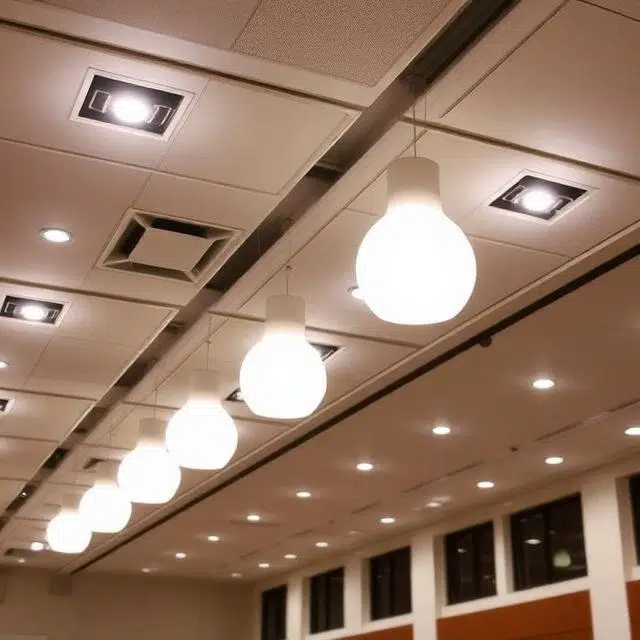
Different Areas of a University Require Different LED Lighting Solutions
Every area of a university serves a different purpose, and lighting should be designed to match the activities taking place within each space. A single lighting solution cannot effectively meet the needs of classrooms, laboratories, libraries, sports facilities, outdoor pathways, and administrative offices. Professional lighting design ensures each environment receives the correct illumination levels, colour temperature, glare control, and energy efficiency.
Lecture halls benefit from evenly distributed LED panel lights that minimise glare while allowing students to clearly view presentations and teaching materials. Laboratories require bright, high-colour-rendering LED luminaires that support detailed scientific work and accurate colour recognition. Libraries perform best with comfortable, flicker-free lighting that encourages extended reading and independent study.
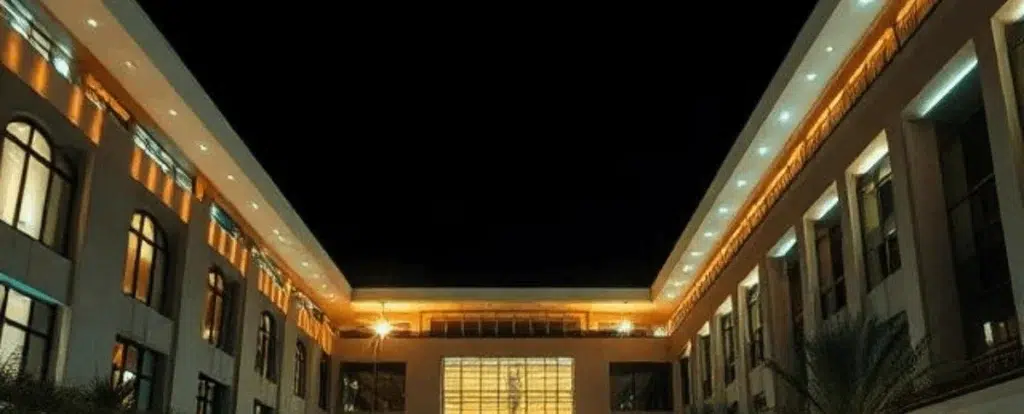
Administrative offices require balanced lighting that supports productivity throughout the working day, while student common areas often use decorative LED fixtures that create welcoming environments. Outdoor walkways, parking areas, sports courts, and campus roads depend on durable LED street lighting to improve visibility and enhance safety during evening hours.
Selecting the appropriate fixture for each application improves comfort, supports learning outcomes, and maximises long-term energy savings.
Improved Safety Across University Campuses
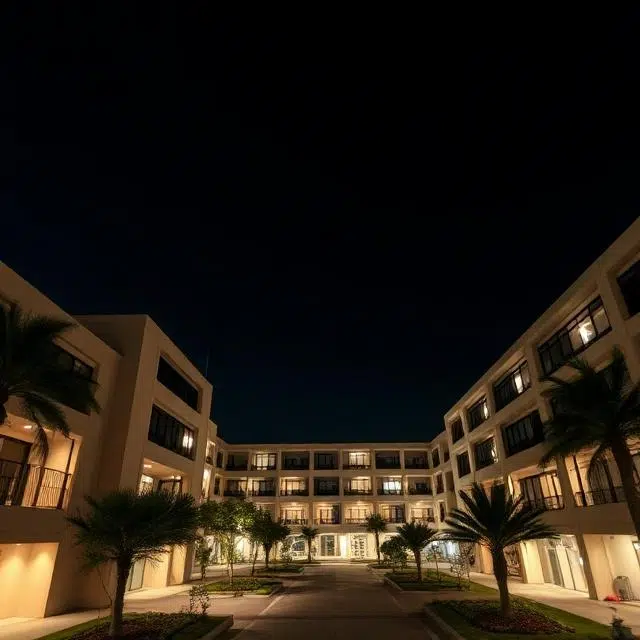
Lighting is an important component of campus safety. Universities remain active well beyond standard classroom hours, with students attending evening lectures, using libraries, participating in sports activities, or moving between buildings after sunset. Poorly illuminated pathways or parking areas increase safety risks for students, staff, and visitors.
Energy-efficient LED lighting produces bright, uniform illumination that improves visibility across pedestrian walkways, entrances, emergency exits, staircases, parking facilities, and open public spaces. Better lighting reduces dark spots and improves the performance of CCTV surveillance systems by providing clearer images during night-time operation.
Emergency lighting systems also benefit from LED technology because LEDs consume less power while providing reliable illumination during power interruptions. This helps universities maintain safe evacuation routes and comply with building safety regulations.
Modern LED campus lighting therefore supports not only operational efficiency but also the overall wellbeing and security of everyone using university facilities.
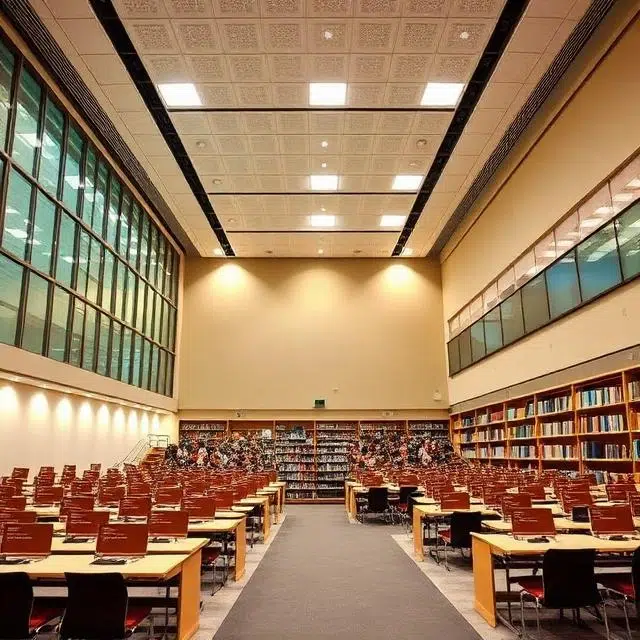
Smart Lighting Controls Improve Operational Efficiency
Today’s educational institutions increasingly adopt intelligent building technologies that improve operational performance while reducing unnecessary energy consumption. Modern LED lighting systems integrate easily with advanced control technologies that automatically respond to occupancy patterns and daylight availability.
Occupancy sensors detect when classrooms, meeting rooms, laboratories, or offices are vacant and automatically switch lighting off until the space is occupied again. Daylight harvesting systems continuously adjust artificial lighting according to the amount of natural sunlight entering the room, maintaining comfortable illumination while minimising electricity use.
Many universities also integrate LED lighting with central Building Management Systems (BMS), allowing facility managers to monitor energy consumption, schedule lighting operations, and identify maintenance requirements from a single control platform.
This combination of intelligent controls and energy-efficient LED technology provides greater flexibility while significantly lowering operational costs across large educational campuses.
Universities Benefit from Lower Total Cost of Ownership
Although LED lighting may require a higher initial investment than conventional lighting technologies, universities increasingly recognise that the long-term financial benefits outweigh the upfront installation costs. Instead of focusing only on purchase price, facility managers evaluate the total cost of ownership over the lifetime of the lighting system.
LED lighting reduces costs in several important areas:
- Lower electricity consumption
- Reduced maintenance expenses
- Longer fixture lifespan
- Fewer replacement lamps
- Lower cooling costs due to reduced heat generation
- Improved operational efficiency
- Reduced labour requirements
When these savings are calculated over many years, LED lighting often provides one of the highest returns on investment among building infrastructure upgrades.
Educational institutions operating large campuses across Dubai, Abu Dhabi, Sharjah, and other Emirates can achieve substantial financial savings while improving the quality of their teaching environments. These long-term economic advantages explain why LED lighting continues to replace older technologies throughout universities across the UAE.
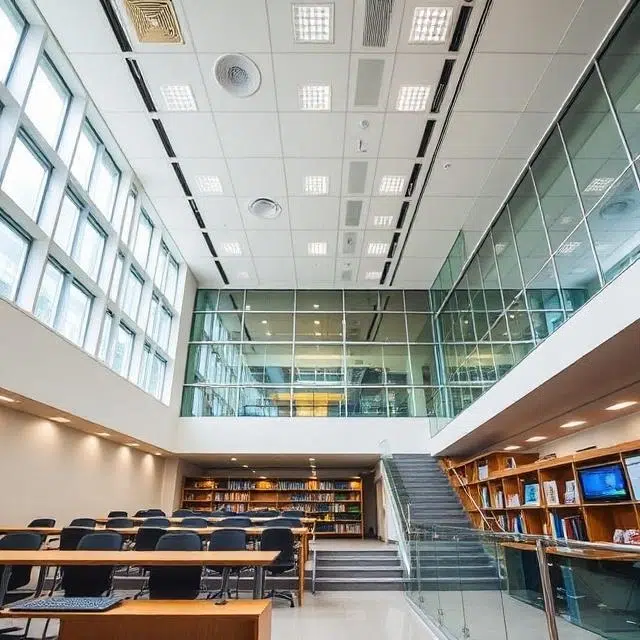
LED Lighting Helps Universities Meet International Building Standards
Universities are expected to maintain facilities that meet high standards for safety, energy efficiency, and occupant wellbeing. Lighting plays an important role in achieving these objectives because it affects everything from visual comfort to emergency preparedness and sustainability performance.
Professional LED lighting systems can be designed to comply with recognised lighting standards relating to illumination levels, glare control, colour rendering, emergency lighting, and energy efficiency. High Colour Rendering Index (CRI) fixtures allow colours to appear more natural, which is particularly important in medical laboratories, engineering workshops, art studios, and research environments where accurate colour recognition is essential.
Many universities also align their infrastructure projects with green building principles and energy-efficient design strategies. LED lighting supports these initiatives by reducing electricity demand while providing long-lasting, reliable illumination across academic and administrative buildings.
Working with experienced lighting specialists ensures that every lighting design is appropriate for the intended educational environment while supporting future campus development plans.
Choosing the Right LED Lighting Supplier Is Critical for Long-Term Success
Installing LED lighting is not simply a matter of replacing existing fixtures. Successful university lighting projects require detailed planning, lighting calculations, product selection, installation expertise, commissioning, and long-term technical support. Choosing the right supplier therefore has a direct impact on the performance and reliability of the completed system.
A professional supplier evaluates classroom layouts, ceiling heights, occupancy patterns, natural daylight availability, electrical infrastructure, and maintenance requirements before recommending suitable LED solutions. They also ensure lighting products meet recognised quality standards while providing reliable warranties and after-sales support.
Universities benefit from suppliers capable of delivering complete lighting solutions rather than individual products. This includes LED panel lights, linear lighting, downlights, outdoor luminaires, street lights, emergency lighting, smart controls, and lighting management systems.
Institutions seeking reliable, high-performance lighting solutions often work with a UAE best university Led lights supplier that understands the technical requirements of educational facilities and provides tailored solutions for classrooms, libraries, laboratories, auditoriums, sports complexes, student accommodation, and outdoor campus environments.
Future Trends in University LED Lighting
The evolution of LED technology continues to create new opportunities for universities to improve campus operations and learning environments. Future lighting systems will become increasingly intelligent, energy efficient, and responsive to user needs.
Emerging developments include:
- Human-centric lighting that adjusts colour temperature throughout the day to support student wellbeing and concentration.
- Internet of Things (IoT) integration that allows lighting systems to communicate with other smart building technologies.
- Advanced occupancy analytics that optimise energy use based on actual building utilisation.
- Wireless lighting controls that simplify installation and future expansion.
- Predictive maintenance systems capable of identifying fixture performance before failures occur.
These technologies allow universities to manage lighting more efficiently while creating comfortable environments that support both teaching and research activities.
As campuses continue to adopt smart infrastructure, LED lighting will become an increasingly important component of integrated building management strategies.
Conclusion
Universities across the UAE are switching to energy-efficient LED lighting because it delivers benefits that extend far beyond lower electricity bills. Modern LED systems improve learning environments, reduce maintenance requirements, enhance campus safety, support sustainability initiatives, integrate with intelligent building technologies, and provide significant long-term financial savings.
From classrooms and laboratories to libraries, lecture theatres, sports facilities, administrative offices, and outdoor spaces, every area of a university benefits from lighting solutions designed specifically for educational environments. High-quality LED fixtures provide consistent illumination, excellent visual comfort, improved reliability, and lower operating costs while supporting the evolving needs of modern higher education.
As educational institutions continue investing in smart campuses and sustainable infrastructure, LED lighting will remain one of the most valuable building upgrades available. By selecting high-performance products, implementing professional lighting design, and partnering with experienced specialists, universities can create safer, more comfortable, and more energy-efficient campuses that support students, faculty, researchers, and visitors for many years to come.