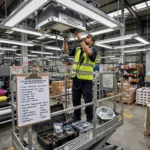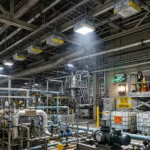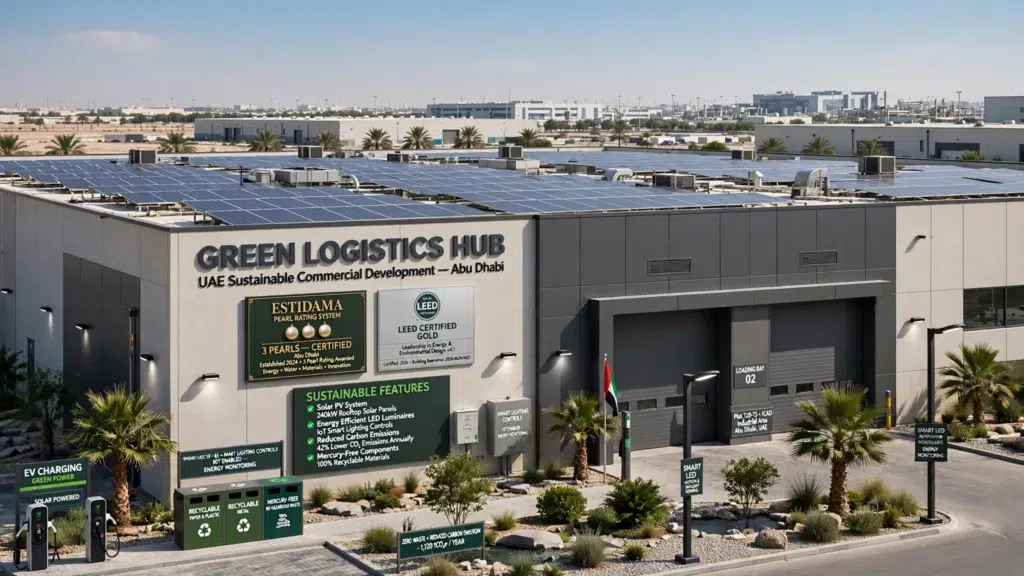
Lighting is one of the most important elements of any industrial or commercial facility. Whether it is a manufacturing plant, logistics warehouse, production facility, airport, retail distribution centre, automotive workshop, pharmaceutical factory, food processing unit, or commercial office complex, the quality of the lighting system directly influences productivity, employee safety, operational efficiency, and long-term energy costs.
Across the UAE, industrial developments continue to expand rapidly as new factories, warehouses, logistics hubs, and commercial facilities are constructed in strategic locations. Areas such as Jebel Ali, Dubai Industrial City, Dubai South, Dubai Investment Park (DIP), Al Quoz, Sharjah Industrial Area, Hamriyah Free Zone, Mussafah, Khalifa Industrial Zone Abu Dhabi (KIZAD), and Ras Al Khaimah Economic Zone (RAKEZ) are home to thousands of industrial buildings that require reliable, high-performance lighting solutions.
Selecting the right commercial LED lighting supplier is therefore one of the most important decisions for developers, contractors, consultants, facility managers, and business owners. A trusted supplier not only provides quality products but also offers technical expertise, lighting design support, compliance with international standards, and long-term after-sales service.
Why LED Lighting Has Become the Standard for Industrial Buildings
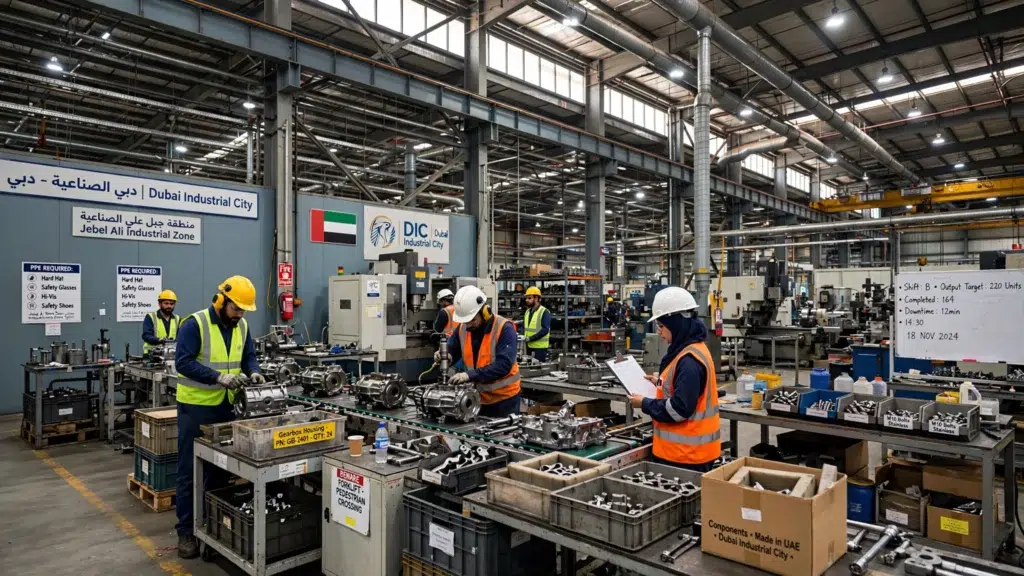
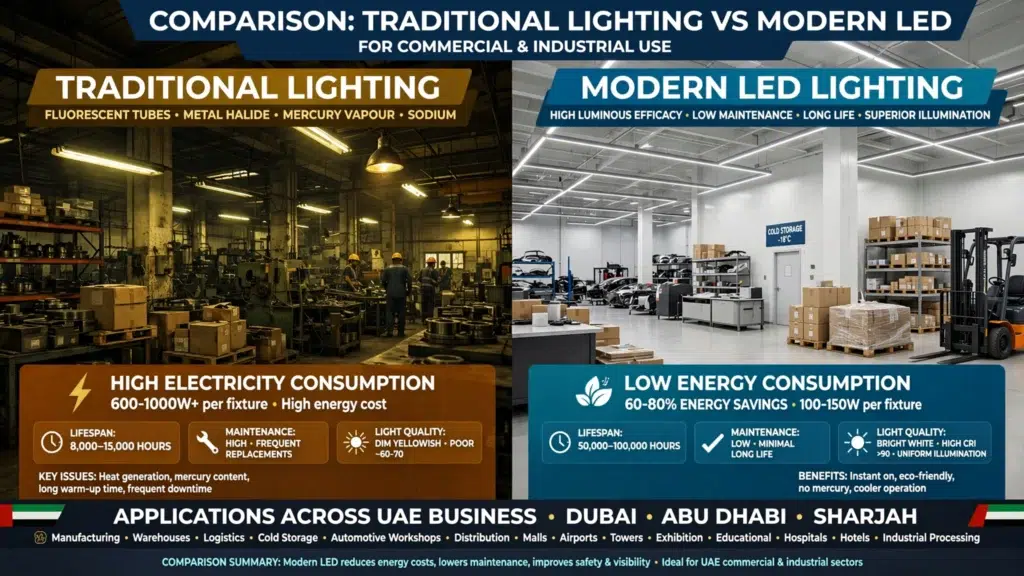
Traditional lighting technologies such as fluorescent tubes, metal halide lamps, mercury vapour lights, and high-pressure sodium fixtures consume significantly more electricity than modern LED systems.
Commercial LED lighting has transformed industrial facilities because it provides higher luminous efficacy, lower maintenance requirements, longer operating life, and superior illumination quality.
Modern LED lighting solutions are commonly installed in:
- Manufacturing factories
- Warehouses
- Logistics centres
- Cold storage facilities
- Automotive workshops
- Distribution hubs
- Shopping malls
- Airports
- Commercial office towers
- Exhibition halls
- Educational institutions
- Hospitals
- Hotels
- Industrial processing plants
Businesses throughout Dubai, Abu Dhabi, Sharjah, Ajman, Fujairah, and Umm Al Quwain increasingly replace conventional lighting systems with energy-efficient LED technology to reduce operating costs while improving workplace safety.
Understand Your Project Requirements First
Before selecting a lighting supplier, it is important to understand the project’s technical requirements.
Every industrial building has unique operational needs.
For example:
A warehouse requires uniform lighting across storage aisles.
A manufacturing plant requires task-specific lighting with excellent colour rendering.
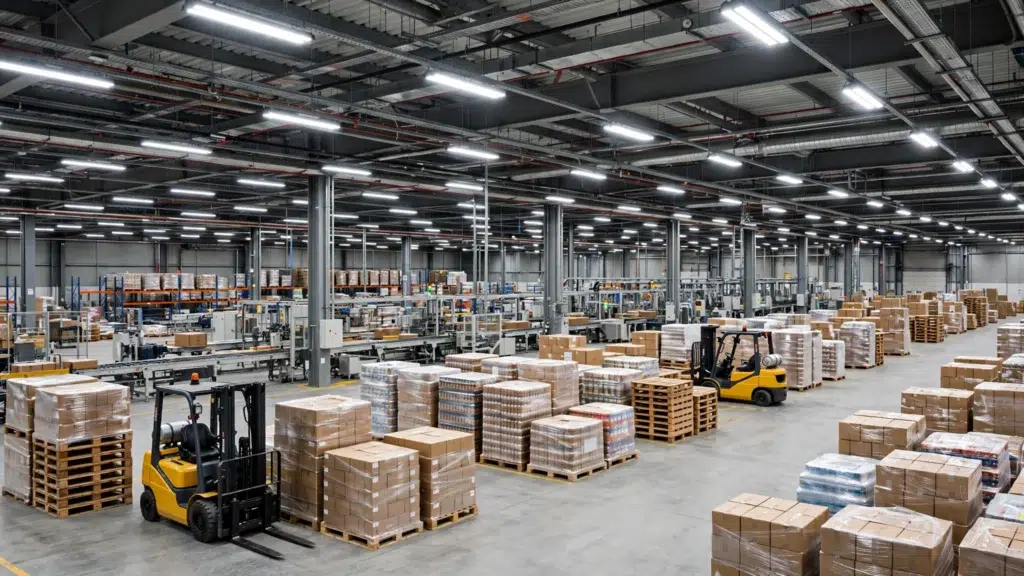
A logistics centre requires high-output LED High Bay Lights installed at considerable mounting heights.
A pharmaceutical facility demands precise illumination for quality control processes.
An automotive workshop requires glare-free lighting that improves technician visibility.
Professional lighting suppliers begin every project by evaluating:
- Building dimensions
- Ceiling height
- Mounting locations
- Lux level requirements
- Working environment
- Operating hours
- Energy consumption goals
- Emergency lighting needs
- Maintenance accessibility
Proper planning ensures every lighting fixture performs efficiently throughout its service life.
Choose a Supplier With Industrial Project Experience
Commercial lighting projects differ significantly from residential installations.
Industrial facilities often operate continuously, requiring lighting systems capable of performing reliably for many years.
Experienced suppliers understand:
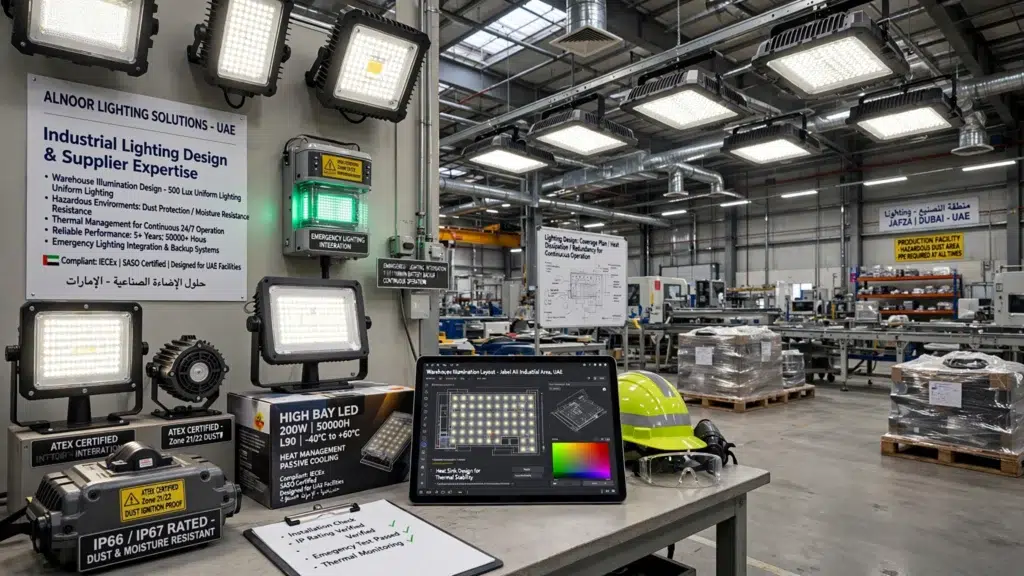
- Industrial lighting design
- Warehouse illumination
- Production facility requirements
- High bay applications
- Hazardous environments
- Dust protection
- Moisture resistance
- Heat management
- Emergency lighting integration
A supplier with proven experience can recommend solutions that improve operational efficiency while reducing long-term maintenance costs.
Evaluate Product Quality
Not every LED product delivers the same level of performance.
High-quality commercial LED lighting typically includes:
- High luminous efficacy
- Long operating life
- Premium LED chips
- Reliable LED drivers
- Efficient aluminium heat sinks
- Stable colour temperature
- Low colour shift
- High Colour Rendering Index (CRI)
- Low glare design
- Consistent lumen maintenance
International quality standards such as IEC, CE, RoHS, ISO 9001, LM-80 testing, and L70 performance ratings provide confidence that products will operate reliably under demanding industrial conditions.
Quality lighting also reduces replacement frequency, labour costs, and operational downtime.
Energy Efficiency Should Be a Priority
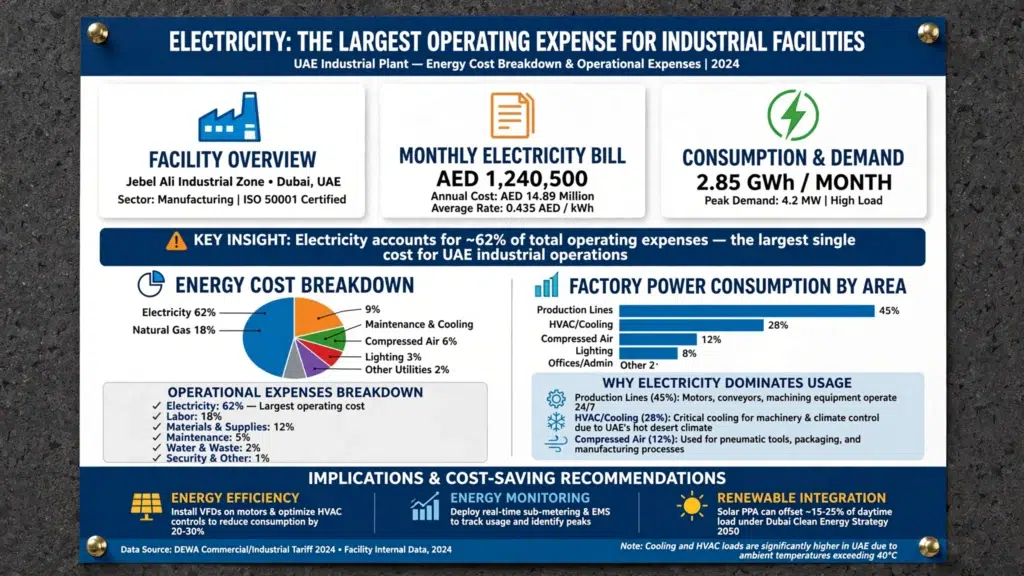
Electricity represents one of the largest operating expenses for industrial facilities.
LED technology dramatically reduces electricity consumption without sacrificing illumination quality.
Modern industrial LED lighting offers:
- Higher lumen output
- Lower wattage
- Reduced heat generation
- Improved efficiency
- Lower carbon emissions
- Reduced cooling loads
Factories operating around the clock can achieve significant annual energy savings after upgrading to high-efficiency LED systems.
This contributes to lower operating expenses while supporting sustainability objectives across the UAE.
Lighting Design Is More Important Than Product Selection
Many businesses focus only on selecting fixtures.
However, professional lighting design is equally important.
Lighting engineers calculate:
- Required lux levels
- Uniformity ratio
- Beam angle
- Mounting height
- Fixture spacing
- Daylight contribution
- Reflectance values
- Visual comfort
- Emergency escape routes
Computer simulations using lighting design software ensure the installed system delivers consistent illumination across the entire facility.
Proper design reduces shadows, dark areas, excessive glare, and unnecessary energy consumption.
Smart Lighting Controls Increase Efficiency
Modern industrial lighting extends beyond simply turning lights on and off.
Intelligent control systems automatically adjust lighting according to occupancy and available daylight.
Common smart lighting technologies include:
- Motion sensors
- Occupancy sensors
- Daylight harvesting
- DALI control systems
- KNX automation
- Zigbee wireless controls
- Bluetooth Mesh lighting
- Smart scheduling
- Centralised lighting management
These technologies reduce electricity usage while extending fixture lifespan.
Large logistics warehouses in Dubai South and Jebel Ali increasingly integrate intelligent lighting automation into new developments.
Consider IP and IK Ratings
Industrial environments expose lighting fixtures to dust, moisture, vibration, chemicals, and impact.
Choosing appropriate protection ratings is essential.
Ingress Protection (IP) ratings indicate resistance against dust and water.
Examples include:
- IP65
- IP66
- IP67
Impact Protection (IK) ratings measure resistance against mechanical impact.
Factories, warehouses, food processing plants, and manufacturing facilities often require fixtures with higher IP and IK ratings to ensure long-term durability.
Selecting products suited to the operating environment significantly reduces maintenance requirements.
Product Range Matters
Reliable suppliers offer complete commercial lighting solutions rather than only individual products.
Typical product categories include:
- LED High Bay Lights
- LED Low Bay Lights
- LED Flood Lights
- LED Panel Lights
- LED Linear Lighting
- LED Batten Lights
- LED Street Lights
- LED Canopy Lights
- LED Emergency Lights
- Explosion-Proof Lighting
- Industrial Bulkhead Lights
- Warehouse Lighting
- Car Park Lighting
- Outdoor Area Lighting
- Architectural Lighting
A comprehensive product portfolio allows consistent lighting quality throughout large commercial developments.
Technical Support Adds Long-Term Value
Professional suppliers provide much more than product delivery.
Technical support may include:
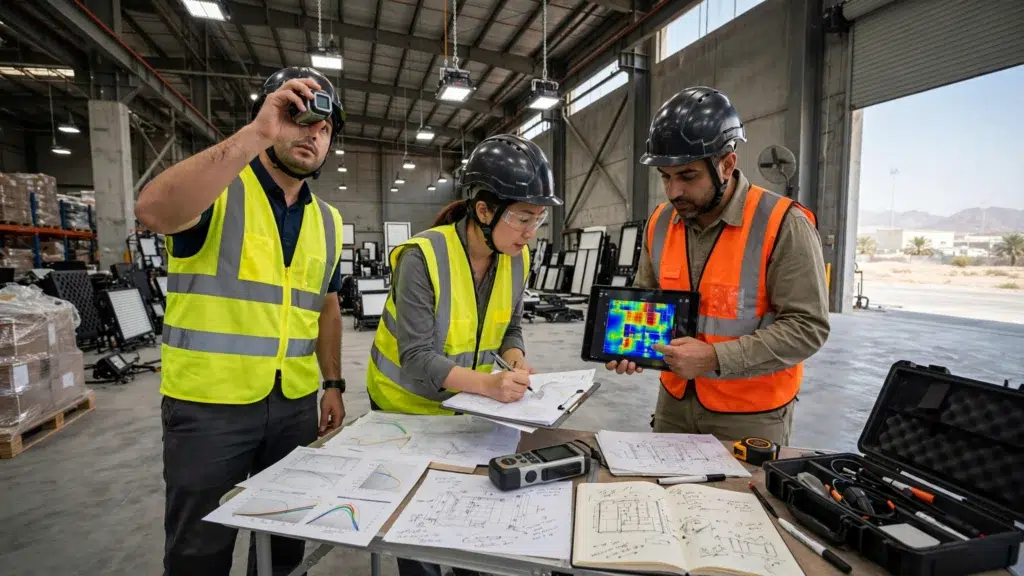
- Site surveys
- Lighting calculations
- Product recommendations
- Photometric reports
- Installation guidance
- Energy-saving analysis
- Warranty support
- Maintenance advice
- Project documentation
- Commissioning assistance
Businesses looking for a dependable commercial LED lighting supplier for Industrial Projects benefit from working with specialists who understand engineering requirements, lighting standards, and the unique operating conditions of industrial facilities across the UAE.
Importance of Warranty and After-Sales Service
Industrial lighting systems represent long-term investments.
Professional suppliers typically offer comprehensive warranties supported by reliable after-sales service.
Strong warranty coverage demonstrates confidence in product quality while providing peace of mind for facility owners and contractors.
Reliable after-sales support ensures replacement components, technical advice, and maintenance assistance remain available throughout the lighting system’s operational life.
Lighting Uniformity Improves Workplace Safety
Industrial lighting should not only be bright but also evenly distributed.
Poor lighting uniformity creates shadows, dark corners, excessive contrast, and glare that may reduce employee safety.
Professional lighting design ensures consistent illumination throughout:
- Warehouse aisles
- Production lines
- Assembly areas
- Loading bays
- Packaging departments
- Quality control laboratories
- Storage facilities
- Mechanical workshops
Uniform lighting improves visibility while helping employees perform tasks accurately and safely.
Large facilities in Dubai Industrial City, Mussafah, Hamriyah Free Zone, and KIZAD increasingly prioritise lighting uniformity as part of workplace safety programmes.
Sustainability Is Becoming a Major Selection Factor
Environmental sustainability is now an important consideration for commercial construction throughout the UAE.
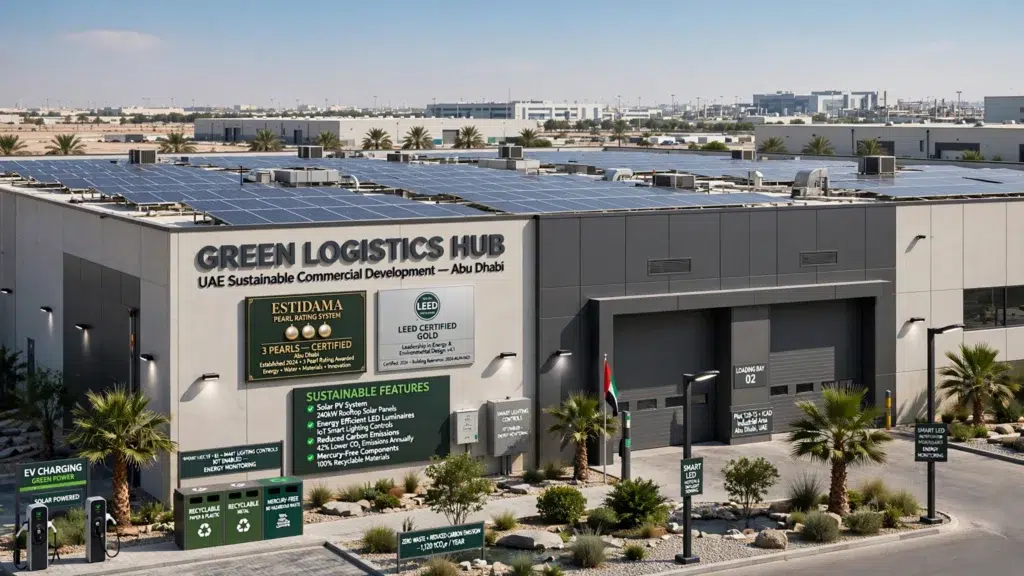
LED lighting contributes to sustainable building performance by reducing electricity consumption and lowering carbon emissions.
Additional sustainability advantages include:
- Longer operating life
- Reduced maintenance waste
- Lower heat generation
- Mercury-free construction
- Recyclable components
- Reduced greenhouse gas emissions
Many commercial developments pursuing LEED Certification and Estidama Pearl Rating integrate high-efficiency LED lighting into their overall sustainability strategy.
Smart lighting controls combined with energy-efficient luminaires further reduce building energy consumption while supporting environmental objectives.
Integration With Smart Building Systems
Modern commercial buildings increasingly operate using integrated Building Management Systems (BMS).
Professional LED lighting suppliers provide fixtures compatible with intelligent building automation platforms.
Lighting systems may integrate with:
- Building Management Systems (BMS)
- DALI Control Networks
- KNX Automation
- Zigbee Wireless Systems
- Bluetooth Mesh Networks
- Motion Sensors
- Occupancy Sensors
- Daylight Sensors
- Energy Monitoring Platforms
- Emergency Lighting Systems
Integrated lighting automation allows facility managers to monitor electricity consumption, schedule lighting operation, identify faults, and optimise overall building efficiency.
This level of control is particularly valuable for commercial office towers, airports, shopping centres, hospitals, hotels, and industrial campuses operating across multiple buildings.
Supplier Inventory and Delivery Capability
Large industrial developments often require thousands of lighting fixtures delivered according to strict construction schedules.
An experienced supplier should maintain sufficient inventory and strong logistics capabilities to support projects without unnecessary delays.
Reliable suppliers are capable of providing:
- Large-volume product availability
- Consistent product specifications
- Fast delivery schedules
- Technical documentation
- Replacement inventory
- Project-based supply management
Construction delays caused by lighting shortages can affect overall project completion dates, making supplier reliability an important consideration.
Importance of Custom Lighting Solutions
Every industrial project has unique operational challenges.
Rather than supplying standard products only, experienced lighting companies often develop customised lighting solutions based on:
- Ceiling height
- Machinery layout
- Storage configuration
- Working environment
- Hazardous locations
- Temperature conditions
- Moisture exposure
- Operational schedules
Customised lighting improves energy efficiency while ensuring compliance with industry-specific operational requirements.
Supporting Different Commercial Industries
Professional LED lighting suppliers typically support a wide variety of commercial sectors.
These include:
- Manufacturing plants
- Food processing facilities
- Pharmaceutical factories
- Automotive workshops
- Logistics centres
- Distribution warehouses
- Retail centres
- Airports
- Hotels
- Hospitals
- Universities
- Exhibition centres
- Sports complexes
- Government facilities
- Data centres
Each industry requires specialised lighting solutions that support productivity, operational efficiency, and workplace safety.
Importance of Long-Term Partnership
Choosing a lighting supplier should be viewed as a long-term business partnership rather than a one-time purchase.
Commercial projects often require future expansion, maintenance support, replacement products, warranty assistance, and technical consultation.
Suppliers who maintain strong relationships with contractors, consultants, facility managers, and developers continue providing value throughout the lifecycle of the lighting system.
Long-term partnerships improve consistency across multiple projects while simplifying future procurement.
Questions to Ask Before Choosing a Supplier
Before selecting a commercial LED lighting supplier, businesses should evaluate several important factors.
Key questions include:
- Does the supplier specialise in commercial and industrial lighting?
- Are products certified to international standards?
- Can lighting calculations and photometric reports be provided?
- What warranty coverage is available?
- Are products suitable for UAE environmental conditions?
- Can smart lighting controls be integrated?
- Is technical support available during installation?
- Can the supplier manage large-volume commercial projects?
- Are replacement products readily available?
- Does the supplier have experience with similar industrial facilities?
Carefully evaluating these factors helps minimise project risks while improving long-term performance.
Future Trends in Commercial LED Lighting
Commercial lighting technology continues evolving rapidly.
Emerging innovations include:
- AI-powered lighting controls
- Human Centric Lighting (HCL)
- Internet of Things (IoT) integration
- Predictive maintenance
- Cloud-based lighting management
- Wireless smart sensors
- Adaptive daylight harvesting
- Li-Fi communication technology
- Solar-powered commercial lighting
- Advanced energy analytics
These technologies allow commercial buildings to become more intelligent while reducing operating costs and improving workplace environments.
Industrial developments across Expo City Dubai, Dubai Creek Harbour, Dubai South, Abu Dhabi Global Market (ADGM), and Masdar City are increasingly adopting smart lighting technologies as part of future-ready infrastructure.
Conclusion
Choosing the right commercial LED lighting supplier is a critical decision that influences the efficiency, safety, and long-term operating costs of any industrial project. A reliable supplier provides more than high-quality LED products—they offer engineering expertise, lighting design, certified equipment, technical support, and dependable after-sales service.
From LED High Bay Lights and Flood Lights to intelligent lighting controls, emergency systems, and energy-efficient automation, every component should be carefully selected to meet the specific needs of the facility.
Whether developing a warehouse in Jebel Ali, a manufacturing plant in Dubai Industrial City, a logistics hub in Dubai South, a production facility in KIZAD, or a commercial complex in Business Bay, partnering with an experienced LED lighting supplier ensures optimal illumination, improved workplace safety, lower electricity consumption, and reliable long-term performance.
As industrial construction and commercial infrastructure continue expanding throughout the UAE, professionally designed LED lighting systems will remain essential for creating efficient, sustainable, and future-ready facilities.