Lighting plays a central role in the design of a modern spa and wellness centre. It influences how guests perceive the environment, how comfortable they feel during treatments, how clearly staff can perform their work, and how efficiently the facility operates. Unlike conventional commercial lighting, spa lighting needs to create a carefully controlled atmosphere that supports relaxation, privacy, visual comfort, safety, hygiene, and brand identity.
In Dubai and across the UAE, wellness facilities are becoming increasingly sophisticated. Luxury spas, hotel wellness centres, beauty salons, fitness clubs, health clubs, massage centres, thermal facilities, and private wellness studios all compete to create memorable experiences for customers. The right LED lighting strategy can help these spaces feel warmer, more refined, and more comfortable while also reducing energy consumption and maintenance requirements.
A successful spa lighting design therefore requires more than simply selecting attractive fixtures. It involves colour temperature, colour rendering, illumination levels, glare control, dimming, zoning, waterproofing, controls, architectural integration, and energy efficiency.
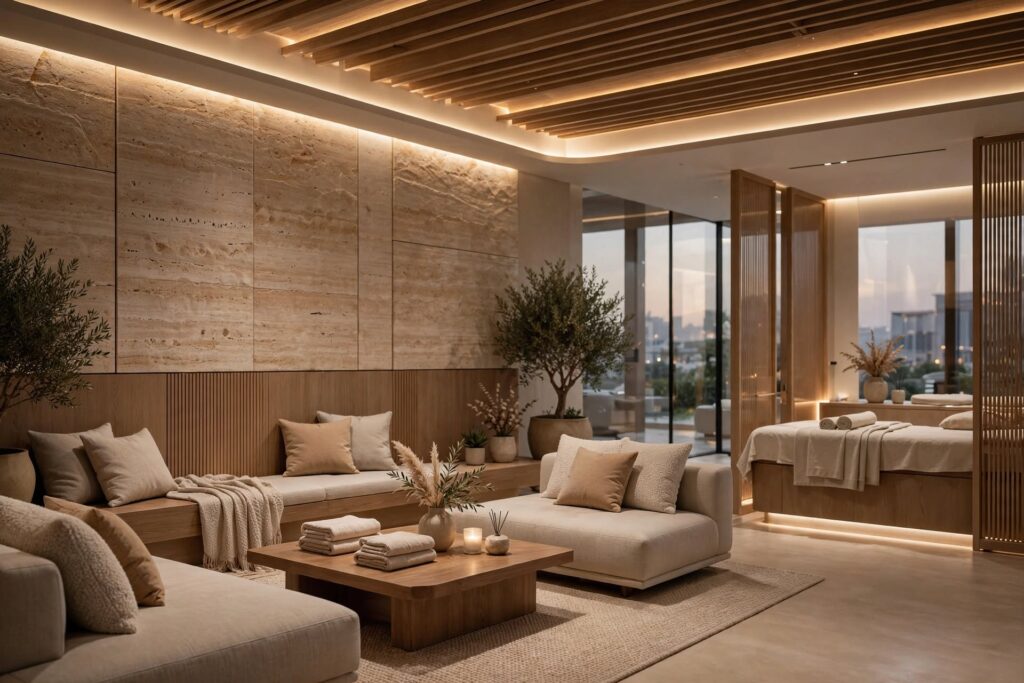
Why Lighting Matters in Spa and Wellness Centres
A spa is fundamentally an experience-driven environment. Guests often arrive expecting a quiet escape from busy urban surroundings. Harsh illumination, visible glare, inconsistent colour temperatures, or poorly positioned downlights can undermine that experience.
Well-designed lighting can help establish a sense of calm from the moment a customer enters the reception area.
The lighting strategy should support several objectives simultaneously:
Relaxation, visual comfort, safety, functionality, privacy, cleanliness, architectural appearance, and operational efficiency.
A reception area may require brighter illumination for greeting customers and completing transactions, while treatment rooms may benefit from softer, dimmable lighting.
This difference demonstrates why one lighting specification should not be applied throughout an entire wellness facility.
Understanding the Different Lighting Zones
A spa typically contains multiple environments, each with different lighting requirements.
These may include:
Reception areas, waiting lounges, treatment rooms, massage rooms, facial rooms, beauty rooms, changing rooms, corridors, relaxation lounges, saunas, steam rooms, hydrotherapy areas, swimming pools, fitness areas, retail displays, staff rooms, and service spaces.
Each zone should be considered independently while maintaining a consistent overall design language.
For example, a spa corridor can use concealed LED lighting to guide guests without creating excessive brightness, while a treatment room can use adjustable lighting that allows therapists to change illumination according to the service being provided.
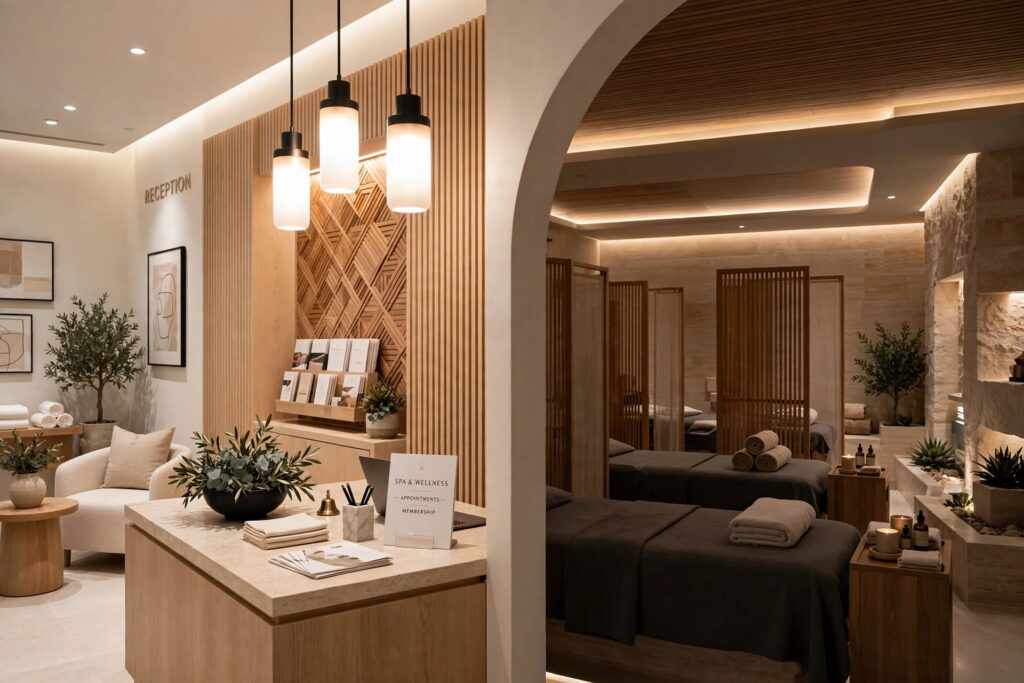
Choosing the Right LED Colour Temperature
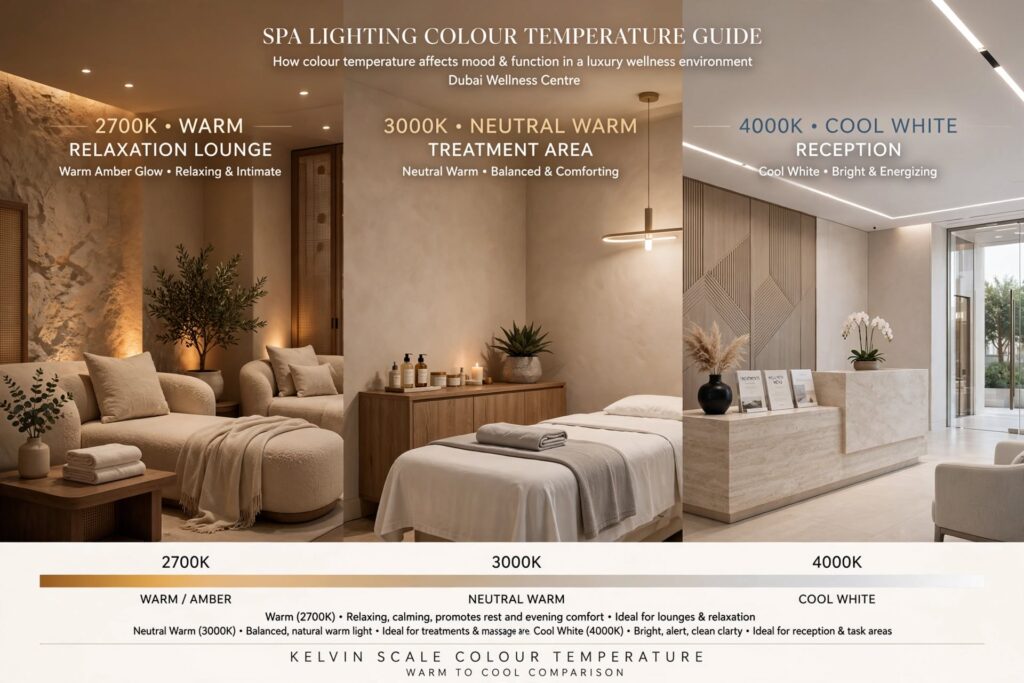
Colour temperature is one of the most important aspects of spa lighting.
It is generally measured in Kelvin (K).
Warm white lighting creates a more intimate and relaxing atmosphere, while cooler colour temperatures can appear brighter and more energetic.
Many wellness environments benefit from warm or neutral-white lighting, particularly in relaxation and treatment areas.
A spa designer may use different colour temperatures according to the function of each space rather than using one temperature throughout the property.
The important consideration is consistency and purpose.
Colour Rendering and Skin Appearance
Colour rendering is particularly important in spas and beauty centres because customers frequently look at their skin, hair, makeup, and facial treatments under artificial light.
CRI, or Colour Rendering Index, indicates how accurately a light source renders colours compared with a reference source.
Higher-quality LED lighting with strong colour rendering can provide more natural-looking skin tones and product colours.
This can be especially valuable in:
Facial treatment rooms, beauty salons, makeup areas, skincare consultation rooms, retail displays, and changing areas.
Lighting quality should therefore be assessed using more than brightness alone.
Soft Lighting for Treatment Rooms
Treatment rooms are among the most important spaces in a wellness centre.
The lighting needs to support the therapist while maintaining a calming environment for the customer.
A practical solution may combine:
Dimmable ceiling lighting, concealed LED strips, wall lighting, adjustable task lighting, and indirect illumination.
The main ambient light can be reduced during relaxation-focused treatments, while task lighting can be increased when therapists require better visibility.
This layered approach provides flexibility without forcing the room to remain brightly illuminated throughout the treatment.
Indirect LED Lighting for Relaxation Areas
Indirect lighting is highly effective in spa environments because the light source itself can remain concealed.
LED strips can be integrated into:
Ceiling coves, wall recesses, shelving, architectural niches, behind mirrors, under counters, and furniture details.
Instead of seeing a bright LED source directly, guests see the illuminated surface.
This can create a softer visual effect and reduce glare.
Indirect illumination is particularly useful in relaxation lounges and treatment rooms where a peaceful atmosphere is more important than maximum brightness.
LED Strip Lighting in Spa Interiors
LED strip lighting offers designers considerable flexibility.
It can be used to emphasize architectural elements or provide subtle wayfinding.
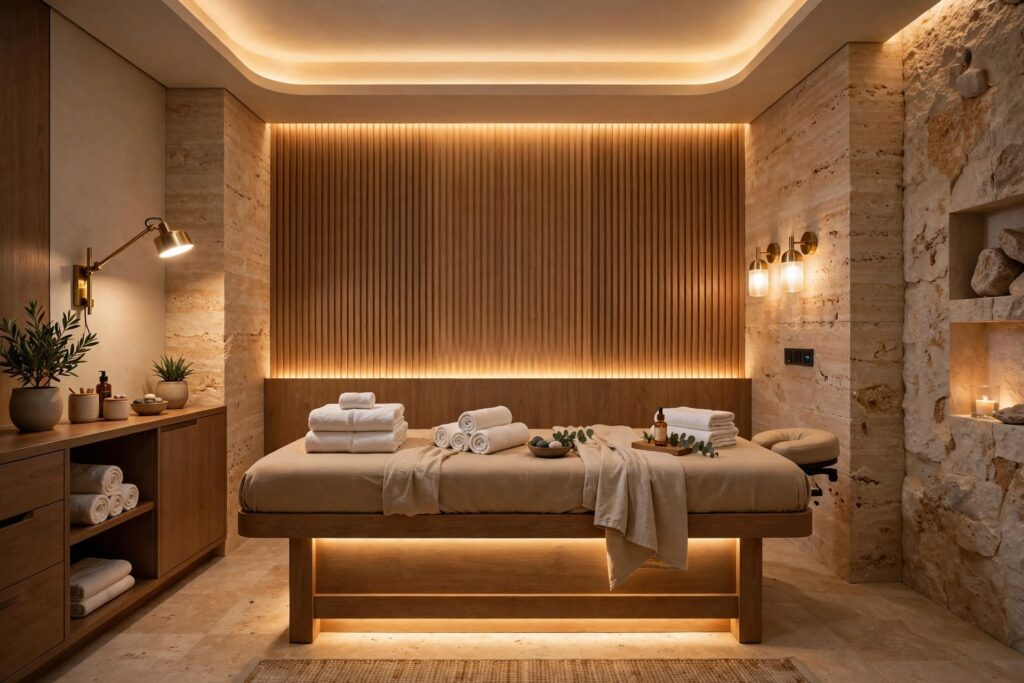
Applications include:
Under vanity counters, behind mirrors, beneath benches, inside shelving, along wall niches, within ceiling coves, and under reception desks.
When selecting LED strips, designers should consider:
Colour temperature, CRI, lumen output, IP rating, LED density, heat management, dimming compatibility, and power-supply requirements.
Proper installation is essential because poor-quality strips or unsuitable drivers can lead to flickering, inconsistent illumination, or premature failure.
Reception Lighting for Wellness Centres
The reception is usually the first interior space customers experience.
It should communicate the brand’s personality while remaining functional for staff.
A modern wellness reception may combine:
Decorative pendants, recessed downlights, linear LEDs, concealed cove lighting, illuminated signage, wall washing, and accent lighting.
The reception desk itself can become a visual focal point.
Under-counter LED lighting can create a floating effect, while backlit branding can improve visibility without overwhelming the space.
Spa Corridor and Wayfinding Lighting
Corridors should provide safe movement without feeling excessively bright.
Linear LED fixtures, recessed wall lights, concealed floor-level illumination, or ceiling coves can guide customers through the property.
Lighting can also reinforce architectural rhythm.
Repeated light elements along a corridor can create visual continuity while helping customers understand where treatment rooms and relaxation areas are located.
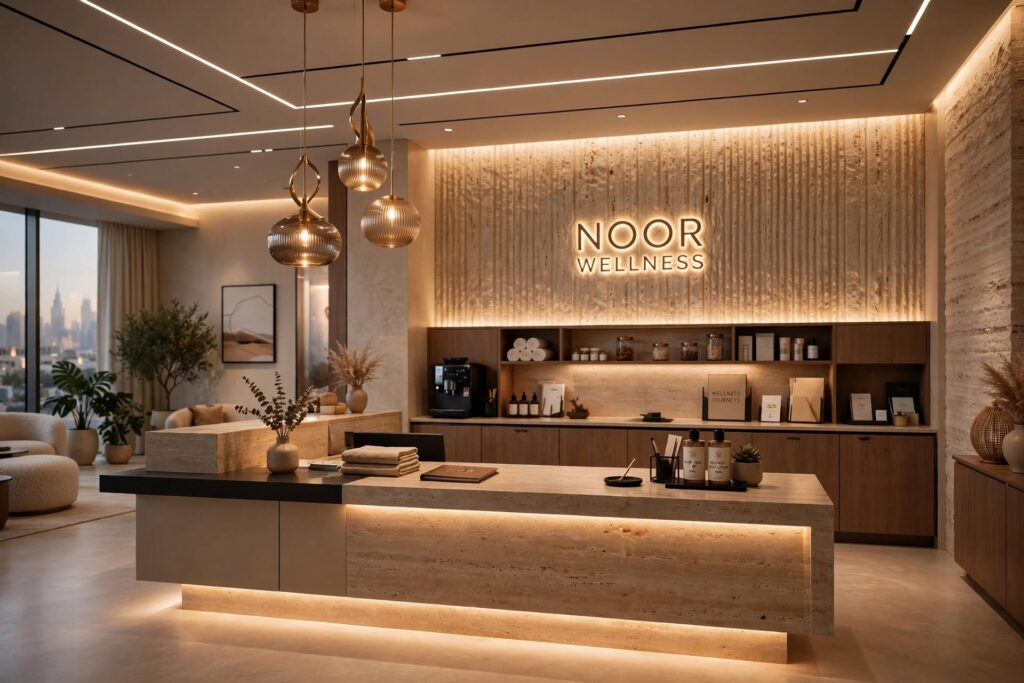
Bathroom and Changing Room Lighting
Bathrooms and changing areas require a balance between functional visibility and comfortable ambience.
Mirror lighting is particularly important.
Poorly positioned overhead lighting can create shadows across the face.
Vertical or surrounding mirror illumination can provide more even facial lighting.
LED lighting in these areas should also be selected according to moisture conditions and appropriate electrical safety requirements.
Waterproof LED Lighting for Wet Areas
Spas frequently contain areas with elevated humidity and direct water exposure.
Examples include:
Steam rooms, showers, hydrotherapy areas, pools, wet changing areas, and certain sauna environments.
Fixtures installed in such locations need suitable protection against moisture and water ingress.
The IP rating, or Ingress Protection rating, identifies the degree of protection provided by an electrical enclosure against solids and liquids.
The appropriate rating depends on the exact installation location.
Designers and electrical professionals should verify fixture suitability based on the area’s exposure rather than assuming that any LED fixture is appropriate for wet environments.
Pool and Hydrotherapy Lighting
Water features can become major visual elements within a wellness facility.
Underwater and surrounding lighting can create an elegant atmosphere when correctly designed.
Lighting may emphasize:
Pool edges, water surfaces, steps, architectural walls, fountains, hydrotherapy features, and surrounding materials.
However, pool lighting requires specialized equipment and strict attention to electrical safety.
Fixtures, transformers, cabling, control systems, and installation methods should comply with applicable requirements.
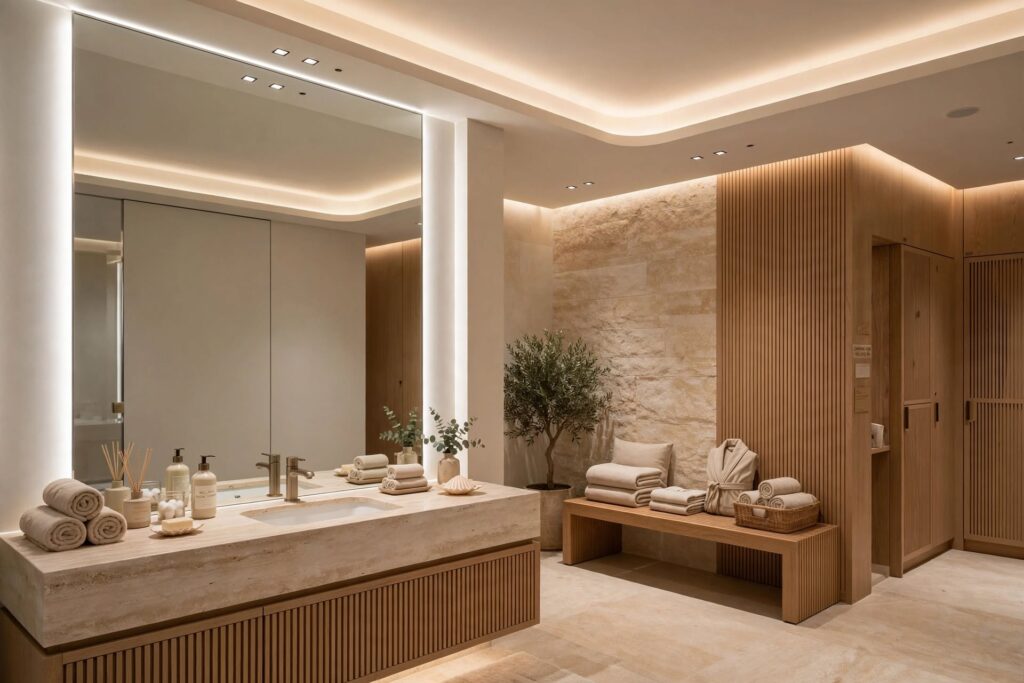
Sauna and Steam Room Lighting
Saunas and steam rooms present challenging environments because of heat and humidity.
Standard LED fixtures may not be suitable for these conditions.
The lighting system must be selected according to:
Temperature, humidity, moisture exposure, enclosure requirements, electrical safety, and manufacturer specifications.
Indirect lighting is often aesthetically effective because it can illuminate surfaces without placing bright fixtures directly in the user’s field of vision.
Tunable and Dimmable LED Lighting
Modern LED technology allows wellness facilities to create different lighting scenes.
Dimming systems can adjust illumination according to the time of day or treatment type.
A spa could have settings such as:
Morning, daytime, treatment, relaxation, evening, cleaning, and maintenance.
Tunable white systems can provide additional flexibility by adjusting colour temperature.
This allows the lighting environment to change throughout the day without physically replacing fixtures.
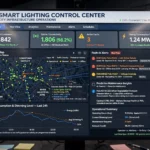
Smart Lighting Controls for Wellness Centres
Lighting control systems can improve both customer experience and energy efficiency.
A smart system can integrate:
Occupancy sensors, daylight sensors, dimming controls, timers, programmable scenes, central management systems, and building automation.
For example, corridor lighting can operate at reduced levels when occupancy is low.
Treatment rooms can have preset lighting scenes.
Reception lighting can automatically adjust according to operating hours.
These systems can reduce unnecessary energy consumption while maintaining appropriate illumination.
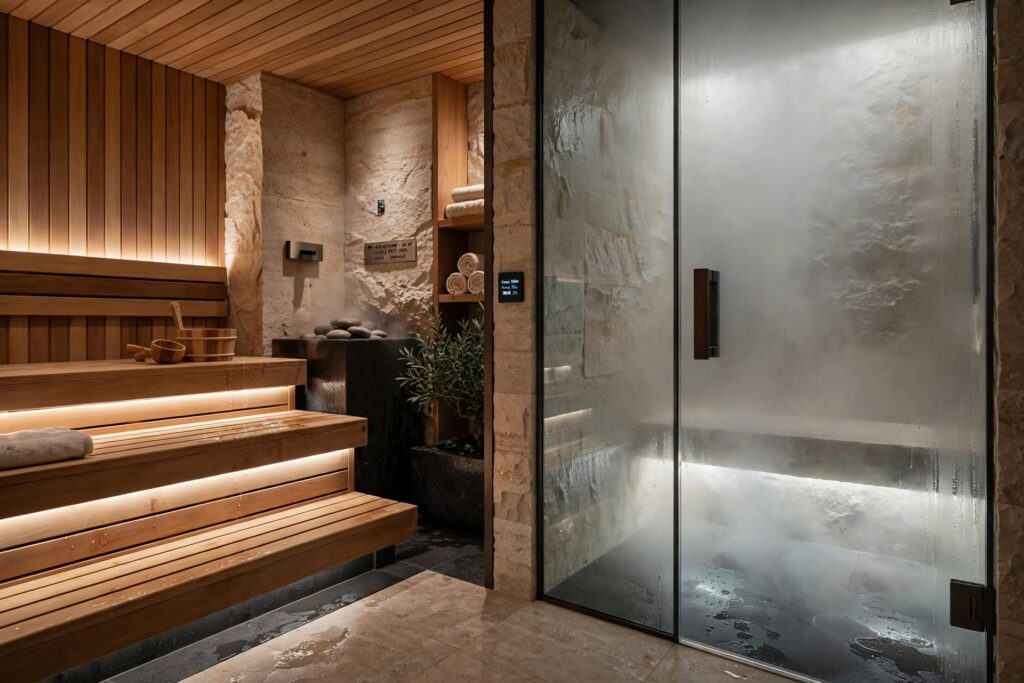
Energy Efficiency of LED Lighting
LED technology is widely used in commercial environments because it can provide efficient illumination with lower energy consumption than many older lighting technologies.
In a large wellness facility, lighting can operate for many hours every day.
Energy-efficient LED fixtures combined with controls can therefore contribute to operational savings.
The actual savings depend on factors such as:
Fixture efficiency, operating hours, existing lighting technology, control strategy, illumination requirements, and electricity costs.
Energy efficiency should be evaluated as part of the complete lighting design rather than based only on the wattage printed on an individual fixture.
Glare Control in Spa Lighting
Glare can significantly reduce comfort.
A guest lying on a treatment bed should not be looking directly into a bright ceiling fixture.
Glare can be reduced through:
Indirect lighting, diffusers, recessed fixtures, appropriate beam angles, shielding, careful fixture positioning, and dimming.
This is particularly important in treatment rooms, relaxation lounges, meditation spaces, and areas where guests remain reclined.
Architectural LED Lighting
LED technology can be integrated directly into architecture.
Examples include:
Cove lighting, illuminated wall panels, recessed channels, linear profiles, floating ceilings, illuminated stairs, backlit stone, and feature walls.
Architectural lighting can make the interior feel more sophisticated without relying on excessive decorative fixtures.
In luxury spas, carefully concealed lighting can highlight textures such as marble, timber, stone, plaster, and decorative wall panels.
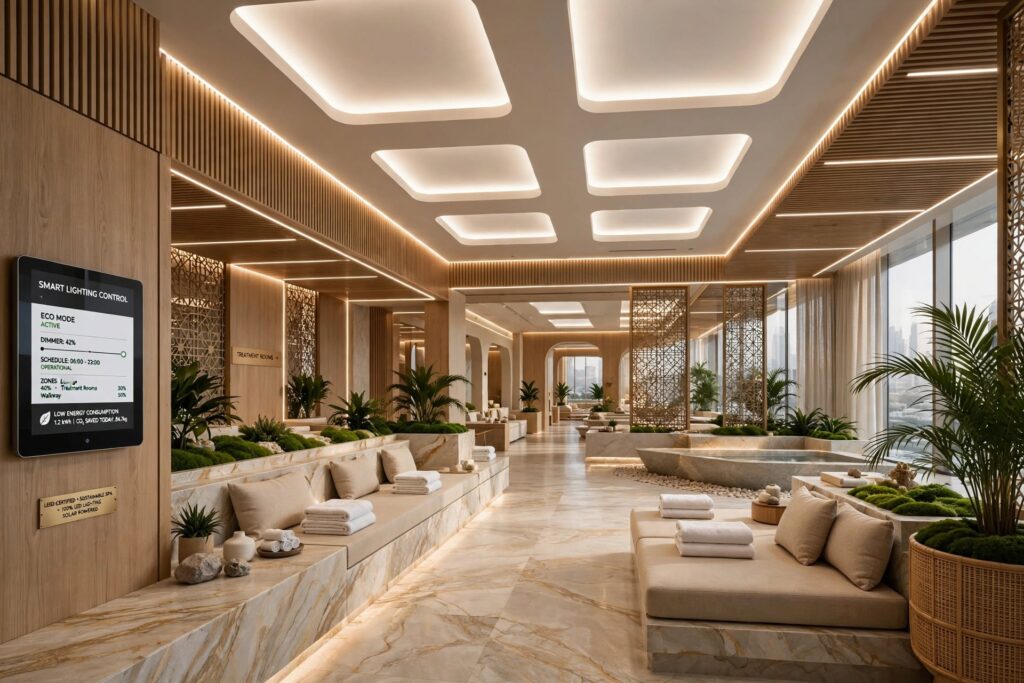
Lighting Natural Materials
Materials play a significant role in spa interiors.
Common finishes include:
Natural stone, marble, wood, textured plaster, glass, porcelain, metal, and natural fabrics.
Lighting changes how these materials appear.
Wall washing can emphasize stone texture.
Warm indirect lighting can bring out timber tones.
Backlighting can create dramatic effects behind translucent stone.
Therefore, lighting and material selection should be coordinated during the design stage.
Biophilic Lighting in Wellness Centres
Wellness design increasingly incorporates natural elements.
Plants, natural textures, water features, daylight, and organic forms can create a stronger connection with nature.
Lighting can support this concept by creating soft transitions between daylight and artificial illumination.
Artificial lighting should complement natural light rather than compete with it.
Large windows and skylights can provide daytime illumination, while carefully controlled LEDs maintain comfort during evening operations.
Daylight Management
Natural daylight can enhance a wellness environment, but uncontrolled sunlight can create glare and heat.
This is particularly relevant in Dubai and the UAE.
Designers can manage daylight through:
Sheer curtains, blinds, solar-control glazing, architectural shading, louvers, and automated window treatments.
Artificial lighting can then be designed to supplement daylight rather than simply operate at maximum output throughout the day.
Spa Lighting and Customer Experience
The customer’s emotional response is an important design consideration.
A bright, cool, highly uniform environment may feel appropriate for a medical or technical facility but less suitable for a relaxation-focused spa.
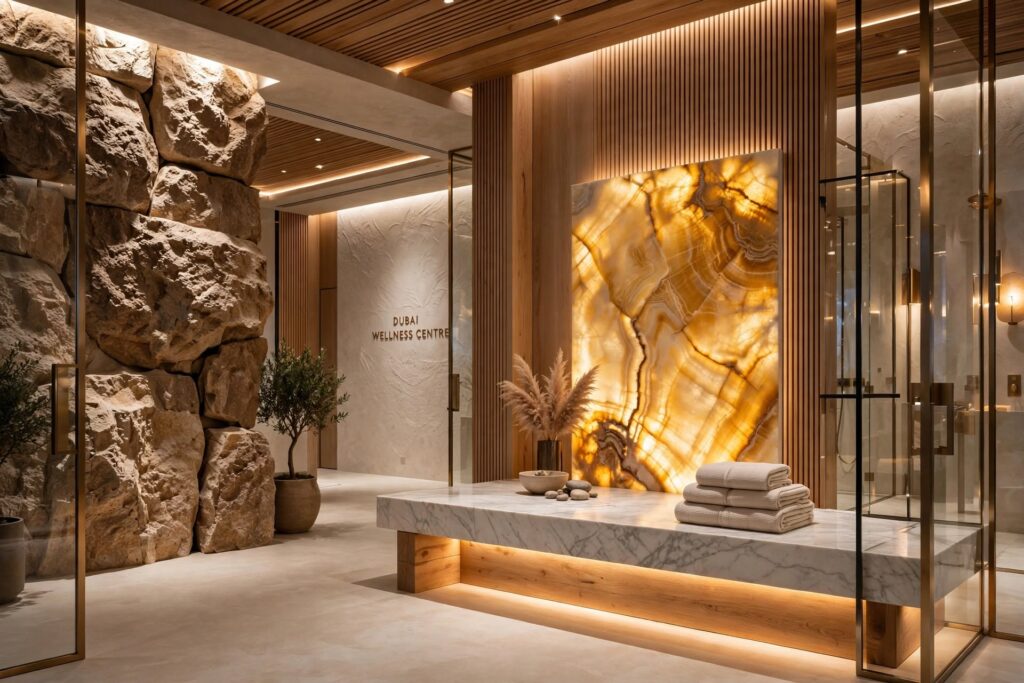
A carefully layered lighting system can create:
Calmness, warmth, privacy, luxury, intimacy, cleanliness, and visual comfort.
This doesn’t mean that every area should be dark.
Functional spaces still require sufficient illumination.
The objective is to create the right lighting level for each activity.
Lighting for Luxury Spas in Dubai
Dubai’s luxury hospitality and wellness sector creates strong demand for premium interior environments.
Spas located in areas such as Downtown Dubai, Palm Jumeirah, Dubai Marina, Jumeirah, Business Bay, Dubai Hills Estate, and Emirates Hills may target different customer groups, but premium design and attention to detail are common priorities.
A luxury spa may incorporate:
Decorative chandeliers, illuminated stone, custom linear lighting, concealed LEDs, smart controls, statement reception lighting, and carefully coordinated architectural illumination.
The design should still prioritize comfort rather than visual spectacle alone.
Commercial Lighting for Hotel Wellness Centres
Hotel spas require coordination with the wider hospitality environment.
The lighting should relate visually to:
Hotel lobbies, corridors, guest rooms, restaurants, fitness facilities, swimming pools, and outdoor areas.
A hotel wellness centre may have its own identity while maintaining a connection with the hotel’s broader brand language.
Lighting specifications should also consider maintenance because hotel engineering teams may need to manage fixtures across many areas.
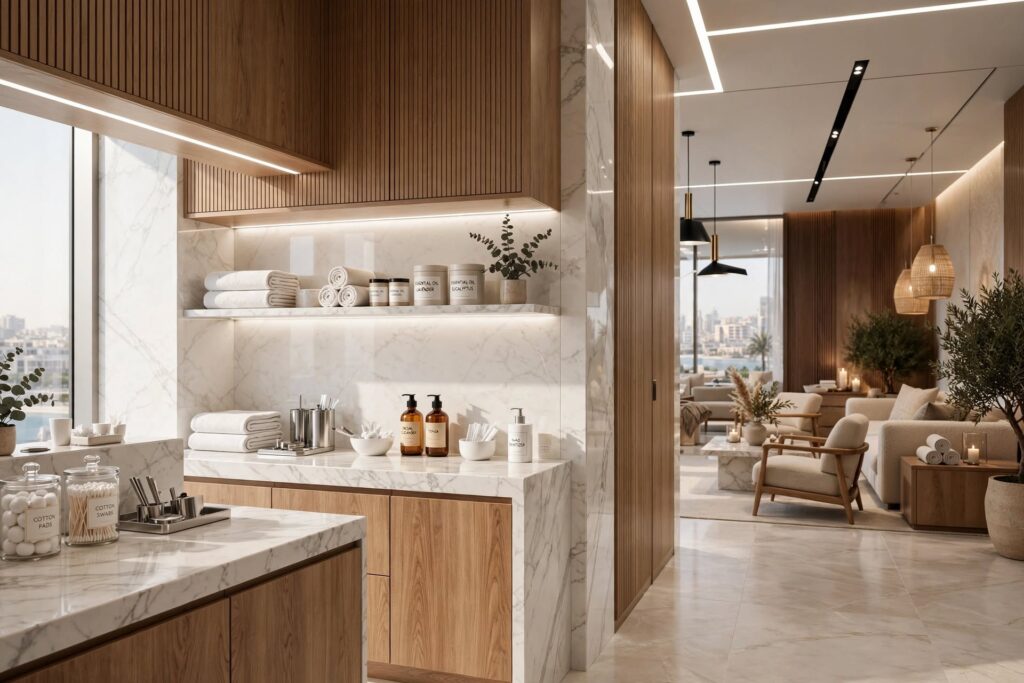
Retail Displays in Spa and Beauty Centres
Many wellness facilities sell:
Skincare products, cosmetics, fragrances, wellness products, supplements, accessories, and treatment packages.
Retail displays require different lighting from relaxation zones.
Products need sufficient illumination and good colour rendering.
Adjustable spotlights, track lighting, display cabinet lighting, and integrated shelf LEDs can highlight merchandise without disrupting the overall atmosphere.
Lighting for Fitness and Wellness Areas
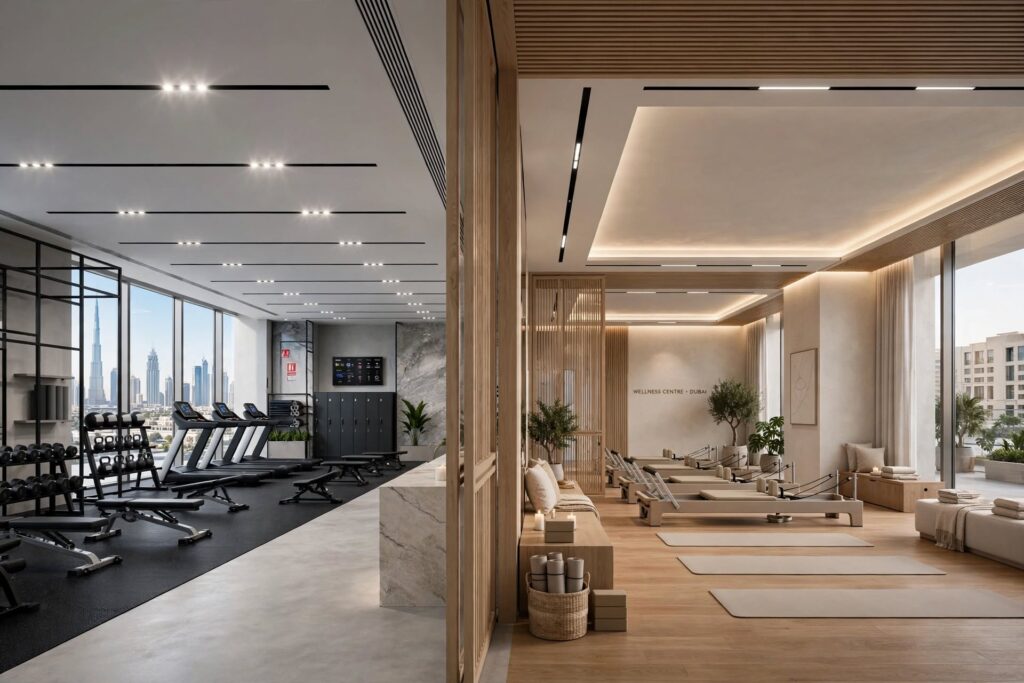
Some wellness centres combine spa facilities with gyms, yoga studios, Pilates rooms, or fitness spaces.
These areas may require brighter and more energetic lighting than treatment rooms.
However, the lighting should still maintain visual comfort.
For yoga and meditation spaces, dimmable and indirect lighting can support a calmer environment.
For active fitness areas, uniform illumination and appropriate glare control become more important.
Maintenance Considerations
A commercial lighting system should be designed with maintenance in mind.
Important considerations include:
Driver accessibility, replacement availability, cleaning access, fixture lifespan, spare components, control-system compatibility, and serviceability.
LED fixtures can reduce maintenance frequency, but they are not maintenance-free.
Dust accumulation can affect light output and appearance, particularly in UAE environments.
Regular cleaning and inspection can help maintain lighting performance.
Choosing Quality Lighting Products
The quality of the LED fixture can have a major influence on long-term performance.
Important specifications may include:
Luminous efficacy, CRI, colour temperature, beam angle, power factor, driver quality, dimming compatibility, IP rating, thermal management, warranty, and rated life.
For commercial projects, product documentation should be reviewed before specifying fixtures.
A lower-cost product may not provide the same consistency or service life as a professionally specified commercial lighting solution.
For wellness projects requiring reliable commercial fixtures and specialized applications, selecting appropriate Centre LED Lighting Supplies can help ensure that products are matched to the project’s functional and architectural requirements.
LED Lighting and Sustainability
Sustainable wellness design should consider the entire building rather than focusing on individual products.
Lighting efficiency can be improved through:
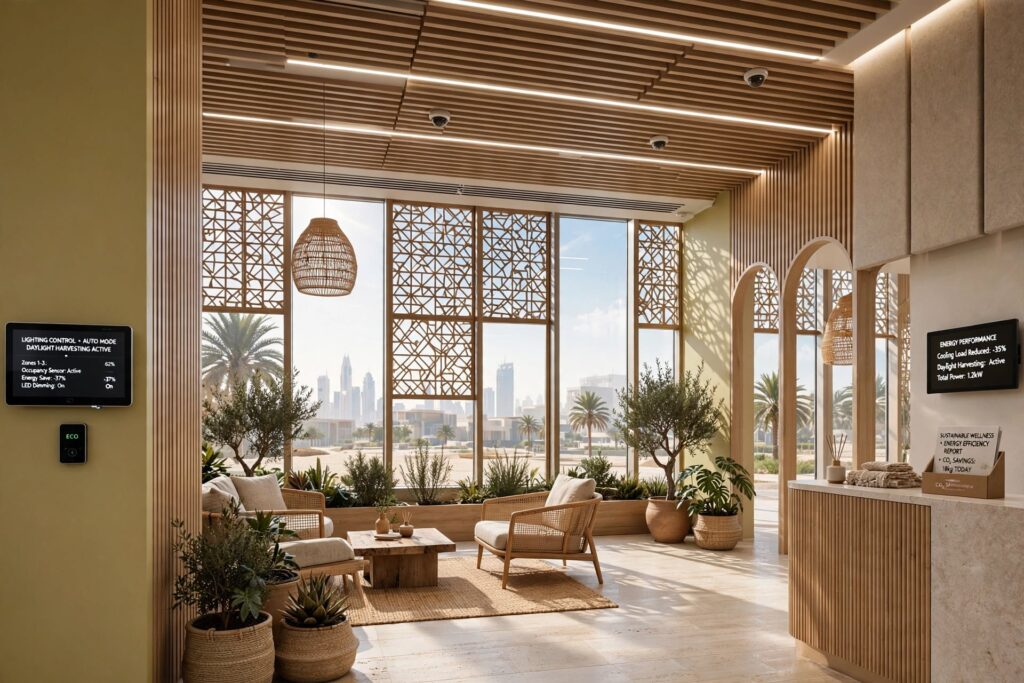
Efficient LEDs, occupancy sensors, daylight harvesting, dimming, scheduling, smart controls, and appropriate illumination levels.
Reducing unnecessary lighting operation can also reduce cooling loads because electrical lighting generates heat.
This relationship is particularly relevant in Dubai’s climate, where air-conditioning represents a significant part of building energy consumption.
Lighting Design for Abu Dhabi and the Wider UAE
Although Dubai is a major centre for wellness and hospitality, similar lighting requirements exist in Abu Dhabi, Sharjah, Ajman, Ras Al Khaimah, and other UAE markets.
A wellness centre in Abu Dhabi’s business districts may have a different customer profile from a resort spa in Ras Al Khaimah.
Local conditions should also influence product selection.
Outdoor and semi-outdoor installations need to account for:
UV exposure, heat, humidity, dust, and weather conditions.
Indoor wet areas require appropriate moisture protection and electrical safety.
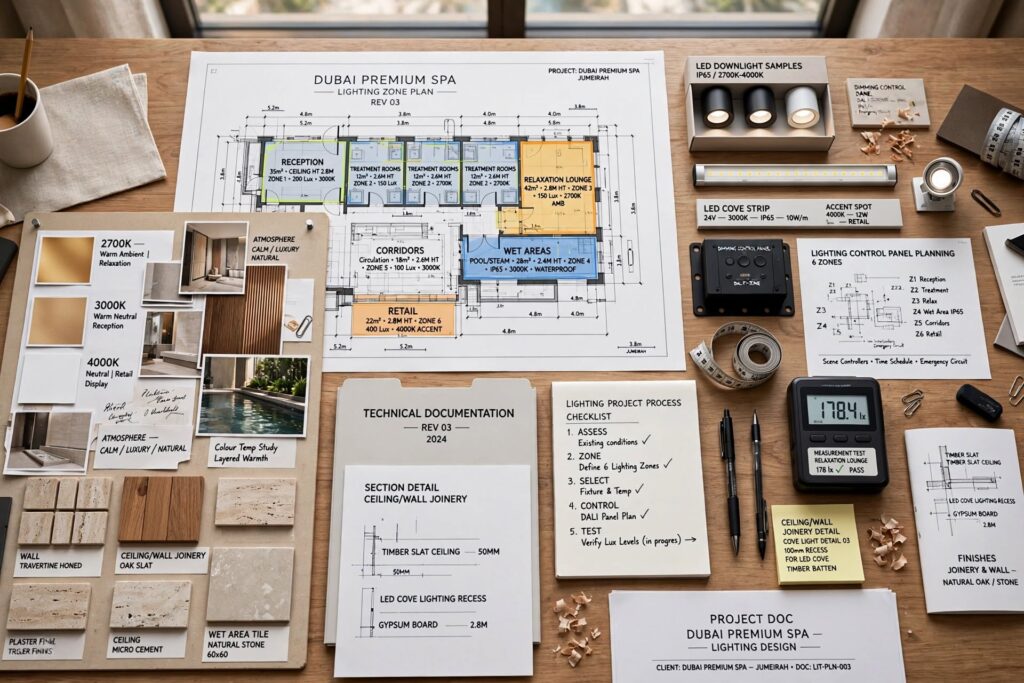
How to Plan a Spa LED Lighting Project
A successful lighting project can follow a structured process.
Assess the Space
Understand room dimensions, ceiling heights, windows, existing lighting, finishes, and functional requirements.
Divide the Facility Into Zones
Identify reception, treatment, relaxation, wet areas, corridors, retail areas, staff spaces, and other zones.
Establish the Lighting Concept
Define the desired atmosphere, colour temperature, brightness, contrast, and architectural emphasis.
Select Fixtures
Choose products according to performance, aesthetics, environment, and technical specifications.
Coordinate With Architecture
Integrate lighting with ceilings, walls, joinery, mirrors, furniture, signage, and architectural features.
Plan Controls
Determine where dimming, occupancy sensing, daylight control, and preset scenes are required.
Test the Installation
Commission the system and verify illumination levels, colour consistency, dimming behaviour, glare, and control operation.
Frequently Asked Questions
What colour temperature is best for a spa?
Warm or neutral-white lighting is commonly suitable for relaxation-focused spaces, but the best colour temperature depends on the room’s purpose, materials, branding, and desired atmosphere.
Is LED lighting suitable for wet spa areas?
Yes, but fixtures must be specifically suitable for the environmental conditions. The appropriate IP rating and electrical safety requirements should be confirmed for each installation location.
Why is CRI important in a beauty spa?
High-quality colour rendering helps skin tones, cosmetics, hair colours, and products appear more natural and accurate.
Can spa lighting be dimmed?
Yes. Many commercial LED systems can be dimmed when compatible fixtures, drivers, and control systems are specified.
Can LED lighting be integrated into a smart building system?
Yes. Compatible LED fixtures and control systems can integrate with building automation and smart lighting platforms.
How can spa lighting reduce energy consumption?
Efficient LEDs combined with dimming, occupancy sensors, daylight controls, scheduling, and appropriate lighting levels can reduce unnecessary energy use.
Conclusion
LED lighting is an essential component of modern spa and wellness centre design. The right system can influence guest comfort, relaxation, safety, brand perception, architectural appearance, energy efficiency, and operational performance.
The most successful spa lighting schemes use multiple layers rather than relying on a single type of ceiling fixture. Ambient lighting establishes the general environment, task lighting supports staff activities, accent lighting highlights architecture, and concealed LED systems create atmosphere.
Dubai’s wellness sector presents additional opportunities for sophisticated lighting design because luxury spas, hotel wellness centres, beauty facilities, and fitness destinations increasingly compete through customer experience.
A well-planned lighting strategy should therefore consider colour temperature, CRI, glare, dimming, waterproofing, smart controls, energy efficiency, material interaction, maintenance, and local environmental conditions from the beginning of the project.
Whether the facility is a boutique treatment centre, hotel spa, luxury wellness destination, beauty clinic, fitness club, or integrated health and wellness facility, lighting should be treated as part of the overall architecture rather than an afterthought.
When lighting, interior design, HVAC, electrical systems, controls, materials, and operational requirements are coordinated properly, the result is a wellness environment that feels comfortable and sophisticated while remaining practical to operate.
In a competitive market such as Dubai, that combination of experience, efficiency, functionality, and visual identity can help a spa create a stronger and more memorable environment for its guests.