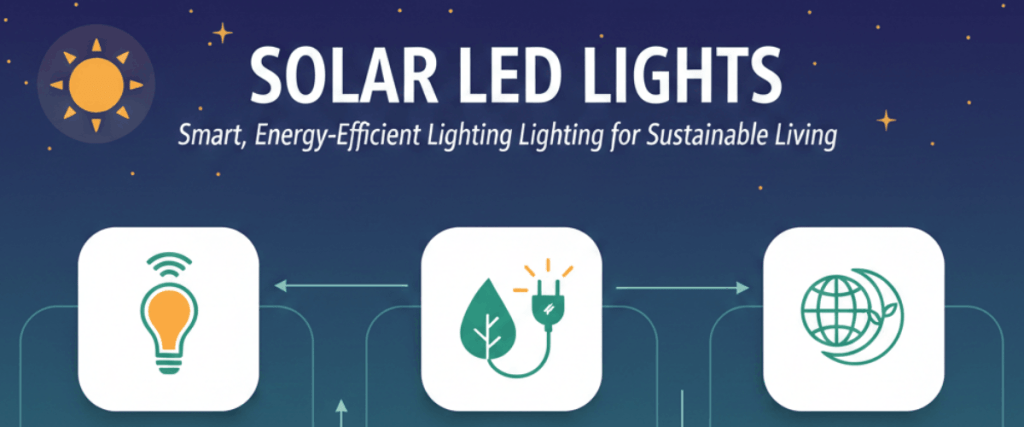
Harnessing the UAE Sun for Lighting
The UAE enjoys among the most abundant solar resources in the world, and solar LED lighting harnesses this resource to deliver sustainable, wire free outdoor lighting for commercial developments. Combining photovoltaic generation with efficient LED illumination, solar lighting offers developers a sustainable outdoor lighting solution that reduces energy cost and supports environmental objectives. This guide examines solar LED lighting for sustainable commercial developments across the UAE.
It explores the applications, the benefits, and the considerations of solar LED lighting, supporting the developers and consultants who specify sustainable outdoor lighting for commercial, residential, and infrastructure developments across the Emirates.
How Solar LED Lighting Works
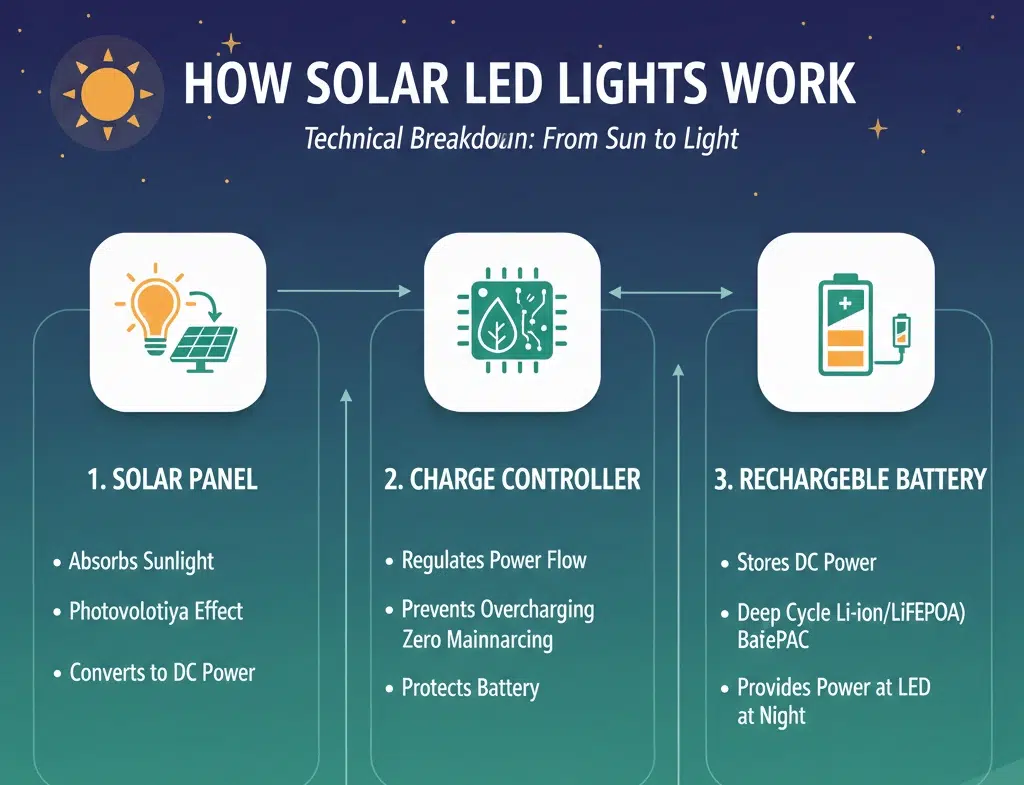
Solar LED lighting combines a photovoltaic panel that generates electricity from sunlight, a battery that stores it, and an efficient LED fixture that delivers the illumination. The panel charges the battery during the day, and the stored energy powers the LED at night, delivering illumination without a mains connection. This self contained operation makes solar lighting independent of the electrical grid.
Understanding how solar LED lighting works clarifies its advantages, the self contained generation, storage, and illumination that operate without a mains connection. This independence from the grid, harnessing the abundant UAE sun, enables the sustainable, wire free lighting that solar systems provide across outdoor applications in the Emirates.
Master Community and Landscape Applications
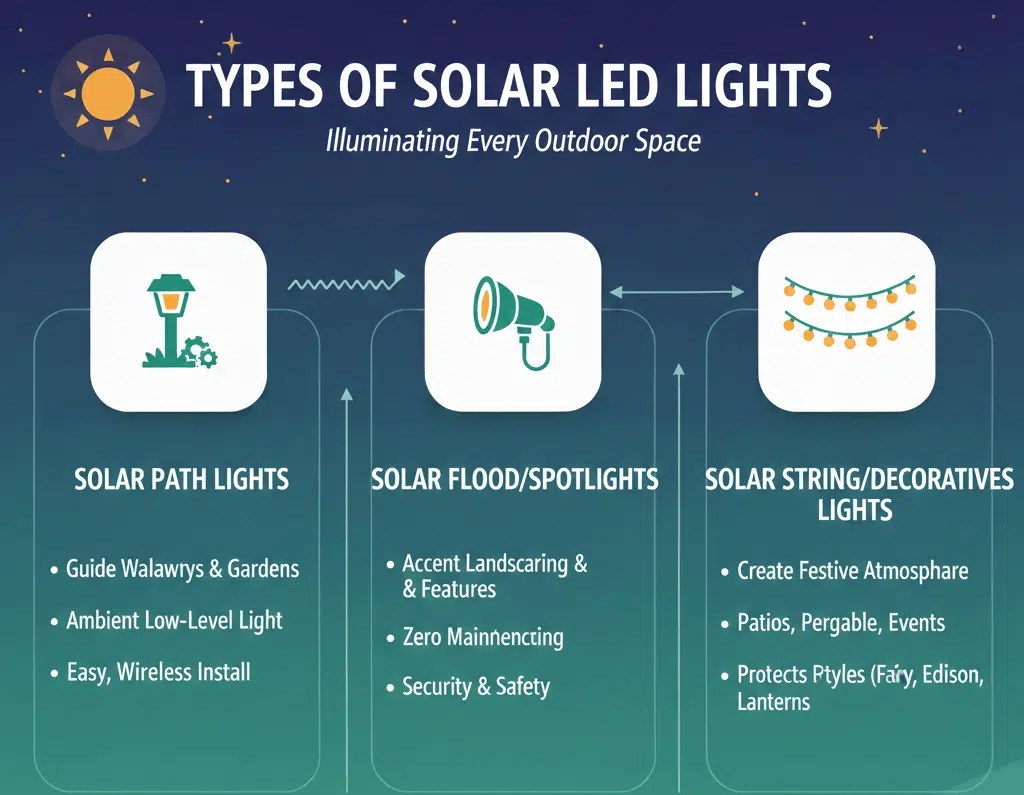
Master planned communities and landscaped developments use solar LED lighting for pathways, gardens, and amenity areas, delivering attractive sustainable lighting without the cabling that mains lighting requires. The wire free solar lighting eliminates the trenching and cabling cost, while harnessing the UAE sun to operate sustainably. For master community developers, solar lighting offers an attractive, sustainable landscape lighting solution.
Specifying solar LED lighting for master communities and landscapes delivers sustainable lighting without the cabling cost. The wire free systems that eliminate the trenching, harnessing the sun to operate sustainably, suit the landscapes and pathways of the development, an attractive sustainable solution across master community developments in the UAE, complemented by our LED landscape lights for developments.
Car Parks and Perimeter Lighting
Commercial developments use solar LED lighting for car parks and perimeters, particularly where the cabling of mains lighting is costly or impractical. The self contained solar lighting illuminates these areas without the infrastructure that mains lighting requires, delivering sustainable illumination economically. For car parks and perimeters distant from the mains supply, solar lighting offers a practical, sustainable solution.
Specifying solar LED lighting for car parks and perimeters delivers illumination without the cabling cost. The self contained systems that light these areas without mains infrastructure suit the applications distant from the supply, delivering sustainable illumination economically across commercial developments in the UAE.
Infrastructure and Remote Applications
Infrastructure projects and remote applications, where mains supply is distant or unavailable, suit solar LED lighting particularly well. The self contained solar systems deliver illumination where extending the mains supply would be costly or impractical, suiting roads, remote facilities, and infrastructure across the UAE. For these applications, solar lighting provides illumination that mains lighting could not deliver economically.
Specifying solar LED lighting for infrastructure and remote applications delivers illumination where mains supply is impractical. The self contained systems that operate without the grid suit the remote and infrastructure applications, providing sustainable illumination where extending the mains would be costly, an advantage of solar lighting across these applications in the UAE.
Sustainability and Carbon Reduction
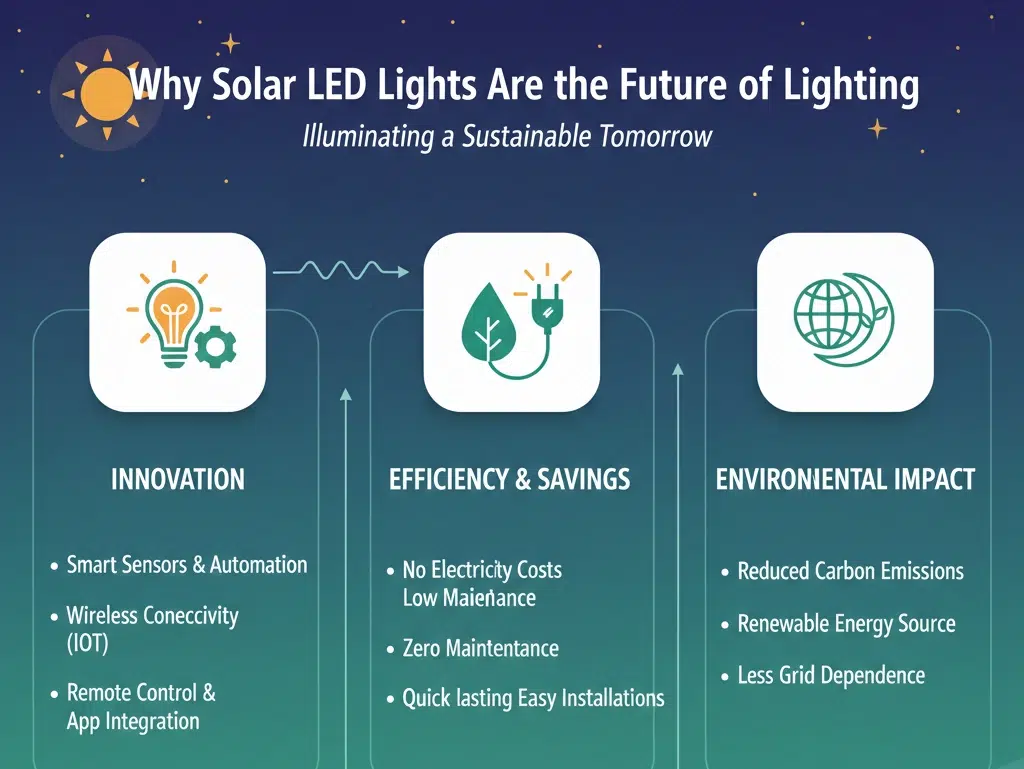
Solar LED lighting delivers genuine sustainability, generating its energy from the sun and producing no operational emissions. This zero emission operation supports the sustainability objectives and certifications that commercial developments increasingly pursue, providing a visible, measurable contribution to the environmental performance of the development. For developments pursuing sustainability, solar lighting offers a tangible sustainable solution.
Specifying solar LED lighting supports the sustainability objectives that developments pursue. The zero emission operation, generating energy from the sun, provides a visible contribution to the environmental performance, supporting the sustainability certifications and ESG positioning that distinguish the development, a tangible sustainable solution across UAE commercial developments.
Eliminating Cabling and Running Cost
Solar LED lighting eliminates both the cabling cost of installation and the running cost of mains energy, delivering economic advantages alongside the sustainability. The wire free installation avoids the trenching and cabling expense, while the solar operation avoids the mains energy cost. For appropriate applications, these economic advantages make solar lighting an attractive solution alongside its sustainability.
Specifying solar LED lighting delivers economic advantages alongside sustainability. The elimination of the cabling cost and the mains running cost provides economic benefits, making solar lighting attractive for appropriate applications where the wire free, sustainable operation suits the requirement across UAE developments.
The UAE Solar Resource
The abundant, reliable solar resource of the UAE makes solar lighting particularly effective, with the strong, consistent sunlight generating ample energy to power the lighting reliably. The UAE solar resource, among the best in the world, ensures the solar systems generate and store sufficient energy to operate reliably through the night, making solar lighting a reliable solution in the favourable UAE conditions.
The favourable UAE solar resource makes solar lighting reliable and effective. The strong, consistent sunlight that generates ample energy ensures the solar systems operate reliably, making solar lighting a dependable solution in the UAE, where the abundant sun provides the resource that solar lighting harnesses across outdoor applications.
Battery and Storage Considerations
The battery that stores the solar energy is a critical component of the solar lighting system, determining its reliable operation through the night and its life. Quality batteries with adequate capacity, rated for the UAE conditions, deliver reliable operation across their life, while inferior batteries fail prematurely. Specifying solar systems with quality batteries ensures reliable operation and longevity in the UAE conditions.
Specifying solar LED lighting with quality batteries ensures reliable operation and longevity. The batteries with adequate capacity, rated for the UAE heat, deliver dependable operation through the night across their life, where inferior batteries fail, making the battery quality a key consideration in the specification of solar lighting for the UAE conditions.
Quality and Reliability of Solar Systems
The reliability of solar lighting depends on the quality of all its components, the panel, the battery, the controller, and the LED fixture, working together reliably in the UAE conditions. Quality solar systems, with quality components rated for the conditions, deliver reliable operation, while inferior systems fail. Specifying quality solar systems ensures the reliable sustainable lighting the development requires across its outdoor applications.
Specifying quality solar LED lighting ensures reliable operation across the system life. The quality components, rated for the UAE conditions and working together reliably, deliver dependable sustainable lighting, where inferior systems fail, making quality essential to the solar lighting that serves the development reliably across its outdoor applications in the UAE.
Integrating Solar Into the Development
Solar LED lighting integrates into the development as part of the outdoor lighting and sustainability strategy, deployed where its wire free, sustainable operation suits the application. Coordinating the solar lighting with the wider outdoor scheme and the sustainability objectives ensures it contributes effectively. Specifying solar lighting as part of the integrated strategy delivers its benefits within the development scheme.
Specifying solar LED lighting as part of the development strategy delivers its benefits within the coordinated scheme. The solar lighting deployed where its wire free, sustainable operation suits, coordinated with the outdoor scheme and sustainability objectives, contributes effectively, integrated into the development across its outdoor and sustainability strategy in the UAE.
The Growing Role of Solar
As sustainability becomes increasingly central to UAE development, the role of solar lighting grows, offering a tangible, effective sustainable solution that harnesses the abundant UAE sun. The alignment of solar lighting with the sustainability objectives that increasingly define development positions it as an increasingly valuable solution. For developers pursuing sustainability, solar lighting offers a solution whose role continues to grow across the UAE.
The growing importance of sustainability positions solar lighting as an increasingly valuable solution. The tangible sustainability that solar lighting provides, harnessing the UAE sun, aligns with the objectives that increasingly define development, making solar lighting a solution of growing role across the sustainable developments of the UAE.
Solar Lighting Supply From Tricircle
Delivering solar LED lighting for sustainable developments requires quality systems rated for the UAE conditions and knowledgeable support. As an authorised OPPLE distributor, Tricircle supplies solar LED lighting solutions across UAE commercial, residential, and infrastructure developments, supporting developers in delivering sustainable outdoor lighting.
To discuss solar LED lighting for your sustainable development, contact our team at aysha@tricirclegroup.ae or call +971 50 578 1325. We supply quality solar LED lighting across Dubai, Sharjah, Abu Dhabi, and the wider Emirates.