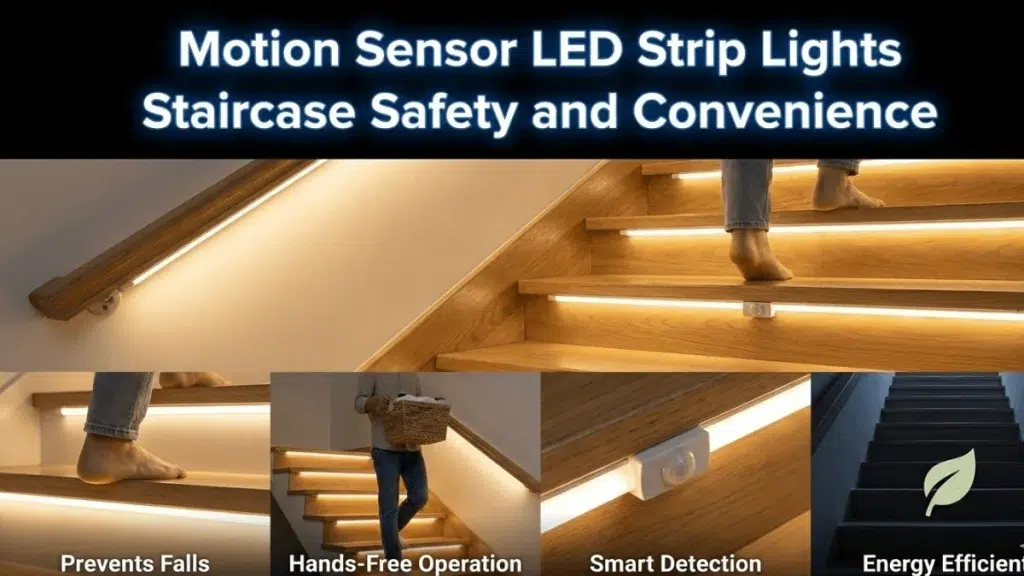
Most staircase lighting articles talk about design and placement again and again. What they often miss is how motion sensor LED strip lights completely change the way staircases are used in daily life. This type of lighting is not just about looks, it is about automatic safety, comfort, and energy control.

This blog focuses only on motion-based LED strip lighting for stairs, written in simple English and based on real user concerns.

What Are Motion Sensor LED Strip Lights?

Motion sensor LED strip lights turn on automatically when they detect movement. Once no movement is detected for a set time, they turn off on their own.

For staircases, this means:

This is especially useful at night or in low-light conditions.

Why Motion Sensors Are Ideal for Staircases

Staircases are transitional spaces. People don’t stay there for long, but they need clear visibility while moving.

Motion sensor LED strip lights are ideal because they:

Unlike regular lights, they don’t stay on all the time.

Night-Time Safety Benefits

Many stair accidents happen at night. People often avoid turning on bright lights because it disturbs others or feels uncomfortable.

This makes night movement safer for children, adults, and elderly people.

Energy Saving Advantage

One of the biggest advantages of motion sensor staircase lighting is energy efficiency.

Because the lights:

They consume much less electricity compared to traditional staircase lights that stay on for hours.

This is useful in both homes and commercial buildings.

Best Areas on Stairs for Motion Sensor LED Strips

Correct placement improves performance and safety.

Under Stair Treads

This helps light each step clearly as someone walks up or down.

Along Stair Edges

Edge lighting improves step definition and reduces missteps.

Under Handrails

This provides soft side lighting and works well for narrow stairs.

Stair Landings

Motion sensors near landings ensure smooth lighting transition between floors.

How Motion Sensors Detect Movement on Stairs

Motion sensors usually work using infrared technology. They detect body heat and movement.

For staircases:

This ensures lighting follows the user naturally.

Adjustable Settings for Better Control

Most motion sensor LED strip systems allow basic adjustments such as:

These settings help customize lighting for different homes and usage patterns.

Motion Sensor LED Strip Lights for Homes

In homes, motion sensor stair lighting improves comfort and safety without effort.

They are especially useful for:

The automatic function removes the need to remember switches.

Motion Sensor Stair Lighting in Commercial Spaces

Commercial buildings benefit even more from motion sensor LED strip lights.

Common use cases include:

They help maintain safety while reducing electricity and maintenance costs.

Common User Concerns

Do Motion Sensor Stair Lights Turn On by Accident?

Good-quality sensors are designed to detect real movement, not small changes. Proper placement reduces false triggers.

What If Someone Stops on the Stairs?

Most systems keep the lights on as long as movement is detected within range.

Can Brightness Be Kept Low?

Yes. Staircase motion lighting is usually kept soft to avoid glare.

Installation Tips for Motion Sensor Stair LED Strips

To get the best results:

Professional installation is recommended for complex staircases.

Maintenance and Long-Term Use

Motion sensor LED strip lights require very little maintenance.

Basic care includes:

With proper setup, they can work reliably for years.

Why Motion Sensor Stair Lighting Is a Smart Upgrade

Motion sensor LED strip lights are not just a design upgrade. They improve:

They are especially useful for staircases, where lighting is needed only when someone is moving.

Leave a Reply

Your email address will not be published. Required fields are marked *

Have A Questions?

Have Questions about our Products or Services?

We’re Here For You.