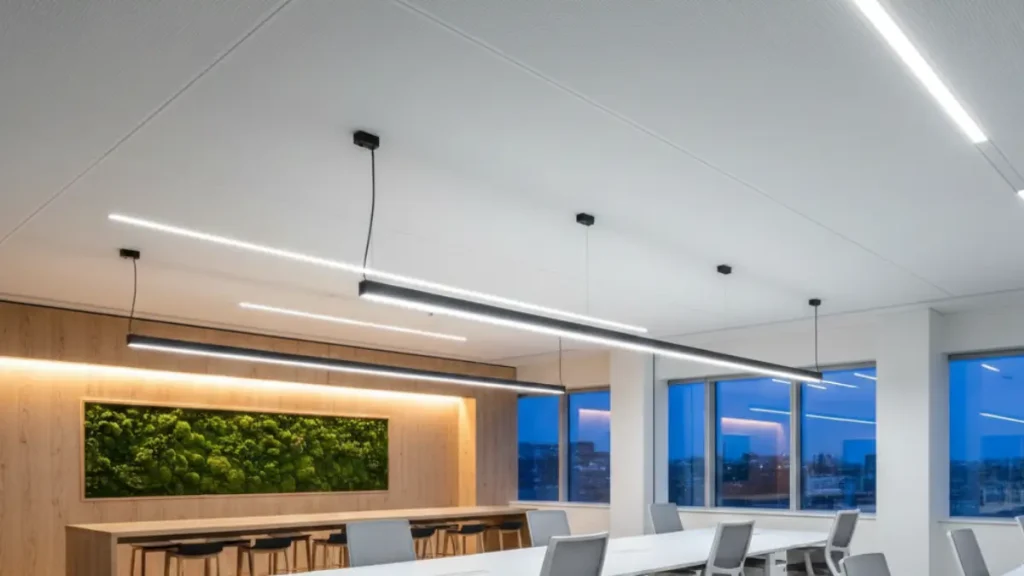
The Rise of Linear Lighting in Commercial Design
LED linear lighting has become the defining lighting technology of contemporary commercial and hospitality design across the UAE. From the clean ceiling planes of Grade A offices to the atmospheric environments of premium hotels, linear systems shape how the most accomplished developments in the Emirates are experienced. This guide provides a complete overview of linear lighting for the developers, consultants, and contractors who specify it, covering what it is, why it dominates, and how to deploy it effectively.
It is written not as a product catalogue but as a working introduction to the technology and its application, equipping the reader to understand and specify linear lighting with confidence across the range of commercial and hospitality projects the UAE market demands.
What LED Linear Lighting Is
An LED linear luminaire is a continuous, elongated fitting that delivers uniform illumination along its length, available in recessed, surface mounted, and suspended forms. It has displaced the fluorescent batten and troffer as the standard commercial linear solution, offering superior efficiency, longer life, better light quality, and the ability to create the continuous lines of light that define contemporary commercial architecture.
The format is inherently flexible, with standard modules joining to create runs of any required length. This allows linear systems to trace the geometry of a space, define circulation, and create architectural effect in ways that discrete fittings cannot, a flexibility central to their appeal among designers and explored across our LED linear lights for commercial interiors.

Why Linear Systems Dominate
The dominance of linear lighting rests on a combination of advantages. Its efficiency satisfies the energy requirements of UAE green building regulations and reduces operating cost. Its long life minimises maintenance across large installations. Its light quality, with glare control and high colour rendering, serves the comfort and presentation that commercial environments demand. And its design flexibility allows architects to integrate lighting into the architecture rather than imposing it upon the space.
Together these advantages make linear lighting the natural choice for premium and design conscious commercial environments, and an increasingly common choice across the broader commercial market as its cost has fallen and its capabilities have grown.
Recessed, Surface and Suspended Configurations
Linear systems come in three principal configurations, each suited to different ceilings and intents. Recessed systems integrate flush into suspended ceilings for clean, minimal planes. Surface mounted systems attach directly to ceilings, suiting exposed structure and shallow voids. Suspended systems hang from the structure, enabling direct indirect distribution and the floating light line effect of contemporary interiors.
Selecting the configuration is a matter of matching the ceiling construction, the available height, and the design intent. Each configuration delivers the benefits of linear lighting while suiting different architectural circumstances, and many developments combine configurations across their various spaces.

Optical Distribution and Light Quality
The optical distribution of a linear system shapes the light it delivers. Direct distribution concentrates light downward for high illuminance on the working plane. Direct indirect distribution washes the ceiling while lighting the plane below, producing the soft, glare free environment offices favour. The distribution must suit the application, with glare control prioritised in offices and educational spaces and higher intensity favoured in commercial.
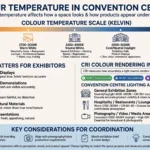
Light quality also depends on colour temperature and rendering. Neutral 4000K suits commercial productivity, warm 3000K suits hospitality, and high CRI serves environments where material and merchandise colour must read accurately. Specifying these characteristics to suit each space is fundamental to a successful linear scheme.
Control and Smart Building Integration
Modern linear systems integrate with control systems to deliver energy management and flexibility. DALI 2 addressable systems enable individual control, daylight harvesting, occupancy response, and energy monitoring, integrating with the building management system. These capabilities reduce energy consumption, support certification, and provide the smart building functionality that premium developments increasingly require.
For commercial buildings, intelligent control transforms the linear installation from a fixed utility into a responsive, manageable system that adapts to occupancy and daylight, delivering ongoing energy savings and the operational data that efficient building management depends upon.

Energy Efficiency and Compliance
Linear systems deliver the efficiency that UAE commercial buildings require to satisfy green building regulations and control operating cost. Quality systems achieve high system efficacy, and with intelligent control they reduce lighting energy consumption substantially against legacy baselines. This efficiency satisfies the lighting power density limits of Dubai Green Building Regulations and Estidama while reducing the running cost of the building.
Compliance also requires certification, with DEWA approval, CE marking, and RoHS compliance evidencing that the products meet the safety and environmental standards UAE commercial procurement demands. Specifying certified, efficient systems addresses both the regulatory and the economic dimensions of the lighting scheme.
Application Across Commercial and Hospitality Projects
Linear lighting serves a broad range of applications. In offices it delivers glare controlled ambient light. In commercial it illuminates circulation and display. In hospitality it creates atmosphere through cove and feature lighting. In healthcare and education it provides reliable, comfortable illumination across large footprints. Understanding the emphasis of each application allows the appropriate system to be specified for each space.
This versatility makes linear lighting a foundational element of contemporary commercial specification, adaptable to the requirements of each environment while providing a consistent design language across a development.

Specifying for Hospitality Atmosphere
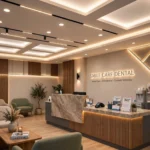
Hospitality projects use linear lighting to create the atmosphere on which their commercial success depends. Warm cove lighting in lobbies and restaurants, concealed linear detail in feature ceilings, and architectural grazing of premium materials all rely on linear systems. The emphasis in hospitality is on warmth, high colour rendering, and dimming flexibility to transform the environment across the day.
Specifying linear lighting for hospitality means prioritising these qualities, selecting warm colour temperatures, high CRI, and quality dimming, to create the inviting environments that drive guest satisfaction and repeat custom across UAE hotels and restaurants.
Specifying for Office Performance
Office projects use linear lighting to deliver the glare controlled, efficient illumination that productive workplaces require. The emphasis is on a UGR below 19, neutral colour temperature, high efficiency, and control integration for energy management. Suspended direct indirect systems are favoured for the comfortable, premium environment they create across open plan floors.
Specifying linear lighting for offices means prioritising these performance characteristics, supporting both the comfort and productivity of occupants and the energy performance and certification objectives of the building, the combination that defines a successful office lighting scheme.

Installation and Commissioning
A linear specification is realised through quality installation and commissioning. Continuous runs must be set out accurately, joined cleanly, and coordinated with ceiling services. Control systems must be commissioned and programmed to deliver the intended scenes and energy strategies. Providing the contractor with complete documentation and clear commissioning requirements ensures the installation realises the design intent.
Quality products that install correctly and commission reliably reduce the risk of on site problems. The transition from specification to commissioned installation is where the value of quality products and complete documentation becomes evident, delivering an installation that performs as designed from handover.
Total Cost of Ownership
Evaluating linear lighting on total cost of ownership, rather than initial price, reveals its true economics. The higher initial cost of quality linear systems is offset by lower energy consumption, reduced maintenance, long service life, and the leasing and asset value advantages they bring. Across the building life, the quality system frequently proves the more economical choice.
For developers and asset managers, framing the linear decision as a total cost of ownership analysis supports the case for quality specification. The system that costs more at tender delivers lower cost across the building life while supporting the value and marketability of the asset.

Sourcing Linear Systems for UAE Projects
Delivering linear lighting across a commercial project requires a supply partner able to provide consistent quality, complete documentation, and delivery scheduling aligned to the programme. Consistency across large quantities is essential to avoid the visible variation that undermines large installations, making the choice of supplier as important as the choice of product.
As an authorised OPPLE distributor, Tricircle supplies linear systems across the UAE with the consistency, certification, and documentation that commercial projects require, supporting developers and consultants from specification through delivery.
Linear Lighting and Acoustic Integration
In contemporary commercial interiors, lighting and acoustics are increasingly integrated, and linear systems play a role in this convergence. Acoustic ceiling rafts and baffles often incorporate linear lighting, combining sound absorption with illumination in a single architectural element. This integration is particularly valued in open plan offices and hospitality spaces, where both acoustic comfort and quality lighting are priorities.
Specifying linear lighting for acoustic integration requires coordination between the lighting and acoustic designers, ensuring the systems work together cleanly. The result is a ceiling that delivers both comfort and quality, addressing two of the most important environmental factors in a single, considered design.
Specifying for Refurbishment Projects
Refurbishment projects present particular opportunities and constraints for linear lighting. Replacing dated fluorescent or early LED installations with modern linear systems transforms the appearance and performance of an existing building, supporting its repositioning in the market. The constraints of the existing structure and services must be accommodated, often favouring surface mounted or suspended systems where ceiling voids are shallow.
For owners refurbishing commercial buildings to improve their market position, linear lighting offers a visible, high impact upgrade that signals investment and quality to prospective tenants. It is one of the most effective ways to modernise the appearance and performance of an existing commercial building.
The Evolving Capabilities of Linear Systems
Linear lighting continues to evolve, with advances in efficacy, control, and integration expanding its capabilities. Tunable white systems that adjust colour temperature across the day, deeper integration with building management and analytics, and ever improving efficiency are extending what linear lighting can deliver. Specifying current generation systems positions a building to benefit from these capabilities.
For developers building for the long term, understanding the direction of the technology helps ensure the lighting infrastructure remains capable and relevant across the building life, rather than dating quickly. Linear lighting is a maturing technology whose capabilities continue to grow.
Speak to Tricircle About Linear Lighting
If you are specifying LED linear lighting for a commercial or hospitality project anywhere in the UAE, our team can provide product recommendations, technical documentation, and project pricing tailored to your requirements. We supply linear systems in project quantities across Dubai, Sharjah, Abu Dhabi, and the wider Emirates.
To discuss your linear lighting project, contact our team at aysha@tricirclegroup.ae or call +971 50 578 1325. We will help you specify and deliver linear lighting that serves your development across its full service life.