Lighting plays a powerful role in architecture. It does more than make spaces visible. It shapes how people feel, move, and experience a place. Today, architects around the world are choosing LED linear lights as a key tool for both ambient lighting and accent lighting. These lights help create calm, modern, and functional spaces without clutter or heavy fixtures.
This guide explains how architects use LED linear lights, why they prefer them, and how these lights improve homes, offices, hotels, retail stores, and commercial buildings. Everything is explained in simple language so anyone can understand, whether you are a homeowner, designer, or business owner.
Understanding LED Linear Lighting
LED linear lights are long, slim lighting fixtures that produce smooth and even light. Unlike traditional bulbs or spotlights, they create a continuous line of light instead of bright dots.
Architects like LED linear lights because they:
- Blend easily into ceilings, walls, and floors
- Create clean and modern designs
- Offer flexibility for different lighting needs
- Work well for both ambient and accent lighting
They are widely used in residential and commercial projects because of their reliability, efficiency, and design freedom.
What Is Ambient Lighting?
Ambient lighting is the main lighting of a space. It provides overall brightness so people can move, work, and feel comfortable.
Architects use ambient lighting to:
- Light up entire rooms evenly
- Reduce harsh shadows
- Create a calm and welcoming mood
LED linear lights are ideal for ambient lighting because they spread light smoothly across large areas without glare.
What Is Accent Lighting?
Accent lighting is used to highlight specific features. It draws attention to details and adds depth to a space.
Architects use accent lighting to:
- Highlight walls, textures, or ceilings
- Emphasize furniture or artwork
- Add visual interest and contrast
LED linear lights are perfect for accent lighting because they can be hidden while still producing strong visual impact.
Why Architects Prefer LED Linear Lights
Clean and Minimal Design
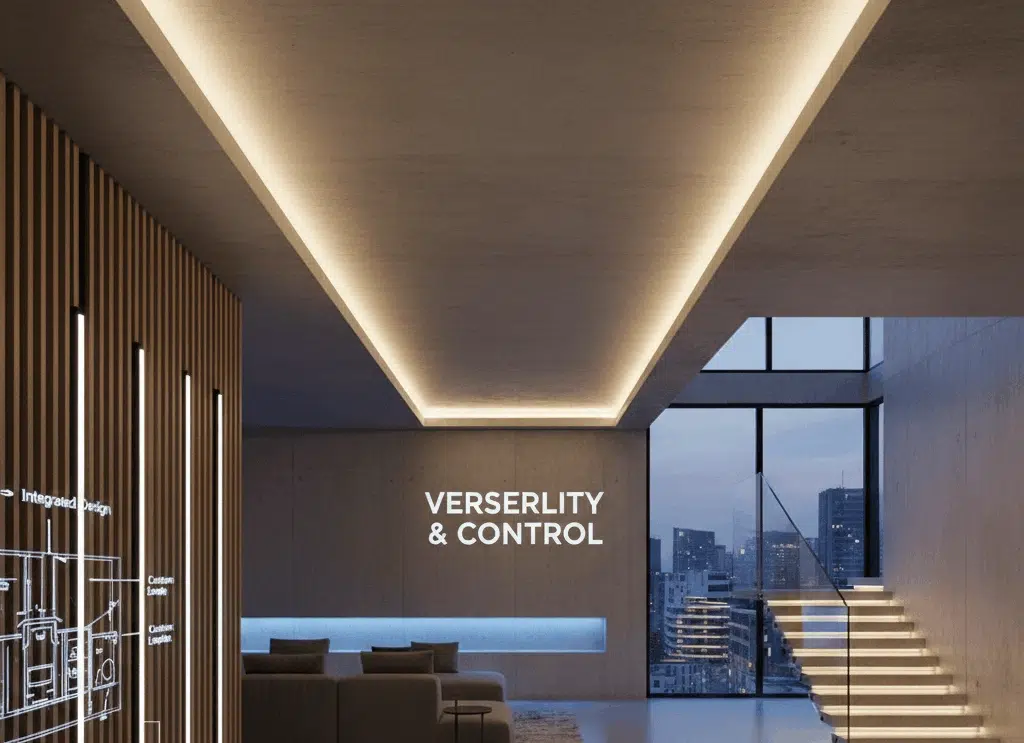
Modern architecture focuses on simplicity. Architects prefer lighting that does not interrupt clean lines or clutter the ceiling. LED linear lights can be recessed, surface-mounted, or hidden in architectural features, making them almost invisible while still powerful.
Flexible Placement
LED linear lights can be installed:
- Along ceilings
- Inside wall grooves
- Under shelves
- Behind panels
- Around stairs
This flexibility allows architects to shape light exactly where it is needed.
Even and Comfortable Light
Traditional spotlights often create uneven lighting. LED linear lights produce uniform brightness, which improves comfort and reduces eye strain. This makes them suitable for homes, offices, and public spaces.
Energy Efficiency
LED technology uses less electricity and lasts longer. Architects working on sustainable buildings prefer LED lighting because it supports energy-saving goals and reduces maintenance needs.
How Architects Use LED Linear Lights for Ambient Lighting
Ceiling-Based Ambient Lighting
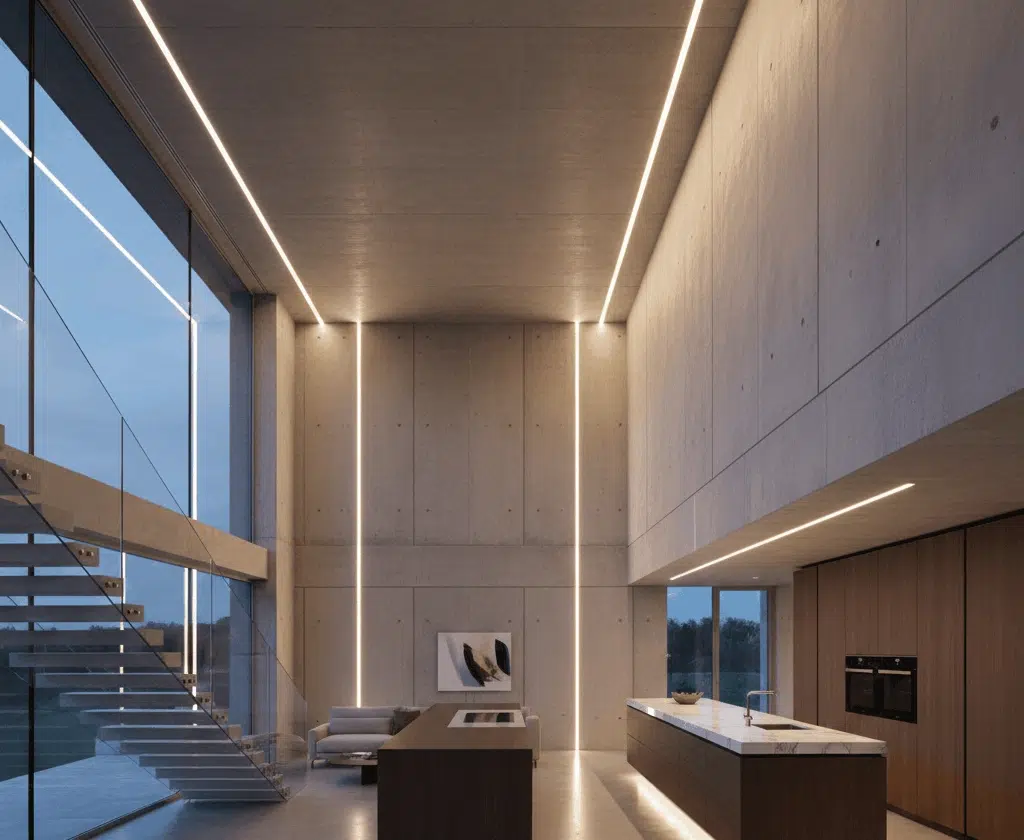
One of the most common uses is installing LED linear lights along ceilings. Architects design straight or continuous lighting lines that provide even illumination throughout the room.
This approach:
- Eliminates dark corners
- Reduces the need for multiple fixtures
- Creates a clean ceiling appearance
In offices and commercial spaces, this method is often used with commercial linear led light fixtures to ensure consistent lighting for large areas.
Cove Lighting for Soft Ambience
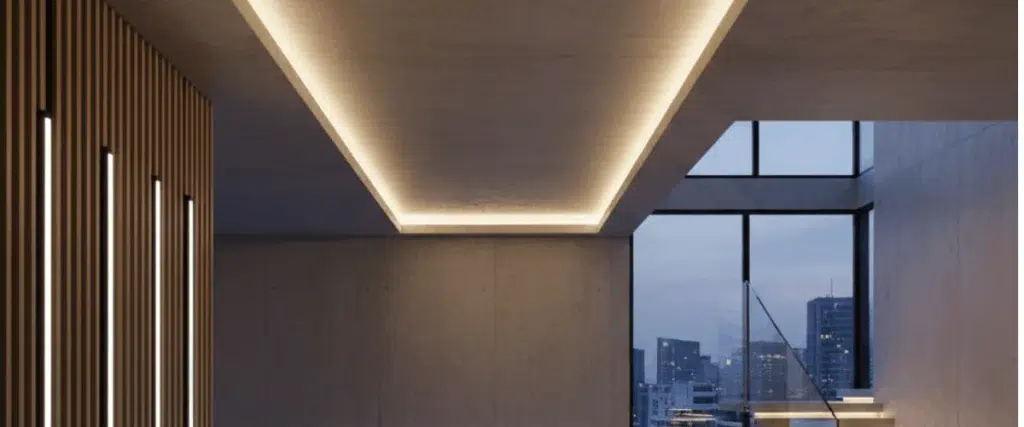
Cove lighting is when LED linear lights are hidden inside ceiling edges or recesses. The light reflects off surfaces instead of shining directly.
Benefits include:
- Soft and indirect lighting
- Relaxing atmosphere
- No visible glare
Architects use cove lighting in living rooms, hotel lobbies, and lounges to create a calm and elegant feel.
Wall Wash Lighting
LED linear lights can be installed close to walls to wash them with light from top to bottom. This makes rooms feel larger and brighter.
Wall wash lighting is often used in:
- Hallways
- Galleries
- Retail spaces
- Corporate interiors
How Architects Use LED Linear Lights for Accent Lighting
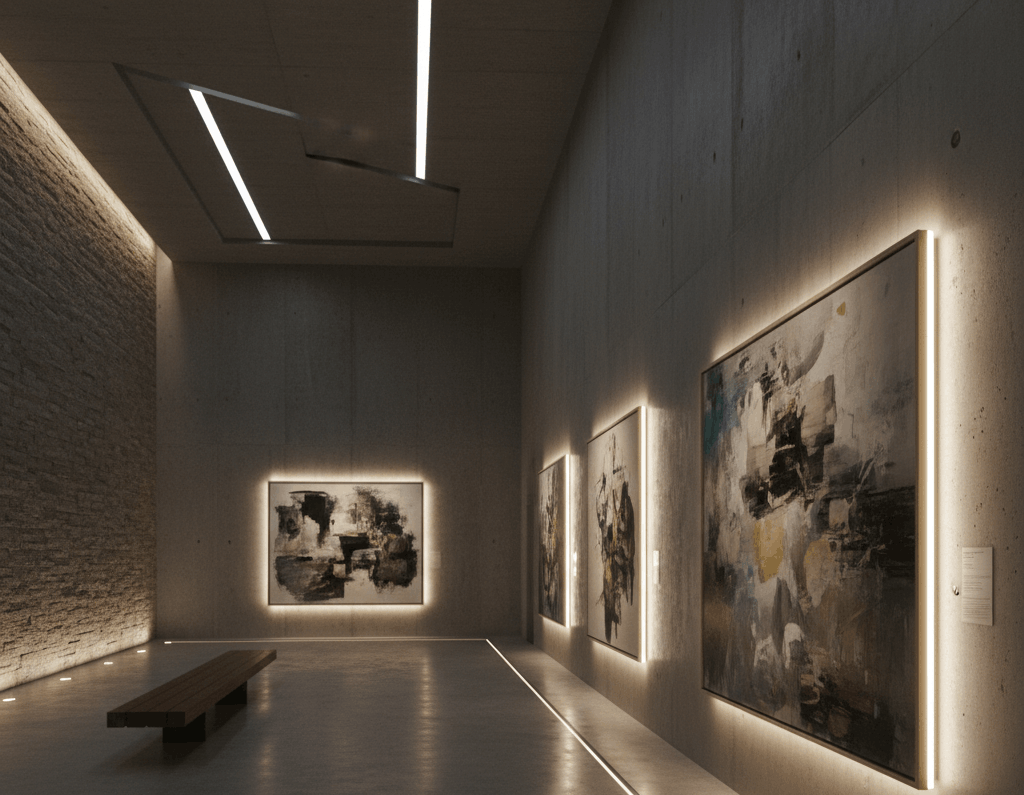
Highlighting Architectural Details
Architectural elements like columns, textures, and ceiling designs become more visible with accent lighting. Architects place LED linear lights carefully to bring out these details.
This adds:
- Depth
- Visual interest
- A premium look
Accent Lighting for Furniture and Displays
LED linear lights are often placed under shelves, cabinets, or counters. This highlights furniture and display items without using bulky fixtures.
Common areas include:
- Retail shelves
- Kitchen cabinets
- Office storage units
Staircase and Pathway Lighting
Architects use LED linear lights along stairs and walkways for both safety and style. These lights guide movement while adding a modern look.
This is especially useful in:
- Commercial buildings
- Hotels
- Public spaces
Using LED Linear Lights in Commercial Spaces
Commercial projects demand lighting that is reliable, efficient, and visually appealing. Architects often specify commercial linear led light fixtures because they are built for long hours of operation and larger spaces.
Offices
In offices, LED linear lights are used to:
- Improve focus
- Reduce eye fatigue
- Create uniform desk lighting
Suspended or recessed linear lights are common in open-plan offices.
Retail Stores
In retail design, lighting influences customer behavior. Architects use LED linear lights to:
- Highlight products
- Create inviting pathways
- Improve store visibility
Accent lighting helps draw attention to featured items and displays.
Hotels and Hospitality
Hotels use LED linear lighting for:
- Ambient lobby lighting
- Accent lighting in rooms
- Decorative lighting in restaurants
Architects focus on creating a warm and luxurious atmosphere using soft indirect light.
Color Temperature and Mood Control
Architects carefully select color temperature based on space use:
- Warm white for relaxation areas
- Neutral white for living and retail spaces
- Cool white for offices and work areas
LED linear lights allow precise control over color temperature, helping architects shape mood and function.
Dimming and Smart Control Integration
Modern LED linear lights support dimming and smart controls. Architects integrate lighting with automation systems to adjust brightness based on time, activity, or daylight.
Benefits include:
- Energy savings
- User comfort
- Flexible lighting scenes
This is increasingly common in commercial and high-end residential projects.
Hidden Lighting for a Premium Look
One of the strongest reasons architects use LED linear lights is the ability to hide the source of light. When fixtures are hidden, only the effect is visible.
This creates:
- Clean interiors
- Modern luxury feel
- Distraction-free spaces
Hidden lighting is a signature element in contemporary architecture.
Installation Planning from an Architect’s View
Architects plan lighting early in the design phase. This allows:
- Proper wiring routes
- Clean ceiling details
- Seamless integration with materials
Late lighting decisions often limit design options. That’s why LED linear lighting is planned alongside ceilings, walls, and furniture.
Safety and Compliance Considerations
Architects ensure that LED lighting systems meet safety standards:
- Correct voltage and drivers
- Heat management
- Fire safety compliance
Using high-quality fixtures reduces risk and ensures long-term performance.
Maintenance and Long-Term Value
LED linear lights require minimal maintenance. Their long lifespan reduces replacement costs and disruptions.
For commercial buildings, this means:
- Lower operating costs
- Less downtime
- Better return on investment
Common Mistakes Architects Avoid
Experienced architects avoid:
- Over-lighting spaces
- Poor placement causing glare
- Wrong color temperature
- Low-quality fixtures
Correct planning and product selection prevent these issues.
Why LED Linear Lighting Is the Future of Architecture
Architectural trends continue to move toward:
- Minimalism
- Sustainability
- Smart technology
LED linear lighting fits all these goals. It offers design freedom, energy efficiency, and visual comfort in one solution.
Final Thoughts
Architects use LED linear lights because they combine function, beauty, and efficiency. Whether for ambient lighting that fills a room gently or accent lighting that highlights details, LED linear lights give architects complete control over how spaces feel and function.
From homes to offices, retail stores to hotels, and especially in projects using commercial linear led light fixtures, this lighting solution has become a core part of modern architectural design.
By choosing LED linear lighting, architects create spaces that are:
- Comfortable
- Visually appealing
- Energy-efficient
- Future-ready
As architecture continues to evolve, LED linear lights will remain a trusted tool for shaping light and space in meaningful ways.