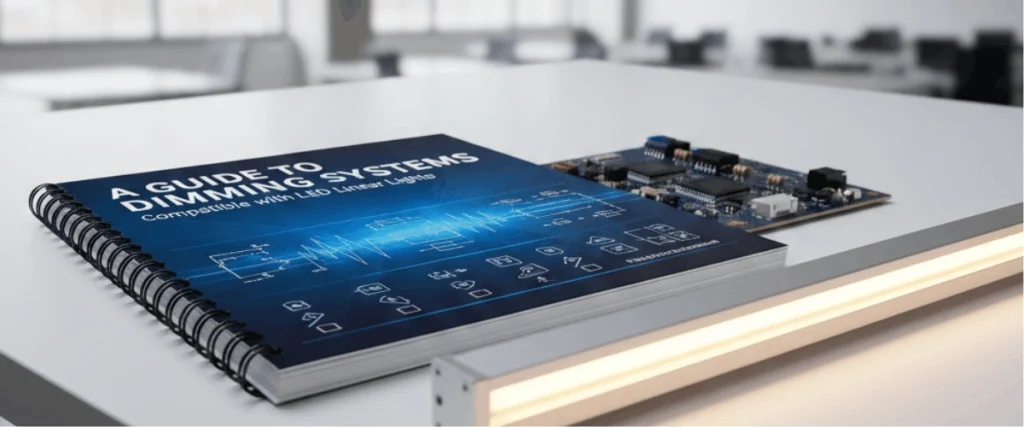
Dimming and Control in Commercial Linear Lighting
Dimming and control transform LED linear lighting from a fixed utility into a responsive, manageable system that adapts to occupancy, daylight, and use. For commercial buildings across the UAE, this controllability delivers energy savings, occupant comfort, and the operational flexibility that modern buildings require. Understanding the dimming and control options, and specifying them correctly, is essential to realising the potential of linear lighting in commercial projects.
This guide examines dimming and control for LED linear lighting, written for the developers, MEP consultants, and contractors who specify it. It covers the control protocols, the applications, and the specification considerations that deliver linear lighting which is controllable, efficient, and reliable across commercial, hospitality, and institutional projects.
Why Dimming and Control Matter
Dimming and control deliver several benefits in commercial linear lighting. They enable energy savings by dimming or switching the lighting in response to daylight and occupancy. They support occupant comfort by allowing the lighting to be adjusted to suit conditions and tasks. And they provide operational flexibility, allowing the lighting to adapt to different uses and times. These benefits make control central to modern commercial lighting.
Understanding these benefits shapes the specification of dimming and control, prioritising the energy savings, comfort, and flexibility that control delivers. For commercial buildings seeking efficiency, comfort, and adaptability, the dimming and control of the linear lighting are essential elements of the installation, not optional additions.
DALI and DALI-2 Control
DALI, the Digital Addressable Lighting Interface, and its current generation DALI 2, have become the dominant control protocol for commercial linear lighting. DALI provides individual addressability of each fixture, enabling precise control, and DALI 2 adds bidirectional communication for fault and energy reporting. Integration with the building management system allows centralised control, monitoring, and energy management across the installation.
For commercial buildings requiring sophisticated control and building management integration, DALI 2 is the protocol of choice. Its addressability, reporting, and integration support the energy management, occupancy control, and monitoring that efficient commercial building operation requires, making it central to the control of commercial linear lighting, as supported across our LED panel lights for commercial buildings.
0-10 Volt Dimming
0 to 10 volt dimming provides a simpler, cost effective control option for applications where individual addressability is not required. It controls the lighting by zone, dimming groups of fixtures together, and suits applications such as warehouse zones controlled by occupancy or office areas controlled by daylight. For simpler control requirements, 0 to 10 volt dimming delivers effective control at lower cost and complexity than DALI.
Specifying 0 to 10 volt dimming for appropriate applications, where zone control suffices and addressability is not needed, delivers effective, economical control. It suits the many commercial applications where simple, reliable zone dimming meets the requirement, offering a practical control option alongside the more sophisticated DALI for the appropriate situations.
Phase-Cut Dimming
Phase cut dimming, controlling the lighting by cutting the mains waveform, suits applications requiring simple level adjustment, particularly in hospitality and smaller installations. Compatible with many drivers and widely understood, phase cut dimming provides straightforward control for applications where the simplicity and familiarity of the method suit the requirement. Driver compatibility must be confirmed to ensure smooth performance.
Specifying phase cut dimming for suitable applications delivers simple, effective control where its characteristics suit the requirement. Confirming the compatibility of the driver and dimmer ensures smooth, flicker free performance, avoiding the problems that incompatibility causes. For appropriate applications, phase cut dimming offers a simple, familiar control option.
Daylight Harvesting
Daylight harvesting, dimming the lighting in response to available natural light, delivers significant energy savings, particularly in the daylight rich UAE. Sensors measure the available light and dim the artificial lighting to maintain the required level, consuming only the energy genuinely needed. Near facades and under rooflights, where daylight is abundant, daylight harvesting reduces lighting energy substantially.
Specifying daylight harvesting for areas with significant natural light delivers energy savings that support both operating cost reduction and sustainability certification. The abundant daylight of the UAE makes this strategy particularly valuable, and the control systems that enable it are a worthwhile investment in the efficiency of commercial linear lighting.
Occupancy and Presence Control
Occupancy and presence control, switching or dimming the lighting in response to the presence of people, delivers energy savings in intermittently occupied spaces. Sensors detect occupancy and control the lighting accordingly, ensuring it operates only when needed. In areas such as meeting rooms, corridors, and back of house spaces, occupancy control reduces the energy consumed by lighting unoccupied spaces.
Specifying occupancy control for intermittently occupied areas delivers energy savings without compromising the availability of the lighting when needed. The lighting responds to actual occupancy, consuming energy only when people are present, a valuable efficiency in the many commercial spaces that are occupied intermittently across the building.

Scene Setting and Programmable Control
Scene setting and programmable control enable preset lighting environments to be recalled for different uses and occasions. In hospitality, boardrooms, and multipurpose spaces, the ability to recall composed lighting scenes, presentation, dining, event, transforms the space at the touch of a control. This programmable flexibility suits the varied uses of many commercial and hospitality spaces.
Specifying scene setting and programmable control for spaces with varied uses delivers the flexibility to adapt the lighting to different requirements. The ability to recall composed scenes supports the multipurpose use of spaces, transforming the lighting environment to suit each occasion across hospitality, corporate, and multipurpose commercial spaces.
Building Management System Integration
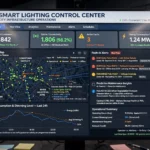
Integration with the building management system allows the linear lighting to be controlled, monitored, and managed centrally alongside the other building systems. This integration, achieved through DALI or other compatible protocols, enables coordinated control, energy monitoring, and fault reporting across the building. For sophisticated commercial buildings, this integration is central to efficient, data driven operation.
Specifying linear lighting with building management integration supports the coordinated, monitored operation that sophisticated commercial buildings require. The lighting becomes part of the integrated building system, controlled and managed alongside the other services, contributing to the efficient, responsive operation that modern commercial buildings pursue.
Energy Management and Reporting
Control systems with energy monitoring provide the data that energy management and sustainability reporting require. Measuring the energy consumed by the lighting, and reporting it, supports the optimisation of the lighting operation and the documentation of the energy performance for certification and ESG reporting. This data is increasingly valued by commercial operators managing energy and sustainability.
Specifying control systems with energy monitoring delivers the data that supports energy management and reporting. For commercial operators pursuing efficiency and sustainability, this data enables the optimisation and documentation that their objectives require, making the monitoring capability of the control system a valuable element of the linear lighting installation.
Ensuring Driver and Control Compatibility
The reliable performance of dimming and control depends on the compatibility of the drivers and the control system. Mismatched drivers and controls produce flicker, minimum load problems, and unreliable dimming, undermining the installation. Confirming compatibility at specification stage, ensuring the drivers and controls are designed to work together, avoids these problems and delivers reliable control.
Specifying compatible drivers and controls, confirmed at design stage, is essential to reliable dimming and control. This compatibility, often overlooked, determines whether the control performs smoothly or suffers the problems that incompatibility causes. Attention to it ensures the dimming and control deliver the reliable performance the installation requires.
Future Flexibility Through Addressable Control
Addressable control systems provide future flexibility, allowing the lighting to be reconfigured and rezoned as the building and its use change, without rewiring. For commercial buildings that must adapt to changing tenancies and uses over decades, this flexibility protects the long term value of the lighting installation, allowing it to evolve with the building rather than requiring replacement.
Specifying addressable control for buildings requiring long term flexibility delivers the adaptability that changing commercial use demands. The ability to reconfigure the lighting through control, rather than rewiring, suits the evolving requirements of commercial buildings, protecting the relevance and value of the lighting across the building life.
Specifying Control for Each Application
The appropriate control varies with the application, DALI 2 for sophisticated commercial buildings, 0 to 10 volt for simpler zone control, phase cut for hospitality and smaller installations. Matching the control to the application delivers the required functionality at appropriate cost and complexity, neither over specifying sophisticated control where it is not needed nor under specifying where it is.
Specifying the control to match the application ensures the lighting has the functionality it requires without unnecessary cost or complexity. This matching, understanding the control requirement of each application and specifying accordingly, delivers control that serves the building effectively across its diverse spaces and requirements.
Control and Dimming Support From Tricircle
Delivering dimming and control for commercial linear lighting requires compatible products and knowledgeable support. As an authorised OPPLE distributor, Tricircle supplies linear lighting with DALI, 0 to 10 volt, and phase cut control options across the UAE, supporting specifiers in delivering controllable, efficient lighting for their commercial projects.
To discuss dimming and control for linear lighting in your commercial project, contact our team at aysha@tricirclegroup.ae or call +971 50 578 1325. We supply controllable linear lighting in project quantities across Dubai, Sharjah, Abu Dhabi, and the wider Emirates.